






By Aggrey Baba
Uganda’s rice and wheat markets are fast turning into political battlegrounds, with powerful figures accused of quietly building cartels that now control who imports what, and at what price.
Behind the rising cost of bread and rice lies a shadowy network of politicians who, according to traders, have used their positions to dominate grain imports, shutting out independent businesspeople and turning the country’s staple foods into a preserve for the well-connected.
For months, traders across Kampala and Mukono have complained of being blocked from importing rice and wheat, allegedly because key import permits are held by individuals with strong political connections. Those without political backing say they have been pushed to the corner, unable to clear goods through customs or compete with tax-favoured companies.
The Kampala City Traders associations (KACITA) chairperson described it as a market “captured from above,” where decisions on who imports bulk wheat or rice are no longer guided by market dynamics but by political influence. Some of the biggest warehouses in Namanve and Banda are now said to be under firms connected to political families, controlling nearly all incoming consignments.

Namanve Industrial Park chairperson Mathias Mutyaba, according to the New Vision, confirmed that local traders have been frustrated by restrictive practices. He said Uganda’s production of rice and wheat remains too low to feed its population, but instead of supporting more importers to bridge the gap, a few politically linked actors have cornered the trade, dictating prices and supply volumes.

According to trade observers, this quiet takeover has deeper implications. It not only suffocates competition but also puts Uganda’s food security in the hands of a few individuals. Any disruption in their supply chains (whether due to politics or global shocks) could easily plunge the country into scarcity.
Market analysts note that this pattern is not new, and similar monopolies have been observed in other essential goods such as batteries, sugar, and building materials, a trend linked to what some describe as Uganda’s political capitalism, where business success depends on one’s political connectivity rather than market ability.
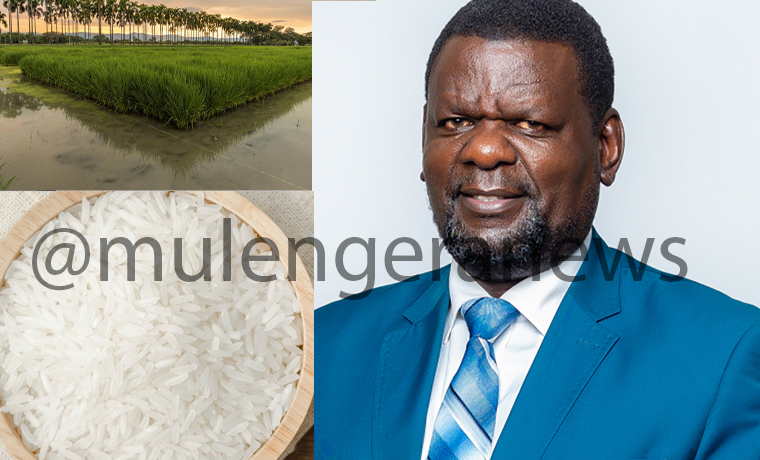
Data from the Uganda Bureau of Statistics (UBOS) paints a grim picture, that Uganda produces just 350,000 metric tonnes of rice per year, less than half of what is needed, and this is forcing the country to import to fill the gap. Wheat dependency is even worse, with Uganda importing nearly 95% of its consumption, mainly from Kenya, Tanzania, and Russia.

As the import bill rises past UGX 400 billion annually, small traders warn they are being pushed out completely. Some argue that import duties favour politically owned companies, while ordinary traders face high taxes that make their businesses unviable. (For comments on this story, get back to us on 0705579994 [WhatsApp line], 0779411734 & 041 4674611 or email us at mulengeranews@gmail.com).