







By Mulengera Reporters
Kaduuba Village in Kansiira Parish, Lwabyata Sub-County, Budyeso Constituency in Nakasongola District is quickly rising to prominence after receiving a solar-powered irrigation scheme that has transformed a once dry and hopeless area into a fast-growing farming success story. Long known for its extreme heat and dry spells that left it almost desert-like, Nakasongola is beginning to shed that image.
The transformation is part of the Solar-Powered Water Supply and Irrigation Project, funded by UK Export Finance and the Ministry of Water and Environment (MWE), with Nexus Green as the contractor.
The Government of Uganda in support of UK Export Finance invested over 111 million Euros in this nationwide initiative to install more than 450 solar-powered water and irrigation systems, and Kaduuba became one of the fortunate beneficiaries.

These schemes are reshaping livelihoods as villages that once survived on rain-fed farming can now harvest throughout the year, boosting food production, household incomes, and overall resilience.

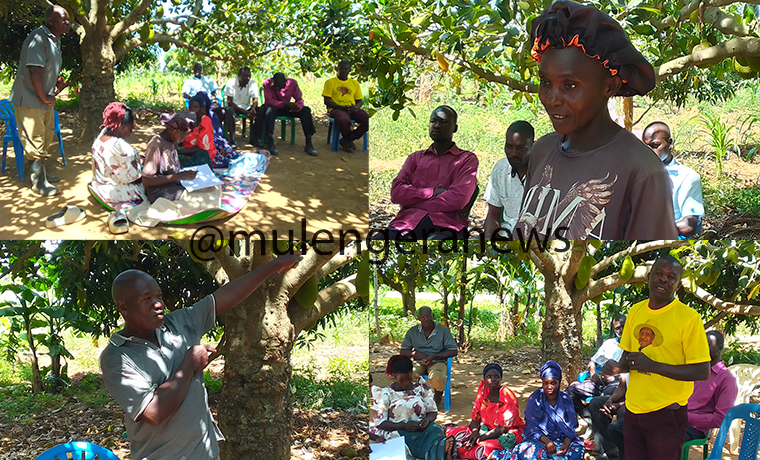
In March 2025, Kaduuba residents united to form the Kisa Kyamukama Kaduuba Farmers Group, bringing together 24 dedicated farmers, including nine women. Their chairman, Bernard Kisaakye Lwanga, shared their journey with officials from the Ministry, Nexus Green, and the media. Before the system was installed, he had even moved closer to Lake Kyoga in search of water for farming but still struggled to earn a meaningful income.
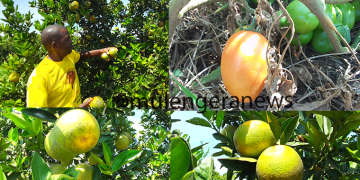
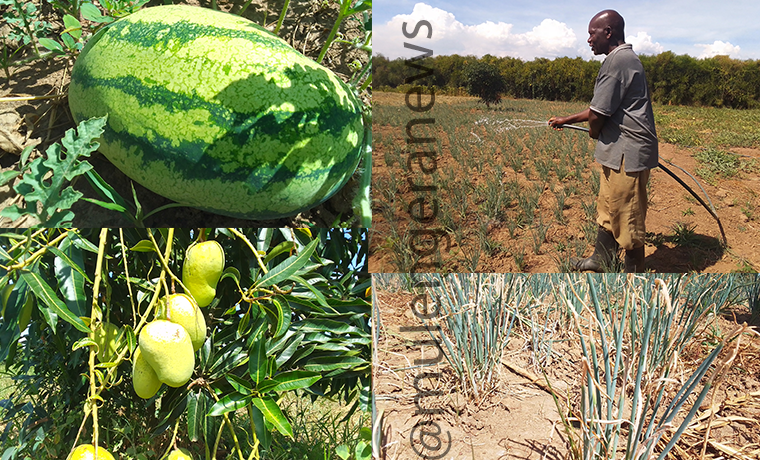
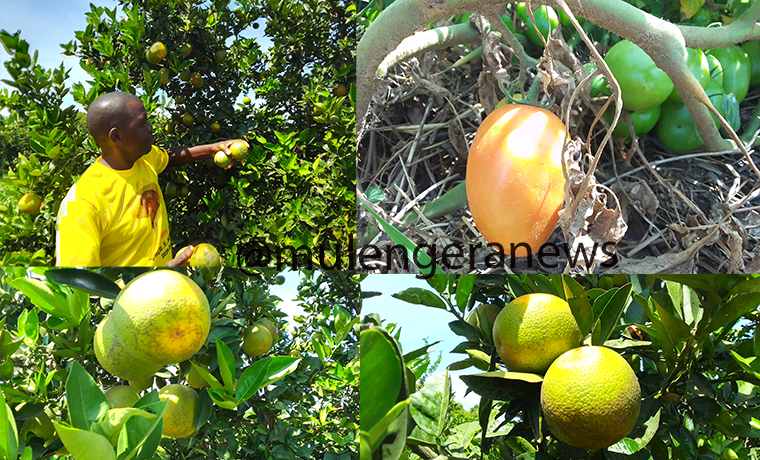
When Nexus Green experts through MWE proposed installing a solar-powered irrigation system, he quickly mobilized the community, and they chose to focus on horticulture—tomatoes, watermelons, cotton, maize, oranges, eggplants, mangoes, sweet potatoes, and more.
Their first farming season came with mixed results. On three acres they planted tomatoes, groundnuts, and watermelons, earning 3 million shillings from tomatoes, harvesting 28 sacks of groundnuts, and making 6 million shillings from watermelons.

Despite considering this a loss due to the absence of an agronomist, Lwanga said it was still more money than they had ever earned before and that he was finally able to pay his children’s school fees with ease.
With a government-provided agronomist now supporting their work, the group expects much greater yields in the next season, especially since they benefit from harvesting during dry spells when farmers without irrigation struggle.
Lwanga urged the government to support them with value-addition machinery such as juice processors and tractors to help them utilize the vast areas of unused land. Their success has, however, attracted jealousy from neighbors who initially refused to join the project; at one point, a solar panel was stoned in an attempt to sabotage the system.
Despite this, the group remains focused and is already planning to diversify into catering, cake baking, poultry, and livestock farming.
For the women in the group, the project has been life-changing. Agnes Nabalwana, a 38-year-old mother of nine and the group secretary, said she had never earned 3 million shillings from farming until the irrigation scheme came and that she can now grow crops three times a year without waiting for rain.
Richard Musonga Mujabi, a 65-year-old father of twelve, proudly revealed that he is now known as “Mzee W’akatungulu,” the old man of onions, because onions have become the backbone of his livelihood.
Other farmers, such as Eseza Nalubega and Grace Nabuyungu, recalled how tomato disease, locally known as Lubabu, destroyed their crop in the first season. After receiving guidance from the government agronomist to switch to watermelons, their fields improved greatly. Nalubega said each member contributed 400,000 shillings for seedlings and later earned 2.8 million shillings as a group, which funded their next planting season.
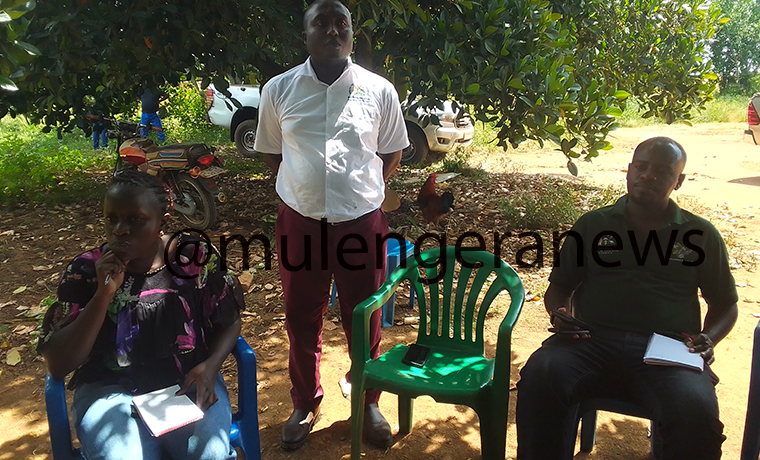
Officials from the Ministry of Water and Environment praised the community’s tremendous progress. Senior spokesperson Noel Muhangi commended the villagers—especially the women—for embracing irrigation and planting fruit trees that improve nutrition and help fight climate change. He noted that Kaduuba is on its way to becoming the food basket of Nakasongola and the Bululi chiefdom.
Civil engineer Martin Karuhanga explained that the EUR 269,853.77 irrigation system uses 54 solar panels to pump water from Lake Kyoga into a 12-metre-high reservoir with a 40-cubic-metre capacity, which then distributes water to farms through modern irrigation tapes.
Patricia Namara, the Ministry’s communication officer for the Central Region, said she was delighted to see high-quality fruits on the trees and proud to see women leading the transformation.
From a village once defined by drought and poverty, Kaduuba has become a symbol of hope—proof that with sunlight, teamwork, and determination, even the driest land can rise again and bloom. (For comments on this story, get back to us on 0705579994 [WhatsApp line], 0779411734 & 041 4674611 or email us at mulengeranews@gmail.com).