






By Aggrey Baba
The Ministry of Gender, Labor and Social Development has reaffirmed its commitment to empowering women entrepreneurs through sustainable access to finance under the World Bank-funded Generating Growth Opportunities and Productivity for Women Enterprises (GROW) Project.
In response to public concerns over why the programme offers loans rather than outright grants, the they clarified that the design of the project is grounded in long-term sustainability, inclusiveness, and financial prudence.
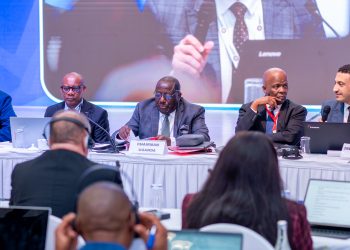
Speaking during a recent media engagement, Permanent Secretary Aggrey David Kibenge explained that while the funding originates from the World Bank, the decision to charge a low interest rate on loans was a deliberate strategy to enable the fund to revolve and benefit more women over time.
“The interest rate was put at 10%, which is about half the average commercial lending rate. This makes the loans more affordable for women in business and allows the fund to grow rather than diminish,” he said.
The GROW Project is structured as a revolving fund that will run until December 2027, and according to Kibenge, all repayments collected within this period will be retained by the Government of Uganda, which will then take over full management of the fund for continued lending to women entrepreneurs.

“At the end of the day, this money has to be recovered,” he said, adding that if they don’t lend it on interest, sustainability becomes a problem. Once the money is spent and not returned, the fund dries up, and with it, the opportunity for thousands more women.

This approach, he noted, aligns with the broader goals of the World Bank to promote development through sustainable financing models that strengthen institutional capacity and encourage responsible borrowing.
In a bid to improve efficiency and access, the GROW Project has partnered with six commercial banks to handle the loan disbursement and recovery process.
These include Centenary Bank, PostBank Uganda, Finance Trust Bank, dfcu Bank, Equity Bank Uganda, and Opportunity Bank Uganda.
The banks not only manage the lending process but also guarantee the loans issued under the programme.
This public-private partnership ensures that loans are professionally vetted and monitored while reducing the financial risk to the programme.
Launched to support micro and small women-led enterprises, the GROW Project is not merely about finance but a comprehensive intervention. Beyond capital, beneficiaries receive business development support, financial literacy training, and access to gender-responsive infrastructure.
To date, the initiative has disbursed billions of Ugandan shillings, empowering thousands of women across Uganda to expand their businesses, generate employment, and improve household incomes.
By blending public funding with private sector discipline, the GROW Project exemplifies a new model of development finance, one that balances compassion with accountability.
As the project continues to roll out, the Ministry is optimistic that more women will access affordable credit and use it to scale their enterprises.
With firm structures in place, including risk-sharing mechanisms and financial training, the GROW Project aims to leave behind not just success stories, but a sustainable framework for women’s economic empowerment.
The Ministry urges women entrepreneurs to take advantage of the opportunity, noting that empowerment begins not with handouts, but with smart support systems that encourage resilience, responsibility, and growth.(For comments on this story, get back to us on 0705579994 [WhatsApp line], 0779411734 & 041 4674611 or email us at mulengeranews@gmail.com).