





By Atwemereireho Alex (alexatweme@gmail.com)
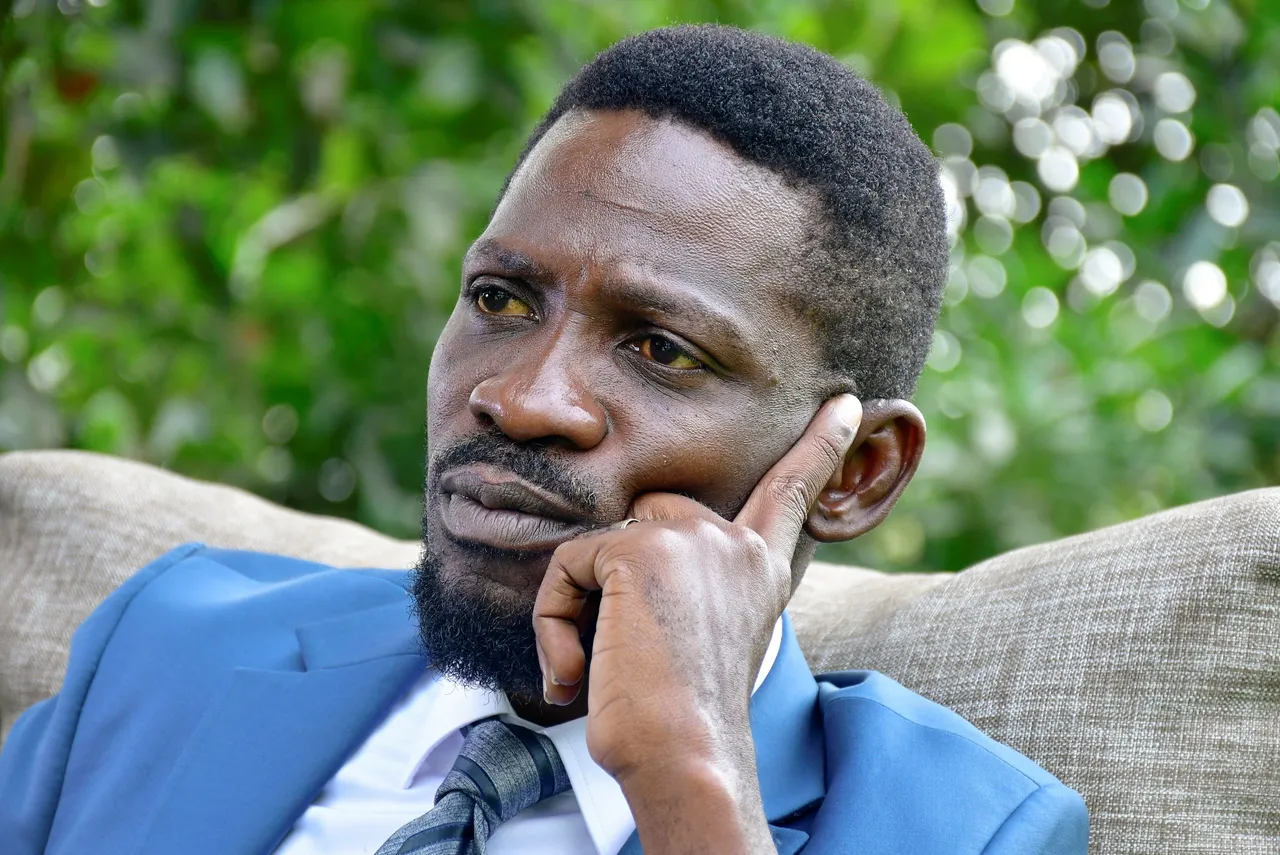
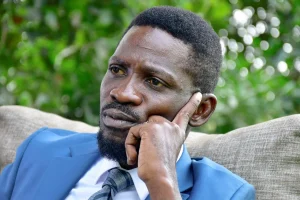
Uganda stands at a rare and decisive historical juncture, a moment when nations either renew themselves through courage or decay through complacency. History teaches that such moments are unforgiving to hesitation. As Frantz Fanon warned with prophetic clarity in The Wretched of the Earth (1961): “Each generation must, out of relative obscurity, discover its mission, fulfil it, or betray it.” For Uganda’s long-suppressed, youthful yet inter-generationally wounded society, that mission has found unmistakable human expression in Kyagulanyi Ssentamu Robert.
This is not mere politics. It is history asserting itself.
To understand why Uganda must trust him with the presidency, one must first understand his origin not as spectacle, not as folklore, but as sociology and substance. Born and raised in Kamwokya, one of Kampala’s most marginalized urban settlements, his formative years were shaped by poverty, police brutality, informal economies, artistic resistance, and survival under a state that often criminalized existence itself. He has never disowned this past. Instead, he redeemed it. He transformed lived marginalization into political consciousness, turning personal struggle into collective awakening.

Where society saw a “ghetto youth,” history was forging what Antonio Gramsci described in Prison Notebooks as an “organic intellectual” one who emerges from within the oppressed class to articulate its pain, aspirations, and historical destiny. Long before electoral politics, his music had already politicized millions. Songs like Ghetto, Situka, Freedom, and Kadingo were not entertainment; they were social diagnoses. They narrated inequality more truthfully than official statistics ever could.
Before politics, he conquered culture. Before Parliament, he had already mobilized consciousness.

When he entered Parliament in 2017 as Member of Parliament for Kyadondo East, it was not a career shift; it was an escalation of duty. In a legislature increasingly militarized and constrained, he spoke against unconstitutional excesses, most notably the removal of the presidential age limit. His resistance came at enormous personal cost: arrest, torture, detention, exile, and the loss of close associates. Yet he endured. Hannah Arendt reminds us in On Violence (1970): “Power and violence are opposites; where one rules absolutely, the other is absent.” The violence visited upon him revealed not his weakness, but the moral exhaustion of repression.

Empirically, his impact is undeniable. Uganda has witnessed the largest political youth mobilization in its history under his leadership. Over 75% of Uganda’s population is below 35, according to UBOS. For the first time since independence, this demographic saw itself reflected in leadership. In the 2021 general election, despite internet shutdowns, military deployment, arrests of agents, and widespread voter suppression documented by local and international observers, he officially garnered over 3.6 million votes, sweeping urban centers and first-time voters.
Beyond elections, he institutionalized resistance through the National Unity Platform (NUP), transforming fragmented opposition into the largest opposition force in Parliament. This required organization, ideological clarity, and discipline. Today, NUP legislators consistently raise issues of governance, public finance accountability, service delivery, and human rights often at grave personal risk. This is constitutional politics in its purest form.
His manifesto, The People’s Manifesto, is not populist literature. It is anchored in constitutionalism and legality. Article 1 of the Constitution of Uganda vests sovereignty in the people. Article 20 affirms the inherent nature of fundamental rights. Article 38 guarantees civic participation. Article 208 mandates the armed forces to be professional, non-partisan, and subordinate to civilian authority. His agenda seeks to restore fidelity to these provisions nothing more radical, nothing less urgent.
At the core of this project is a new social contract between the Ugandan state and its citizens. Political philosophers have long argued that legitimate leadership rests on such a contract. John Locke, in Second Treatise of Government, asserted that governments exist by the consent of the governed and lose legitimacy when they betray trust. Jean-Jacques Rousseau, in The Social Contract, was even clearer: “Man is born free, and everywhere he is in chains.” Uganda’s chains today are institutional, corruption, impunity, militarization, and exclusion. Kyagulanyi’s leadership seeks to renegotiate this broken contract, restoring consent, accountability, and reciprocity between state and citizen.
His grand vision for Uganda is grounded in this philosophy. It begins with restoration of constitutionalism and rule of law. Uganda’s gravest crisis is not poverty alone, but the collapse of legal order. Selective enforcement of laws, militarization of policing, and erosion of judicial independence have hollowed out public trust. His presidency would prioritize full enforcement of Chapter Four of the Constitution on fundamental rights, restore civilian oversight over security forces as mandated under Article 208, and end the unconstitutional trial of civilians in military courts, an abuse repeatedly condemned by Uganda’s own Supreme Court.
Economically, his agenda centers on production-led growth and justice. Uganda possesses over 80% arable land, vast freshwater resources, and a young labor force, yet youth unemployment officially exceeds 13%, with underemployment far higher. Public debt has ballooned beyond UGX 90 trillion, mortgaging future generations. His vision emphasizes agricultural value addition, irrigation, cooperative revival, agro-industrialization, and support for small and medium enterprises. This approach aligns with development economists like Ha-Joon Chang, who warns against premature deindustrialization, and Joseph Stiglitz, who argues that inequality undermines sustainable growth.
On human development, he treats health and education not as privileges, but rights. In Uganda, maternal mortality stands at an alarming 336 deaths per 100,000 live births, while chronic underfunding of health facilities and overstretched personnel reveal a moral failing, not just a technical one. To him, health is an inviolable right of citizenship primary care must be universal, healthcare workers justly compensated, and suffering de-commercialized. Rudolf Virchow’s enduring insight resonates here: “Medicine is a social science, and politics is nothing else but medicine on a large scale.” Disease is as much a societal symptom as it is a biological condition; underinvestment in health is therefore a failure of governance, a breach of social contract.
Education, equally, is reconceived as the fulcrum of human capability. Uganda’s system has achieved remarkable access but remains largely irrelevant to the demands of a modern economy. Each year, over 400,000 graduates emerge, ill-prepared for innovation, enterprise, or self-employment, while employers decry profound skills gaps.
Kyagulanyi’s vision transforms education from a credentialing treadmill into a generator of human capital: technical and vocational excellence, applied sciences, agribusiness innovation, digital literacy, apprenticeships, and the creative industries. In this, he channels John Dewey’s call for experiential, socially useful education and Paulo Freire’s indictment of the passive “banking model.” True development, as Amartya Sen reminds us, is the expansion of human capabilities, not mere economic indicators. A citizen trained only to wait for a job is not free; one trained to innovate, employ, and transform society embodies freedom itself.
Crucially, his appeal transcends age. While he has inspired millions of young people, he has equally resonated with elders, farmers dispossessed by land injustice, parents whose children flee abroad for dignity, professionals suffocated by corruption. This is not youth rebellion; it is national exhaustion with stagnation. Alexis de Tocqueville once observed that “The most dangerous moment for a bad government is when it begins to reform.” Uganda is past reform; it demands renewal.
Morally, his restraint distinguishes him. Despite provocation, he has consistently advocated nonviolent resistance, constitutional means, and peaceful transition. Like Nelson Mandela, once branded a criminal history may yet reveal that Uganda’s stability lies not in eternal incumbency, but in dignified change.
To those unsettled by his past, wisdom offers perspective. Augustine wrote, “There is no saint without a past, no sinner without a future.” Uganda does not need mythic perfection; it needs a redeemed realist, one who understands suffering not theoretically, but viscerally.
Internationally, he has repositioned Uganda within global democratic discourse. From the European Parliament to the United States Congress, from Amnesty International to Human Rights Watch, Uganda’s governance crisis is now globally documented largely because of his courage. This is not treason; it is patriotism under constraint. John Stuart Mill warned in On Liberty (1859): “Bad men need nothing more to compass their ends, than that good men should look on and do nothing.” Silence, not dissent, is the greater betrayal.
Crucially, his appeal transcends age. While he has inspired millions of young people, he has equally resonated with elders’ farmers dispossessed by land injustice, professionals stifled by corruption, parents whose children flee the country for dignity abroad. He speaks to a shared exhaustion with stagnation. As Alexis de Tocqueville observed, “The greatest revolutions are often prepared silently in the depths of society.” Uganda’s is no longer silent.
Morally, his restraint distinguishes him. Despite provocation, he has consistently advocated nonviolent resistance, constitutional means, and peaceful transition. Like Nelson Mandela, once branded a criminal and terrorist history may yet reveal that Uganda’s stability lies not in eternal incumbency, but in dignified transition.
To those unsettled by his past, wisdom offers perspective. Augustine wrote: “There is no saint without a past, no sinner without a future.” Uganda does not need mythic perfection; it needs a redeemed realist someone who understands suffering not theoretically, but viscerally.
His life embodies a philosophy echoed in a timeless counsel to young people: be different and look up. The tragedy of societies, as that reflection warns, is not ignorance but conformity, what passes for “common sense” but lacks moral courage. Education without self-development breeds stagnation. Leadership without conscience breeds decay. He challenges Uganda to chart its own course, to ask why, to refuse mediocrity, to look up from fear into possibility. This is generational leadership in the deepest sense-not age-bound, but mission-bound. Paulo Freire, in Pedagogy of the Oppressed, reminds us that “The oppressed must be their own example in the struggle for their redemption.” That struggle is underway.
Uganda today yearns not merely for a new president, but for a reconstructed state and a renewed social contract, one grounded in dignity, productivity, accountability, and hope. That yearning is neither naïve nor reckless; it is historically rational.
History rarely announces itself politely. When it does speak, it demands recognition. And Uganda, unmistakably, has arrived at that demand.
Uganda’s next chapter cannot be written by the past indefinitely. It must be written by courage, conscience, and collective awakening. The writer is a lawyer, researcher and governance analyst. (For comments on this story, get back to us on 0705579994 [WhatsApp line], 0779411734 & 041 4674611 or email us at mulengeranews@gmail.com).