






By Nabimanya Ronald
In an age where political narratives are increasingly driven by optics rather than substance, Uganda finds itself at the center of a recurring debate: Is the government a republic, or a family enterprise? The question, often posed by opposition politicians and echoed in donor corridors and foreign newsrooms, implies that the prominence of President Yoweri Museveni’s family members in government equates to dynastic rule.
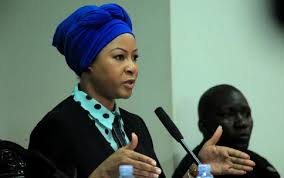
But this framing, while emotionally resonant, is intellectually shallow. In her recent column, Esteri Mugurwa Akandwanaho, daughter of presidential adviser Gen. Salim Saleh offered a compelling and timely intervention. Rather than deny the visibility of family members in politics, she asked a more difficult question: Are our institutions strong enough to hold all leaders accountable, regardless of name or origin? Her position deserves serious engagement, not casual dismissal.
Political Families Are Not Political Failures
First, it’s critical to recognize that political families exist across the democratic spectrum. From the Trudeaus in Canada, the Bushes and Kennedys in the United States, to the Gandhis in India and the Marcos-Duterte alliance in the Philippines, the recurrence of political surnames is not synonymous with autocracy. What matters is how those individuals rise to power: through transparent, constitutional processes, or through opaque inheritance and coercion.

Uganda’s case is not outside this global pattern. While Gen. Muhoozi Kainerugaba, First Lady Janet Museveni, and Odrek Rwabwogo all occupy prominent roles, there has been no constitutional breach or illegal appointment. Each holds positions within the bounds of law, subject to parliamentary oversight, public scrutiny, and in some cases, political contestation.

The True Litmus Test: Institutional Accountability
Esteri’s core argument and one that is too often ignored is that the real health of a democracy lies in its institutions, not in its family trees. If Parliament, the Judiciary, the Inspectorate of Government, and civil society are functional, then no individual, regardless of kinship, can operate with impunity.
Blaming family involvement for governance failures is an oversimplification. It lets institutions off the hook and reinforces a dangerous “big man” culture, where citizens expect all reform or failure to trace back to the presidency. Esteri’s rightly challenges this mindset, calling on Ugandans to redirect their scrutiny toward the systems meant to check power, not just those who wield it.

Merit Must Be the Standard For Everyone
Criticism of nepotism is valid only when meritocracy is visibly compromised. In a truly democratic society, every public official should be judged by competence, character, and results not merely by association. If Muhoozi or Rwabwogo fail in their duties, then they should be held accountable like any other leader. But to assume incompetence solely because of family ties is both intellectually lazy and politically dangerous.
This is precisely Mugurwa’s point: Uganda must move beyond emotional responses to surnames and instead demand higher standards for all public servants, regardless of their lineage. In this light, family affiliation should neither be a qualification nor a disqualification, performance should speak.
Sovereignty Means Self-Determination, Not Donor Narratives
A key strength in Mugurwa’s essay was her critique of selective foreign narratives. While international media and donor communities often highlight political dynasties in Uganda as anti-democratic, they are far less critical when similar dynamics unfold in Western capitals. This hypocrisy isn’t just unfair; it’s corrosive.
Ugandans must shape their political future on their own terms. This means holding leaders to account domestically, through civil society, free media, independent courts, and electoral engagement not through pressure from foreign capitals, think tanks, or curated donor reports.
Conclusion: Shift the Lens, Strengthen the State
Esteri Mugurwa does not claim that Uganda is perfect, nor does she defend public officials blindly. What she offers is a more mature lens through which to view governance: one that prioritizes institutions over innuendo, accountability over ancestry, and logic over legacy.
Uganda’s path to democratic resilience will not be paved by obsessing over family ties, but by strengthening systems that make every leader; related or not answerable to the people. That is the conversation we ought to be having. And that, ultimately, is where Esteri Mugurwa is right. The writer is an Author, Publisher and concerned citizen. (For comments on this story, get back to us on 0705579994 [WhatsApp line], 0779411734 & 041 4674611 or email us at mulengeranews@gmail.com).