




By Aggrey Baba
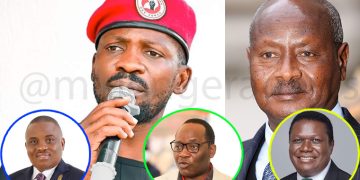
A fresh directive linking government funding of political parties to membership in the Inter-Party Organisation for Dialogue (IPOD) has triggered concern and discontent among opposition groups, some of which have sitting MPs in Parliament but will not receive a share of the government’s political party financing.
This financial year, each of the seven qualifying parties under IPOD is expected to receive UGX7.5 billion, disbursed through the Electoral Commission (EC), to support political mobilisation and institutional growth.
The total allocation is UGX 52.5 billion, and according to the EC, the first quarter release of UGX 11.25 billion is expected this week.
Parties eligible for the funding include the NRM (336 MPs), FDC (30 MPs), DP (9 MPs), JEEMA, and PPP with one MP each.
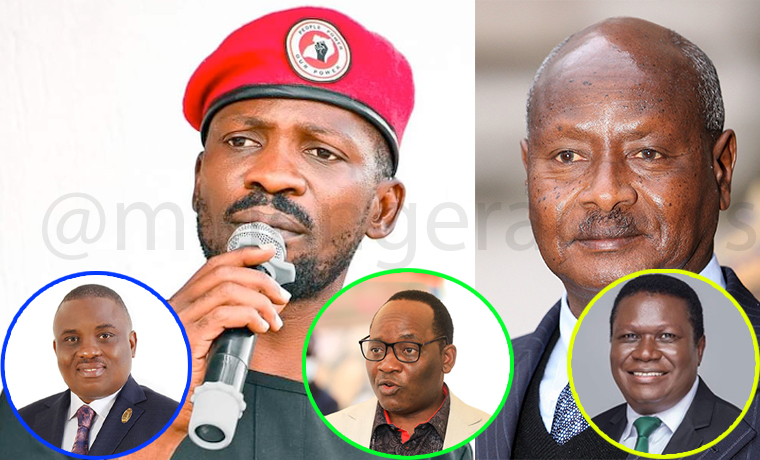
However, parties like the National Unity Platform (NUP), despite being the leading opposition party with 57 MPs, the newly formed Democratic Alliance (DA) led by Nyendo-Mukungwe MP Mathias Mpuuga, and the People’s Front for Freedom (PFF) under the stewardship of Kampala Lord Mayor Erias Lukwago have been excluded from the funding list for not subscribing to IPOD.
It’s said that in a recent IPOD meeting chaired by President Yoweri Museveni, it was agreed that party funding should strictly follow the Political Parties and Organisations Act, 2005, and that only IPOD-affiliated parties would receive support.

Today’s New Vision, reportes that Justice Minister Norbert Mao, also the DP president, reportedly directed the Electoral Commission not to disburse funds to any party outside the IPOD framework.
The EC, under the leadership of Justice Simon Byabakama, confirmed the allocation structure, noting that funding must be guided by the law. However, the shift in policy has drawn sharp criticism from excluded parties and civil society.
Hon. Robert Kyagulanyi (Bobi Wine), the NUP president, described the move as a deliberate attempt to stifle opposition activities ahead of the 2026 general elections.
On Monday, NUP launched a countrywide fundraising drive aimed at raising funds for its electoral programmes and supporting candidates at all levels. Kyagulanyi said the fundraising effort was born out of necessity, noting that government funds previously allocated to the party had been cut without justification.
The Kavule based political outfit maintains that while they are not part of IPOD, they were never consulted in the policy shift and view the exclusion as politically motivated. The party argues that funding should be based on numerical representation in Parliament, not organisational alliances.
Patrick Amuriat, president of FDC, which remains a member of IPOD, said his party was also not consulted during the recent decisions, despite being eligible. He said FDC intends to engage other stakeholders to push for amendments that de-link funding from IPOD membership.
Similarly, Gen. (Rtd) Mugisha Muntu, leader of the Alliance for National Transformation (ANT), criticised the funding criteria, accusing Mao and the NRM of trying to weaken credible opposition platforms through financial starvation. Muntu warned that denying funding to parties with a strong public mandate undermines the multiparty spirit and risks turning IPOD into a tool for controlling political dissent.
The Auditor General’s 2022/23 report revealed that while UGX 4.9 billion was disbursed to political parties, some beneficiaries like DP, FDC, and JEEMA had not submitted work plans as required by law. Nonetheless, the report did not recommend cutting off parties based solely on IPOD status.
Erias Lukwago also questioned the legality of excluding registered parties with MPs, arguing that directives on public funding should only originate from Parliament and not from political figures like Mao.
Lukwago said there is no statutory instrument mandating the EC to condition funding on IPOD membership.
As of now, parties such as NUP, ANT, DA, and PFT are not eligible for the current funding cycle. However, their leaders have vowed to challenge the decision both politically and legally, calling it an affront to democratic fairness and a misuse of public resources meant to support political diversity.
The debate over party financing is expected to intensify in the run-up to the 2026 elections, with excluded parties now turning to grassroots mobilisation, private fundraising, and legal redress as alternative means of survival.
Meanwhile, the EC is expected to go ahead with the planned disbursement to IPOD member parties starting this week.