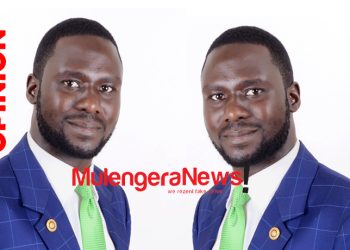







By Atwemereireho Alex (alexatweme@gmail.com)
In every election cycle, history is summoned to the dock, not as a witness to be questioned, but as an exhibit to be defended. In Uganda’s current political season, President Yoweri Kaguta Museveni’s enduring slogan, “Protecting the Gains,” has re-emerged with renewed force and urgency. It is a phrase that appeals to fear of regression, reverence for sacrifice, and the trauma of national collapse.
It speaks most loudly to those who lived through the darkness of the 1970s and early 1980s and to those who emerged from the post-1986 order with stability, status, and security. Yet wisdom especially rare and responsible wisdom demands that we ask a harder question, not with malice but with moral seriousness: what happens when a nation is asked to protect gains that are unevenly owned, selectively enjoyed, and unequally remembered?
This question is not an act of defiance. It is an act of patriotism grounded in reason. It is the kind of question that serious societies must ask themselves when slogans risk becoming substitutes for evidence and when memory risks becoming a tool of exclusion rather than cohesion. For there exists in Uganda today a profound asymmetry: a political economy in which some citizens particularly those connected to the state and system have accumulated substantial wealth and security to protect, while millions of others possess no gains at all, only pains to endure and chains to break.


“Protecting the Gains” was, at its birth, an intelligible and even compelling call. Uganda in 1986 was emerging from institutional ruin, economic devastation, and violent instability. The restoration of relative peace, the reconstitution of state authority, the revival of the economy, and the promulgation of the 1995 Constitution were historic achievements. These gains are real. To deny them would be to falsify history. According to World Bank data, Uganda’s GDP grew from under USD 5 billion in the late 1980s to over USD 50 billion (nominal) by the early 2020s. Poverty levels declined significantly from the catastrophic post-war years. Infrastructure expanded at a scale previously unseen.
But political philosophy has never equated historical achievement with perpetual moral immunity. John Locke, in The Second Treatise of Government (1689), was unequivocal that political authority is fiduciary: it is held in trust for the people and justified only so long as it secures their welfare. When power ceases to advance the purposes for which it was constituted, citizens acquire not merely a right but a responsibility to question it. Legitimacy, Locke insisted, is conditional, not hereditary.

Uganda’s present dilemma must be examined through this lens. Who today meaningfully owns the “gains” being defended? For senior political actors, long-serving bureaucrats, military elites, and business interests embedded within state networks, the gains are palpable: land, capital, contracts, protection, and continuity. These constituencies understandably fear disruption. They have something concrete to lose.
But for the majority, especially the youth, who constitute over 75% of the population, the language of gains is often alien. According to the Uganda Bureau of Statistics (UBOS), youth unemployment and underemployment in Uganda remain structurally high and deeply entrenched. The National Labor Force Survey (2021) places unemployment among youth aged 18–30 at approximately 17%, significantly above the national average. More revealing still, UBOS data shows that nearly 48% of Ugandan youth fall under labor under-utilization, meaning they are either unemployed, underemployed, or engaged in work that does not adequately use their skills or provide sufficient income.
Additionally, about 41% of young people aged 18–30 are classified as NEET (Not in Employment, Education, or Training), signaling widespread exclusion from productive economic participation. Among university graduates, fewer than 15% transition into formal employment, with the overwhelming majority absorbed into informal, insecure, or unpaid work. For young people born after 1990, the wars that legitimize the slogan are historical abstractions, while joblessness, debt, and exclusion are lived realities. One can not be mobilized to protect gains one has never possessed.
Adam Smith warned in The Wealth of Nations (1776) against confusing aggregate growth with shared prosperity. A nation may grow richer while its people grow poorer in opportunity. Uganda’s growth, while real, has been unevenly distributed. The cost of living has risen faster than wages, and public debt has expanded dramatically exceeding USD 25 billion by the mid-2020s, placing a heavy fiscal burden on future generations who had no voice in contracting it. Inflationary pressures have quietly eroded dignity through the arithmetic of daily survival.
Land, the most emotive and constitutionally protected resource, illustrates this contradiction with painful clarity. Article 237 of the 1995 Constitution vests land ownership in the citizens of Uganda, affirming land as a social, economic, and cultural anchor rather than a mere commodity. This protection is reinforced by Article 26, which guarantees the right to property which prohibits compulsory deprivation of property except where it is necessary for public use and subject to prompt, fair, and adequate compensation prior to taking possession.
Yet land evictions, conflicts, and opaque acquisitions have multiplied, often in the name of “development.” When citizens are displaced to make way for investments from which they derive no benefit, the promise of development curdles into dispossession. Amartya Sen, in Development as Freedom (1999), argued that development must expand real freedoms; infrastructure divorced from justice merely rearranges inequality.
The transformation of gains into pains is increasingly accompanied by the risk of gains becoming chains. Frantz Fanon warned in The Wretched of the Earth (1961) that post-liberation regimes often substitute colonial domination with internal stagnation, using the memory of struggle to justify exclusion. Liberation history becomes a gatekeeping device: only those who fought yesterday are deemed qualified to decide tomorrow.
Uganda’s constitutional trajectory deepens this anxiety. The 1995 Constitution, anchored in popular sovereignty (Article 1), inherent rights (Article 20), and civic freedoms (Article 29), was itself a revolutionary gain. Yet the removal of presidential term limits in 2005 and age limits in 2017 though procedurally lawful strained the doctrine of constitutional morality. B.R. Ambedkar, speaking during the Indian Constituent Assembly Debates (1948), warned that constitutions fail not for lack of text but for lack of restraint among those who wield power. A Constitution endlessly amended to suit incumbency risks remaining valid while losing legitimacy.
Hannah Arendt, in On Violence (1970), distinguished power grounded in consent from force deployed when legitimacy thins. A system confident in its gains tolerates dissent because it trusts itself. A system anxious about its moral footing increasingly polices critique. When protest is framed as disorder and questioning as subversion, silence is mistaken for stability.
Yet balance is essential. Uganda is not a failed state. It has avoided the catastrophic implosions seen elsewhere in the region. Infrastructure exists. Education access has expanded. Diplomacy is active. These are facts. But achievements do not suspend accountability; they intensify it. The greater the gain, the heavier the duty to steward it justly.
The gravest danger lies in converting a historically grounded slogan into an untouchable doctrine. When “Protecting The Gains” is invoked to shield inequality, foreclose generational transition, and sanctify permanence, it ceases to be progressive. It becomes conservative in the most corrosive sense, preserving advantage while invoking history as moral armor.
Jean-Jacques Rousseau observed in The Social Contract (1762) that authority remains legitimate only so long as obedience is continually renewed as consent. Past sacrifice can not indefinitely substitute for present inclusion. A nation can not be permanently governed by memory while denying opportunity to those who inherit the future.
To protect the gains today must, therefore, mean something deeper and more inclusive. It must mean protecting peace by deepening justice, protecting stability by widening participation, and protecting development by restoring production, merit, and mobility. It must also mean acknowledging, with rare honesty, that while some Ugandans are being asked to protect accumulated gains, many others are struggling under accumulated pains and inherited chains.
The question before Uganda is no longer rhetorical. It is moral, constitutional, generational, and urgent: are we protecting gains shared by the nation, or gains concentrated within a system; are we demanding loyalty from those who have little to defend but much to endure?
History will answer, not through slogans or force, but through whether Uganda chooses reform over ritual, courage over comfort, and a living future over an embalmed past. Nations, like laws, do not decay because they are questioned. They decay when questioning becomes forbidden. The writer is a lawyer, researcher, and governance analyst. (For comments on this story, get back to us on 0705579994 [WhatsApp line], 0779411734 & 041 4674611 or email us at mulengeranews@gmail.com).