





By Mulengera Reporters
On Wednesday, Robert Kabushenga participated in a podcast discussion with Charles Onyango Obbo and two other eminent African journalists-a lady from South Africa and another from Nigeria-to discuss the extent to which the Thursday 15th January 2026 Ugandan Presidential elections was rigged or free and fair.
The man, who was a loud Museveni praise singer for decades until a few years ago when he was herded out and ceased to be the CEO for the GoU-owned Vision media Group, made it clear during the ‘Bad Natives’ podcast episode that what Gen Museveni won wasn’t a free and fair elections.
Asked by the South African female journalist who was moderating the podcast to summarize and characterize what happened, as someone who lives in Kampala, Kabushenga said what he saw was nothing but too much rigging. He said there was so much overt rigging of the poll and ballot stuffing to the extent that the characteristic violence and beating of opposition supporters was overshadowed and was unable to be the main story. He asserted that ‘ballot stuffing’ easily ‘outweighed physical violence’ during the 2026 elections for the Presidency vote.

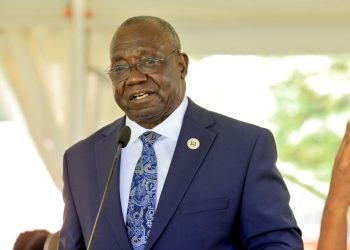
Kabushenga told the Africa-wide audience that the absence ‘of online and street euphoria’ among supporters of Gen Museveni, who is supposed to have defeated his opponent Bobi Wine, was indicative of the extent to which the people of Uganda had rejected the results that Justice Simon Byabakama, the Ugandan EC chairman, had declared, showing the incumbent to have won with over 71% of the vote.
Kabushenga added that what he termed ‘nasty comments by the first son [Gen MK]’ hinting at the possible killing of his father’s leading political opponent Bobi Wine had only fermented more public anger and resentment towards the final outcome of the 2026 elections. He added that from what he sees and hears from the ordinary people he interacts with, the 2026 presidential elections isn’t yet a closed chapter because in his view, ‘people are still angry, things aren’t yet certain, it’s not yet done and tough times still lie ahead.’

He also castigated the GoU for their decision to shut down internet days to the polling day. Referring to the fully booked flights out of Entebbe International Airport, moments after the internet shut down had been proclaimed, Kabushenga said the decision demonstrated the extent to which those surrounding the President ceased to act reasonably long time ago.

He said that many people with means to do so opted to flee Kampala and lounge in Nairobi because the government-induced absence of internet for an indefinite period would constrain their business operations and potential earnings besides costing them millions of dollars.
To Kabushenga, who these days is involved in plenty of online activism against the Kampala regime, the casual manner in which the internet was switched off portrayed the extent to which Uganda is currently being ran by very imprudent people who are totally insensitive and unbothered about consequences such actions can have on people’s private businesses. He also called the internet shut down tyrannical and backwardness. He challenged the supporters of Gen Museveni to prove him wrong by explaining why there was no visible euphoria anywhere in the country following Byabakama’s declaration of the incumbent President as the winner of the 2026 elections.
Kabushenga also pushed back against one fellow panelist who blamed the problem of African governance on tribalism. He said there was nothing wrong with tribes and to him, those who worked hard to facilitate ballot stuffing to ensure Gen Museveni bounces back are fortune-hunting and opportunistic elites who were on a frolic of their own. He asserted that such elites, who he dismissed as crude and unscrupulous, are acting to serve their own personal selfish interests and don’t genuinely represent the ethnic groups or tribes they hail from. “They can’t claim to derive any backing or endorsement from a tribal council in the respective regions they hail from.”
He said that, in Uganda’s case, these are very corrupt elites who have lately accumulated a lot of political power and leverage which they are using to shield themselves against media scrutiny and anger from deprived members of the public who are very resentful of their impunity and corrupt ways.
Robert Kabushenga, by implication, agreed with Dr. Kizza Besigye’s anger and disapproval of the elite by controversially suggesting that, for good governance and democracy to organically ever take root in Africa and more so in Uganda, such elites must be ‘exterminated and die’ first before there can be any hope of things ever getting better.
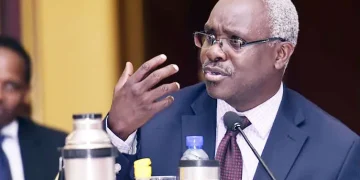
Insightful on Ugandan politics as always, Onyango disputed the legitimacy of Gen Museveni’s re-election victory by referring to the more than 350 polling stations which the Observer newspaper recently profiled and indicated to have had 100% voter turn up-and on each of these, Gen Museveni won with no less than 95%.
He wondered how possible it can be that no one died, was absent or failed to turn up for voting for some reason. Onyango Obbo said that legitimacy problems would haunt Gen Museveni for the rest of his Presidency. Panel members seemed to be unanimous on the fact that Gen Museveni will most likely finish his next five years as President of Uganda, after which he will have ruled Uganda for no less than 45 years. The panel’s collective wisdom was that there doesn’t seem to be anything that is going to ever stand in Gen Museveni’s way between inauguration in May and the end of his 9th term as President of Uganda (counting from 1986).
Onyango-Obbo, who in the early 2000s had to be exiled to Nairobi as part of the broader efforts to diminish on perceived negativity by the Monitor newspaper towards the NRM regime, added that low voter turnout was equally very diminishing of the re-elected Ugandan veteran leader’s legitimacy. He asserted that Museveni’s 6m votes that the EC gave him amounted to no more than 36% of the registered voters and 29% of eligible voters in the country (including those who were of age but never bothered to register).
The veteran Ugandan journalist, who is currently based in Nairobi Kenya, said this is a very troubling reality which explains why Gen Museveni, speaking at Rwakitura hours after the Byabakama declaration, publicly quarreled about the 10m eligible voters who stayed away and didn’t show up to cast their vote on Thursday 15th January 2026. He claimed these were his NRM voters who, for unknown reasons, opted to stay away from the voting booth. (For comments on this story, get back to us on 0705579994 [WhatsApp line], 0779411734 & 041 4674611 or email us at mulengeranews@gmail.com).