






By Crispin Kaheru
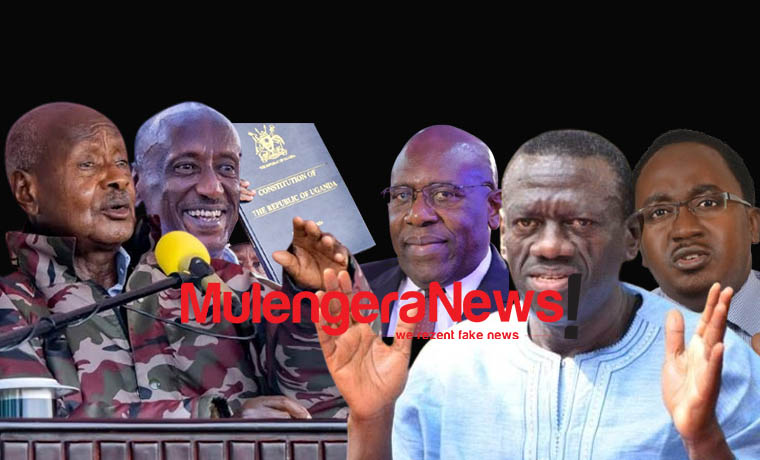
Uganda has a rare gift that few nations ever enjoy. Some of the men and women who shaped our present political order through the 1986 consensus are still alive. They know each other well. They served in the same Cabinet, argued in the same High Command and shared the sacrifices of liberation.
Some left, some returned, others went quiet. Yet they remain bound by a common history and a country they helped build – Uganda. Few nations have the opportunity to bring their founders together, confront their differences and shape their future while they can still look each other in the eye. Uganda should not waste this opportunity.


The broad base of 1986 was a bold political idea. Yoweri Museveni brought Paul Ssemogerere’s Democratic Party, Moses Ali’s Uganda National Rescue Front (UNRF), Dr. David Lwanga’s Federal Democratic Movement of Uganda (FEDEMU) and Dr. Andrew Kayiira’s Uganda Freedom Movement (UFM) into a common governing arrangement. This also included members from UPC, CP, and others. A country emerging from previous violence and fracture needed reconciliation rather than another cycle of exclusion.
But differences gradually emerged. In 1995, Ssemogerere, then Second Deputy Prime Minister, resigned to challenge Museveni in the 1996 presidential election. He believed the no-party Movement should give way to open multiparty competition.
In November 1999, Col. Kizza Besigye, Museveni’s fellow liberation fighter, published a critique arguing that the Movement had drifted from its founding principles. Facing possible court martial proceedings, he retired from the army and challenged Museveni in the 2001 presidential election under Reform Agenda. His public dissent marked a defining rupture within the revolutionary establishment.
Between 2003 and 2005, the controversy over removing presidential term limits deepened these divisions. Mugisha Muntu, replaced as Army Commander in 1998 but initially retained within the establishment, opposed the handling of the proposed constitutional amendment. Eriya Kategaya, Jaberi Bidandi Ssali, Miria Matembe, Amanya Mushega, Mathew Rukikaire and Augustine Ruzindana also resisted the removal of term limits.
Several joined other reformist forces that established the Forum for Democratic Change in 2004. Bidandi subsequently founded the People’s Progressive Party (PPP). What began as disagreements within the Movement had developed into political alternatives.
The next wave brought succession into sharper focus. In 2013, Gen. David Sejusa, a NRA historical, raised concerns about the emerging succession debate, he went into self-imposed exile and returned in 2014.
That year, Amama Mbabazi a historical left the premiership and later challenged Museveni in the 2016 presidential election under Go Forward. Gen. Henry Tumukunde, another historical, left the Security Ministry in 2018 and contested the presidency as an independent in 2021. These episodes highlighted the difficulty of balancing leadership ambition, generational change and institutional continuity.
Yet this history also offers encouragement. Political departures have not always been permanent. Kategaya returned to government in 2006, serving as First Deputy Prime Minister until his death in 2013. Mbabazi reconciled with Museveni. Tumukunde returned to active NRM politics in 2025.
Gilbert Bukenya also rejoined the fold. Others, including Richard Kaijuka, Mushega, Rukikaire, Ruzindana and Bidandi, gradually stepped back from frontline politics, maintaining a quieter public presence. These journeys of departure, return and withdrawal reveal both the resilience of the liberation generation and its unfinished political business.
The surviving comrades must now sit together, repair relationships and candidly confront the choices, mistakes and missed opportunities that divided them. This calls for mutual acknowledgement and collective responsibility, not an exercise in assigning blame.
Their politics of accommodation broadened the governing coalition but arguably weakened ideological clarity and conviction. Today, the 1986 founding values of discipline, patriotism, loyalty and sacrifice are competing with transactional politics, opportunism, and political convenience, that have caused unnecessary polarization and
radicalism in politics.
Now, the challenge is to recover ideological conviction without sacrificing the national unity that inspired the 1986 consensus. This demands a credible generational transition grounded in clear command, institutional loyalty and decisive execution.
The next generation can draw upon the 1986 traditions of organisation, discipline and collective purpose, applying them to civilian governance, national mobilization, wealth creation and economic transformation. What the young people want is the disciplined organisation of Uganda’s people, resources and institutions for prosperity.
The broad base demonstrated that diverse political forces could unite around a national mission. Its unfinished task is to relaunch into practice; to reconcile inclusion with conviction, revolutionary continuity with generational renewal, and political stability with economic opportunity.
The liberation generation’s greatest legacy is the institutions, principles and national unity it leaves behind. And that is why the surviving comrades should sit together and hand the next generation not their unfinished disagreements, but a whole country. The author is Crispin Kaheru, Member of the Uganda Human Rights Commission (UHRC). (For comments on this story, get back to us on 0705579994 [WhatsApp line], 0779411734 & 041 4674611 or email us at mulengeranews@gmail.com).