







By Mulengera Reporters
For years, persons with disabilities have faced some of the steepest barriers to accessing formal finance, from limited collateral and exclusion from mainstream financial services to inadequate products tailored to their circumstances.
But the Government’s Generating Growth Opportunities and Productivity for Women Enterprises (GROW) Project is beginning to bring some of these entrepreneurs into the financial system, with EBO SACCO reporting that persons with disabilities are among the beneficiaries of more than Shs2.5 billion already disbursed under the programme.
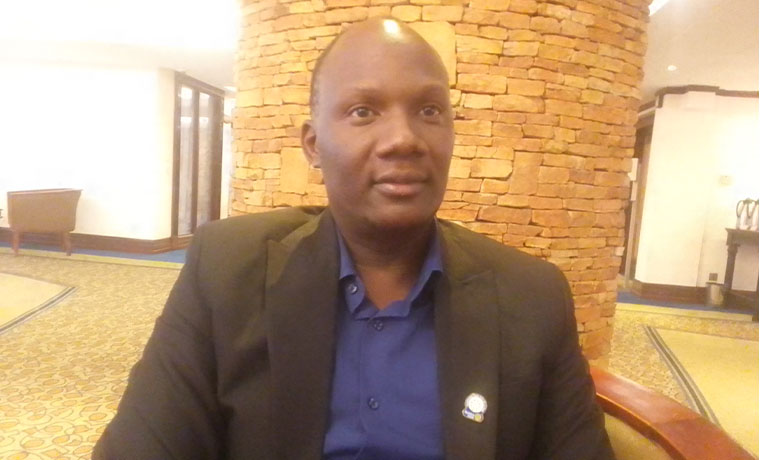
Solomon Akankwasa, Head of Finance at EBO SACCO, said the institution has so far reached more than 385 beneficiaries in its first year of participating in GROW.

The beneficiaries include women entrepreneurs, refugees and persons with disabilities.
EBO SACCO received a Shs4.4 billion line of credit under the programme and has so far disbursed about Shs2.5 billion, representing more than half of its allocation.
“2.5 is already disbursed to women who are in active business, refugees and people with disabilities,” Akankwasa said.
For persons with disabilities specifically, EBO SACCO has so far financed about 14 people under GROW, although the wider institution serves more than 60 persons with disabilities.

Akankwasa said the 14 beneficiaries qualifying under GROW have demonstrated good repayment performance.
“All of them are paying very well their loans,” he said.
One of EBO SACCO’s strategies has been to place inclusion at the centre of its lending approach by employing a person with a disability as a focal point for working with borrowers with disabilities.
The staff member works with persons with disabilities through their associations and groups, helping the SACCO understand their needs and making the beneficiaries more comfortable when seeking financial services.
According to Akankwasa, the approach has helped build trust and contributed to good repayment among the beneficiaries.
The experience is part of a wider GROW expansion by EBO SACCO across western Uganda.
The SACCO is targeting the Rwenzori, Ankole and Kigezi regions, including Kasese, Ntoroko, Fort Portal, Bunyangabu, Mbarara and surrounding districts.
The programme has also taken EBO SACCO into refugee-hosting communities where it previously had little or no presence.
The SACCO is serving refugee settlements in areas including Isingiro, Rwamwanja in Kamwenge and Kyaka II in Kyegegwa.
Akankwasa said the new markets have created opportunities for the institution to expand its physical presence. EBO SACCO is now planning branches in Fort Portal and Kabale, while also preparing to open another branch in Kampala.
The expansion illustrates one of the less visible effects of the programme: GROW is not only providing capital to entrepreneurs but is also encouraging financial institutions to move deeper into underserved communities.
EBO SACCO has also used the programme’s Portfolio Expansion Grant (PEG) to strengthen its capacity to serve these markets.
The grant has supported branch mobilisation, staff capacity building and financial literacy programmes, including training for refugees.
The SACCO has translated training materials to make financial education more accessible to refugee communities.
EBO SACCO’s refugee strategy relies heavily on group lending. Refugees form groups, guarantee one another and receive loans based on their collective responsibility.
The model has helped address some of the difficulties associated with lending to populations that can be mobile.
The SACCO has also employed refugees within its operations. It has two refugee employees in Nakivale, four in Rwamwanja and one in Kyaka II.
Akankwasa said employing refugees has helped the institution understand the communities it serves and conduct better needs assessments.
The approach has not been without challenges. Language barriers have sometimes complicated communication, while some refugees initially struggled with the concept of borrowing money that must be repaid because of previous exposure to humanitarian assistance and grants.
Continuous financial literacy, monitoring and engagement have, however, helped improve loan repayment, according to the SACCO.
The experience of EBO SACCO points to a broader question about whether financial inclusion programmes can sustainably reach groups that have traditionally remained at the margins of Uganda’s financial system.
For persons with disabilities, the early numbers remain relatively small—14 GROW beneficiaries compared with more than 385 beneficiaries overall—but the institution says the repayment performance and the dedicated inclusion strategy provide a basis for expanding access.
The SACCO is also calling for greater government investment in revolving financing mechanisms that can continue serving entrepreneurs after the initial funds are repaid.
Akankwasa said EBO SACCO’s initial allocation was not enough to meet the demand and urged government to increase funding for grassroots economic development.
He also argued that more community-based SACCOs should be allowed to participate in such programmes rather than limiting participation to a small number of institutions.
The GROW Project, implemented by the Ministry of Gender, Labour and Social Development and the Private Sector Foundation Uganda, seeks to help female entrepreneurs grow from micro to small and medium enterprises.
For EBO SACCO, however, its first year under the programme is showing that the impact can extend beyond women entrepreneurs generally—to refugees and persons with disabilities who have historically faced additional barriers to accessing formal credit.
With Shs2.5 billion already disbursed from its Shs4.4 billion allocation and more than 385 beneficiaries reached, the next phase will test how far additional funding can extend that inclusion—and whether groups such as persons with disabilities can move from being marginal beneficiaries to a more significant part of Uganda’s growing enterprise-financing ecosystem.