







By Mulengera Reporters
Zigoti Coffee Works Limited is positioning itself for a major expansion in coffee production, value addition and international market access as Equity Bank Uganda explores expanded commercial financing for the family-owned coffee business.
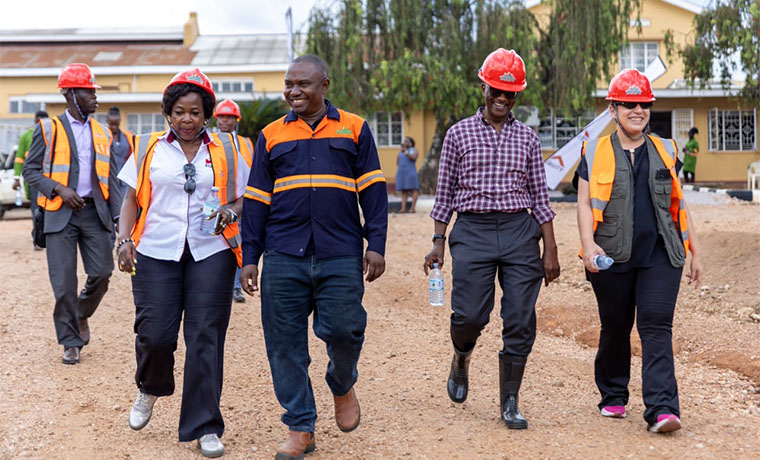
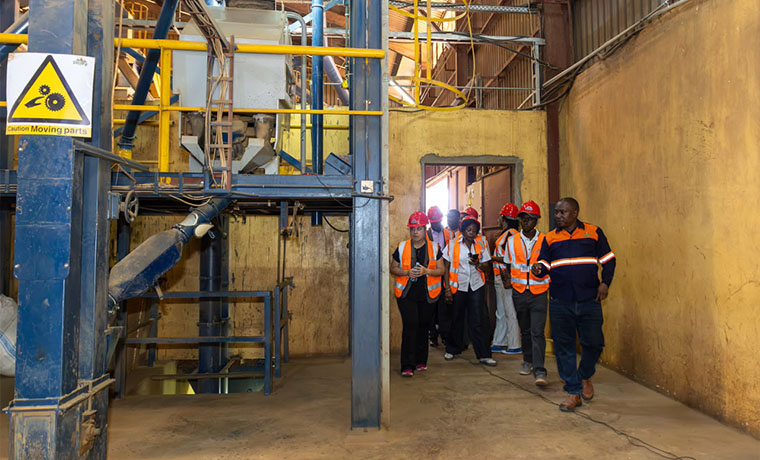
The discussions followed an Equity Bank visit to Zigoti’s farm and processing facilities on Tuesday, September 15, 2026, as a follow-up to the 2026 Trade and Investment Roadshow that kicked off at the Marriott Hotel in Kampala.
The proposed financing could extend beyond traditional asset and working-capital facilities to cover coffee-processing equipment, coffee stocks and the wider agricultural value chain, including financing for smallholder farmers supplying Zigoti.

Established in 1984, Zigoti has grown into an integrated coffee enterprise involved in sourcing, processing, grading, warehousing and exporting. The company was incorporated between 1991 and 1992 and became Uganda’s first coffee export company to receive an export licence following the liberalisation of the coffee sector.

It has since built markets across Europe, Asia, North America and Africa, exporting both Robusta and Arabica coffee.
But the company now wants to move beyond bulk commercial trading and deepen its presence in the higher-value specialty coffee segment.
Charles Roscoe Nsubuga, Chairman of Zigoti Coffee Works Limited, said the business was focused on producing higher-quality coffee capable of attracting better prices on international markets.

“If you cut our blood, the DNA is coffee. This is a third-generation coffee business. Our grandparents started with coffee, our parents continued, and now we are taking it to another level.”
The company’s push into quality coffee builds on its performance in recent years. Zigoti won the Best Pearl Robusta Award four consecutive times between 2021 and 2024, with its coffee recording cupping scores above 85.
Zigoti is expanding wet-processing capacity and experimenting with fermentation techniques and different coffee profiles in an effort to produce differentiated coffees that can command higher premiums from international buyers.
Financing the coffee value chain
For Zigoti, the financing discussions are not limited to expanding its own facilities. The company wants financial institutions to support the farmers who form the foundation of its supply chain.
Nsubuga said access to finance would be critical to increasing production while improving coffee quality among smallholder farmers.
“We are looking beyond one-off asset financing. We want to see how the wider value chain can be financed, including farmers who need inputs to produce quality coffee.”
Under the proposed approach, farmers could access financing of about Shs1 million to Shs2 million to purchase agricultural inputs, with repayment linked to proceeds from coffee sales.
Zigoti works with farmer groups, women and youth, providing extension services, financial literacy and training in good agricultural practices.
The company also operates a 100-acre model farm where farmers receive practical training, while its processing facilities provide systems for quality control and traceability.
South Sudan market in focus
The financing discussions could also strengthen Zigoti’s access to regional markets, particularly South Sudan.
Thomas Muto Lo’Buda, Equity Bank’s delegate from South Sudan, said the engagement could create opportunities to connect the Ugandan coffee business with buyers and partners in the neighbouring market.
“There is an opportunity to connect this business with markets and partners in South Sudan. We can look at the product, the financing required and how to build a sustainable partnership.”
Zigoti already has buyers and markets in South Sudan, although much of the coffee trade currently moves by road through informal channels.
The company sees room to develop more formal distribution and dealership arrangements, including opportunities for roasting, packaging and private-label coffee.
Such arrangements could allow more of the value generated from Ugandan coffee to be captured within formal commercial channels.
Traceability and global competition
As Zigoti targets higher-value international markets, traceability is becoming increasingly important.
The company has been strengthening its systems to meet growing international traceability requirements and said it has mechanisms in place to provide information required by European buyers.
However, financing coffee stocks and hedging remains a major challenge for local exporters competing with multinational traders with greater access to capital.
Nsubuga said local financial institutions needed to better understand the seasonal nature and financing requirements of the coffee business.
“We need financial institutions to understand the coffee business and support local exporters. If we can stabilise the business, we can create better returns for farmers and contribute more to the economy.”
Turning coffee waste into new businesses
Zigoti’s expansion plans also extend beyond coffee production and exports.
The company is investing in waste-recycling initiatives, including a women-led briquette project and a planned black soldier fly project that will convert coffee waste into animal feed and organic fertiliser.
At its processing facilities, the company is also preparing to increase volumes from wet-processing operations as new drying equipment is installed.
For Equity Bank, the engagement is part of a broader effort to provide commercial credit while extending financing and financial literacy across agricultural value chains.
Nsubuga said bringing financial institutions directly to farms was important because it allowed lenders to see the realities behind agricultural businesses.
“When financial institutions come to the farm, they see the farmers, the gardens and the processing. It gives them a better understanding of the business and the challenges we face.”
With financing discussions now extending from equipment and working capital to farmers, regional distribution and value addition, Zigoti is seeking to turn its decades of experience in coffee into a larger, quality-focused business with deeper participation in international markets.