







By Mulengera Reporters
The Uganda Revenue Authority (URA) has called for stronger collaboration with the business community as it works to achieve a Shs46.6 trillion revenue target set for the current financial year.
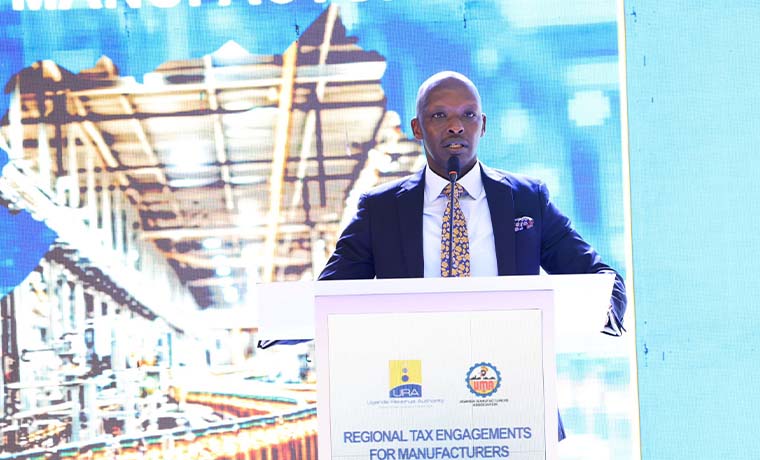
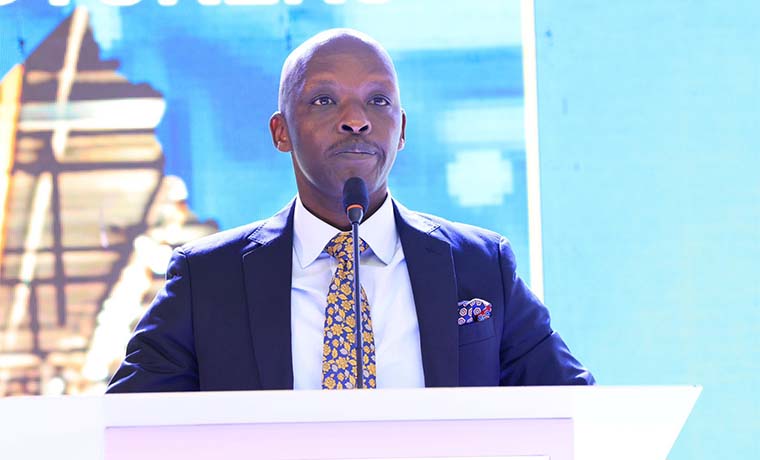
The call was made by Richard Kariisa, Commissioner Corporate Services, who delivered a keynote address on behalf of URA Commissioner General John R. Musinguzi during a stakeholder engagement with manufacturers and other business representatives.
Kariisa thanked the business community for its continued contribution to Uganda’s development through tax compliance, acknowledging that meeting tax obligations can sometimes be challenging for businesses.

“We recognize that paying taxes is not always easy, but your commitment enables government to deliver critical services and invest in national development priorities,” he said.

He said the increased revenue target requires close cooperation between URA and taxpayers, making stakeholder engagements critical in clarifying tax obligations, addressing concerns and preventing disputes.
“Achieving this target requires strong collaboration between URA and the business community,” Kariisa said.
URA urges taxpayers to embrace new identification system

Kariisa also urged taxpayers to comply with the ongoing transition from Tax Identification Numbers (TINs) to new identification systems.
Under the transition, individuals are moving from TIN to National Identification Number (NIN), companies from TIN to Registration Business Number (RBN), while NGOs and other non-profit entities are transitioning to Entity Business Number (EBN).
He encouraged affected taxpayers to seek assistance from URA’s Contact Centre or visit any URA office for guidance where necessary.
The transition is part of efforts to improve taxpayer identification and administration and create more accurate taxpayer records.
Businesses urged to use ADR to resolve tax disputes
Kariisa also responded to concerns raised by the Uganda Manufacturers Association (UMA), particularly over the requirement for taxpayers to pay 30 percent of assessed tax before a case can be admitted at the Tax Appeals Tribunal.
He encouraged businesses facing disputes with URA to first consider the authority’s Alternative Dispute Resolution (ADR) mechanism.
According to Kariisa, the ADR process provides taxpayers with an avenue to resolve disputes amicably while potentially reducing the time and costs associated with litigation.
He urged taxpayers to make use of the dedicated ADR team before pursuing lengthy legal proceedings.
URA addresses EFRIS and DTS concerns
On the Electronic Fiscal Receipting and Invoicing Solution (EFRIS) and Digital Tax Stamps (DTS), Kariisa said URA continues to improve the systems to enhance efficiency, transparency and fairness in tax administration.
He noted that EFRIS can operate both online and offline, allowing businesses to continue operating in situations where they face power outages or connectivity challenges.
On costs associated with Digital Tax Stamps, Kariisa clarified that businesses can claim such expenses as tax deductions, provided they maintain the appropriate supporting records.
The clarification is expected to address some concerns among manufacturers regarding the financial implications of complying with digital tax administration requirements.
Focus on recent tax amendments
The stakeholder meeting also provided an opportunity for URA technical teams to explain recent amendments to Uganda’s tax laws, including changes to the Income Tax and Excise Duty laws.
Kariisa urged businesses to actively participate in discussions with URA officials and seek clarification on areas where they may be uncertain.
He said continued engagement was essential to building a tax system based on trust, transparency and mutual respect.
“As URA, we remain committed to strengthening our partnership with taxpayers through continuous engagement, improved service delivery, and greater transparency,” he said.
He added that the authority wants to build a relationship with taxpayers founded on “trust, mutual respect, and a shared commitment to Uganda’s growth and prosperity.”
The engagement forms part of URA’s broader efforts to maintain dialogue with the private sector, address taxpayer concerns and improve voluntary compliance as the authority pursues its ambitious revenue collection target for the 2026/27 financial year. (For comments on this story, get back to us on 0705579994 [WhatsApp line], 0779411734 & 041 4674611 or email us at mulengeranews@gmail.com).