






 45
45
By Ben Musanje
The Government is set to unveil Uganda’s National Nutrient Profile Model (NPM) on Wednesday, August 12, 2026, in a move expected to strengthen regulation of unhealthy processed foods, guide food labelling and procurement, and support efforts to curb the country’s growing burden of diet-related non-communicable diseases.
The model, developed by the Ministry of Health in collaboration with development partners and other stakeholders, is designed to scientifically classify processed foods and beverages according to their levels of nutrients considered harmful when consumed in excessive amounts.
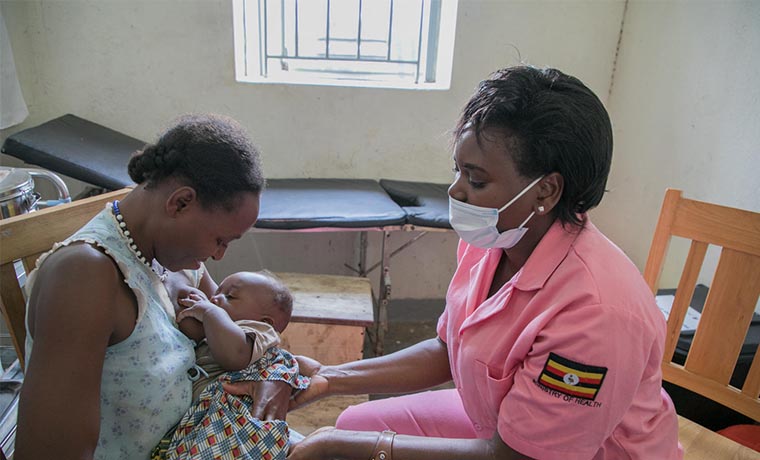
The planned launch comes as Uganda joins the rest of the world to commemorate World Breastfeeding Week, with health officials linking the protection of infant nutrition in the first years of life to the need for healthier food environments as children grow.

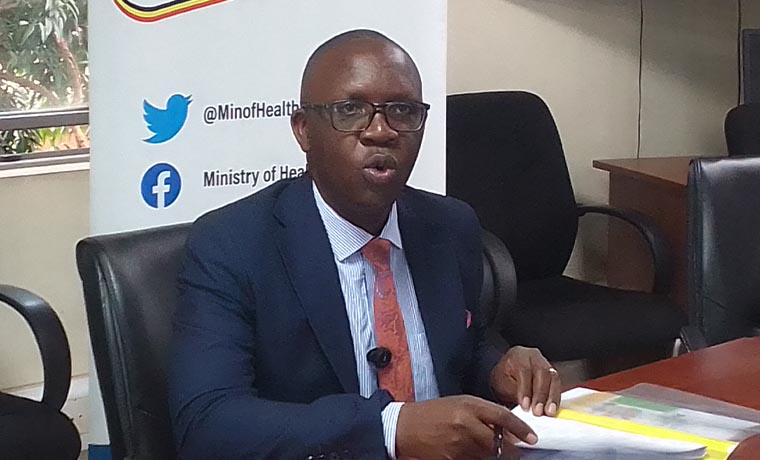
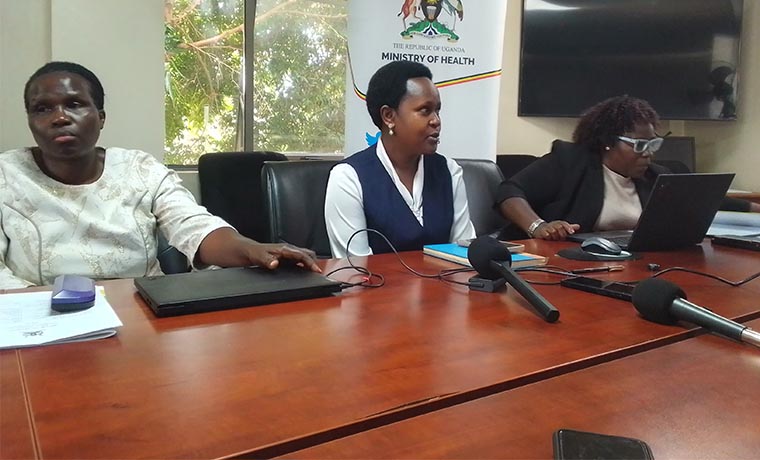
Speaking at a media breakfast meeting at the Lourdel Upper Boardroom on Tuesday, August 11, Director of Public Health at the Ministry of Health, Dr. Daniel Kyabayinze, said the Government was pursuing the two interventions as complementary pillars of public health.
He said while breastfeeding provides children with a healthy beginning, Government must also ensure that children and families are protected from unhealthy food environments later in life.
“Good nutrition begins at birth,” Kyabayinze said, describing breast milk as a child’s “first vaccine” because of its role in protecting infants against infections and supporting healthy growth.
But he warned that Uganda is facing what he described as a “double burden of malnutrition”, where undernutrition exists alongside increasing levels of overweight, obesity and diet-related non-communicable diseases such as hypertension and diabetes.

According to the Ministry of Health, the changing food environment, characterized by increasing availability and aggressive marketing of highly processed foods high in sugar, salt and unhealthy fats, is contributing to the problem.
It is against this background that the National Nutrient Profile Model has been developed.
Principal Nutritionist at the Ministry of Health, Dr. Grace Prospero Ocheng, said the NPM is primarily intended to classify processed foods and beverages according to their nutritional composition and identify products that contain excessive levels of nutrients of concern.
“These include sodium, which is salt, sugar, saturated fats, trans fats, total fats, non-sugar sweeteners and caffeine,” Ocheng explained.
The model will establish thresholds for these nutrients, allowing authorities to determine when a food or beverage crosses from an acceptable nutritional range into a category requiring restriction or other regulatory action.
Ocheng said the model is expected to influence how food manufacturers formulate products by providing clear limits for nutrients of concern.
The Government also intends to use the model to develop policies promoting healthier diets, increase consumer awareness and eventually introduce front-of-pack warning labels to make it easier for consumers to identify products that are high in salt, sugar or unhealthy fats.
The proposed labelling system could significantly change the way Ugandans make decisions in supermarkets, shops and other food outlets.
Under the planned approach, consumers would not have to rely solely on detailed nutritional information printed on the back of a package. Instead, warning symbols placed prominently on the front of products would alert them to excessive levels of particular nutrients.
Ocheng urged Ugandans to develop the habit of reading food labels before purchasing processed products.
“Many of us just go to supermarkets and pick whatever is there and we don’t read the labels,” she said, urging the media to educate consumers about the importance of checking nutritional information.
The NPM is expected to apply primarily to processed and ultra-processed foods rather than naturally occurring or minimally processed foods.
Ocheng clarified that traditional staples and minimally processed foods, including foods such as matoke and fresh milk, are not the main target of the model. Instead, the focus will be on processed products where ingredients such as added sugar, salt and fats can be present at high levels.
The model will also have implications beyond individual consumers.
According to the Ministry, it is expected to guide the procurement of food in public institutions, including schools, hospitals and other government facilities. It could also inform policies governing school feeding, catering, menu labelling, marketing of unhealthy foods and the use of trans fats and partially hydrogenated oils.
The Government further plans to use the model to strengthen regulation of the marketing of unhealthy foods, particularly products targeted at children.
Kyabayinze said aggressive marketing of unhealthy foods and beverages was contributing to an environment in which children are increasingly exposed to products high in sugar, salt and unhealthy fats.
Ocheng cited the use of attractive packaging, toys and other promotional incentives as examples of tactics that can influence children’s food choices.
She said children could be drawn to snacks because of toys or other appealing features associated with the products, placing additional pressure on parents to purchase them.
The Ministry’s concerns are supported by the country’s growing burden of non-communicable diseases.
Ocheng said 33 per cent of deaths in Uganda are caused by non-communicable diseases, while citing Ministry data indicating that 26 per cent of adults have hypertension and 3.3 per cent have type 2 diabetes.
She also pointed to rising obesity levels, particularly among women, saying the prevalence had increased from 19 per cent to 26.4 per cent in 2022.
She said the changing pattern meant diseases previously associated more strongly with older people were increasingly affecting Ugandans before the age of 70.
The Ministry’s 2024 assessment of foods on the Ugandan market, conducted with support from partners, also examined the levels of nutrients of concern in products sold in 14 districts.
The assessment looked at sugar, sodium, total fat, saturated fat, non-sugar sweeteners and caffeine.
According to Ocheng, the findings showed significant levels of concern in some products, particularly in relation to sodium and free sugars — nutrients closely associated with hypertension and type 2 diabetes when consumed excessively.
The NPM is therefore expected to provide a scientific basis for future regulation rather than relying on broad or subjective classifications of what constitutes healthy or unhealthy food.
The Government says the model was developed through consultations involving government agencies, civil society organisations, academia, the private sector and development partners.
Key institutions expected to play a role in implementation include the Ministry of Health, the Uganda National Bureau of Standards, the Ministry of Education, the Ministry of Trade and the Ministry of Finance, alongside civil society and the media.
The Office of the Prime Minister is also expected to provide oversight and coordination.
Ocheng said the Uganda National Bureau of Standards would have an important role in testing products to determine whether they comply with the recommended standards, while other government agencies would be involved in areas such as regulation, education, trade and public procurement.
The Ministry insists that the launch will not mark the end of the process.
Following the unveiling of the model, Government intends to develop detailed guidelines and standards for implementation, including front-of-pack labelling and other regulatory measures.
Ocheng said the Government would also establish mechanisms to monitor food products and ensure manufacturers remain within the prescribed nutrient thresholds.
For Kyabayinze, the NPM forms part of a broader strategy that begins with protecting children during their earliest stages of life and continues by shaping the environments in which they grow.
His remarks came as Uganda prepared to mark World Breastfeeding Week under the 2026 campaign theme, “Breastfeeding for a Sustainable Start in Life, Strengthening What Works.”
It will also depend on cooperation across ministries and agencies, as well as compliance by food manufacturers and meaningful public awareness among consumers.
Ocheng said the ultimate objective was not simply to classify foods but to create an environment in which Ugandans can more easily identify healthier choices.
The Ministry is now looking to the official launch on August 12 as a major step towards that goal. (For comments on this story, get back to us on 0705579994 [WhatsApp line], 0779411734 & 041 4674611 or email us at mulengeranews@gmail.com).