







By Ben Musanje
The Ministry of Health has unveiled an ambitious strategy to expand access to family planning services by taking contraceptives beyond hospitals and into pharmacies, drug shops and communities, while introducing artificial intelligence (AI)-powered platforms to help Ugandans make informed reproductive health decisions.
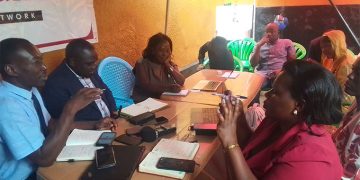
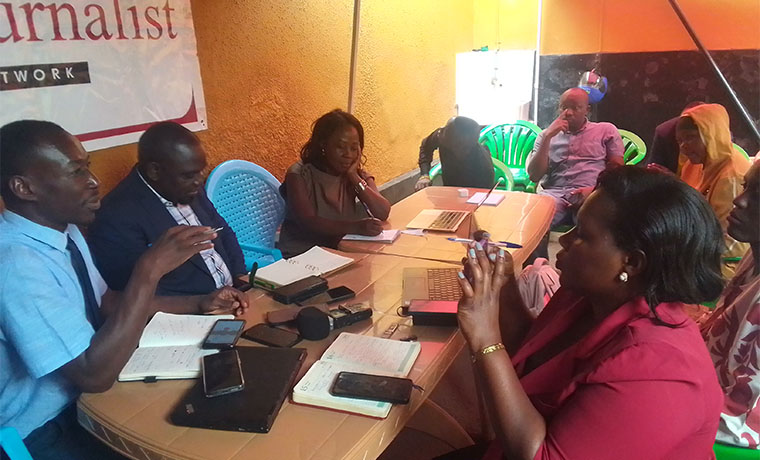
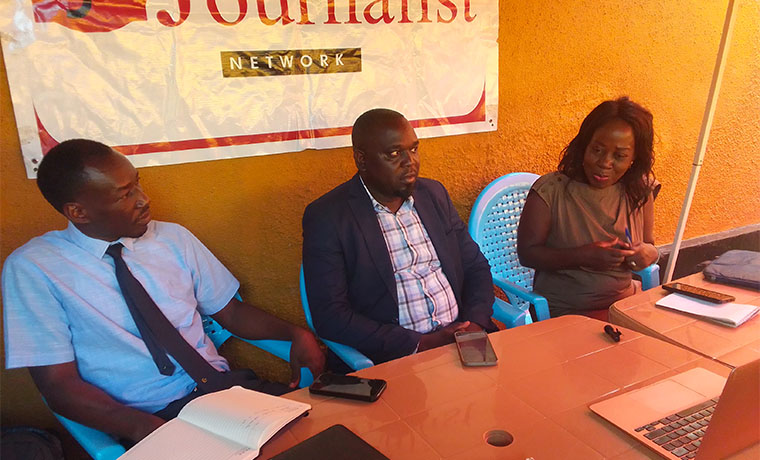
The announcement was made by Dr. Chris Ebong, Principal Medical Officer in charge of Reproductive and Child Health at the Ministry of Health, during a Science Café organized by the Health Journalists Network in Uganda (HEJNU) in partnership with the WISH Policy and Systems Programme, BBC Media Action and the Media Challenge Initiative (MCI).
Addressing science journalists, Dr. Ebong said family planning should no longer be viewed solely as a health intervention but as a critical driver of Uganda’s socio-economic development and a key pillar for achieving the country’s Vision 2040 agenda.

“For us to achieve what we have put in Vision 2040, family planning is a big component,” he said.

According to Dr. Ebong, enabling families to choose when and how many children to have improves household welfare, allows parents to adequately educate their children and increases women’s participation in the country’s economy.
“We need to take family planning not as a medical issue but rather as a developmental issue because it enables us to produce citizens that we are able to take care of, educate, skill and make productive,” he said.
He urged journalists to move beyond reporting family planning as a medical subject and instead highlight its contribution to national development.

“Anyone interested in developing this country should actually be interested in family planning,” he added.
Government expands access
To eliminate persistent contraceptive stockouts and improve access, Dr. Ebong said the Ministry has adopted a two-pronged strategy that combines increased financing with expansion of service delivery points.
He said government has increased funding for family planning commodities while strengthening partnerships with development agencies such as the United Nations Population Fund (UNFPA).
Under an agreement with UNFPA, government contributions are matched with additional donor resources, allowing the country to procure more contraceptive commodities.
Beyond increasing supplies, the Ministry is also diversifying where Ugandans can obtain family planning services.
While public health facilities will continue offering free services to those unable to pay, individuals who can afford contraceptives will increasingly access them through accredited private pharmacies, clinics and drug shops.
“We are intentionally introducing some of the commodities in pharmacies so that if you have the money, you simply walk in, buy them and use them,” Dr. Ebong said.
He explained that government is adopting what it calls a “total market approach,” where both public and private providers work together to improve contraceptive availability while reducing pressure on government health facilities.
Services moving closer to communities
The Ministry is also rolling out community-based delivery through Community Health Extension Workers (CHEWs) to make family planning services more accessible, especially for people who cannot easily visit health facilities during working hours.
Dr. Ebong said family planning users are generally healthy individuals who should not be forced to spend long hours waiting in queues alongside sick patients.
“We do not need to inconvenience anyone in getting family planning,” he said.
Under the new approach, trained community health workers will provide selected contraceptive services within communities, allowing clients to access services closer to their homes.
Drug shops will also be empowered to provide approved family planning methods within their capacity.
Journalists urged to improve reporting
Dr. Ebong challenged journalists to report family planning stockouts with greater accuracy by identifying the specific commodities that are unavailable instead of making broad claims.
He explained that family planning consists of different categories, including natural methods, short-term methods, long-term methods and permanent methods, each serving different reproductive needs.
“When reporting stockouts, don’t simply say family planning commodities are not available. Indicate which methods are missing because communities have different preferences,” he advised.
He noted that better reporting would help policy makers identify supply gaps while enabling communities to make informed choices.
AI enters family planning
Senior Pharmacist Daniel Aguma from the Ministry of Health’s Department of Pharmaceuticals and Natural Medicines said government is embracing digital innovation to improve access to family planning information.
Aguma revealed that the Ministry has introduced an artificial intelligence-powered chatbot capable of guiding users on contraceptive options, identifying nearby service delivery points and advising clients on how to manage common side effects.
“If you’re having side effects, it can guide you on what is normal, what can be managed at home and what requires immediate medical attention,” he said.
The chatbot, he added, is among several digital innovations introduced to improve public access to reproductive health information.
He noted that digital pharmacies, whose popularity grew during the COVID-19 pandemic, now allow Ugandans to order condoms, emergency contraceptive pills and other reproductive health products online.
Men urged to join family planning
Aguma emphasized that family planning should not be viewed as a responsibility for women alone.
He encouraged men to actively participate in discussions and decisions about contraceptive use, saying successful family planning requires shared responsibility between partners.
“There are multiple options available, and couples should work together with trained health workers to identify the most suitable method,” he said.
He also advised users to return to health facilities if they experience discomfort or side effects, noting that healthcare providers can recommend alternative methods suited to individual needs.
Private sector and insurance
The Ministry is also exploring partnerships with private healthcare providers and insurance companies to improve affordability of contraceptive services.
According to Aguma, while family planning commodities remain free in public health facilities, private providers charge for the products because they operate as commercial entities.
However, he said government continues to regulate private providers through accreditation and supervision to ensure service quality while monitoring pricing to keep services affordable.
The Ministry is also considering integrating family planning services into health insurance packages, a move officials say would further expand access while reducing out-of-pocket costs for clients.
As Uganda continues to grapple with contraceptive stockouts and unequal access to reproductive health services, Ministry officials say strengthening partnerships with the private sector, deploying community health workers and embracing digital technologies will be central to ensuring every Ugandan can access family planning services conveniently, affordably and with accurate information.