







 By Ssentamu Mukasa Ssewandagi
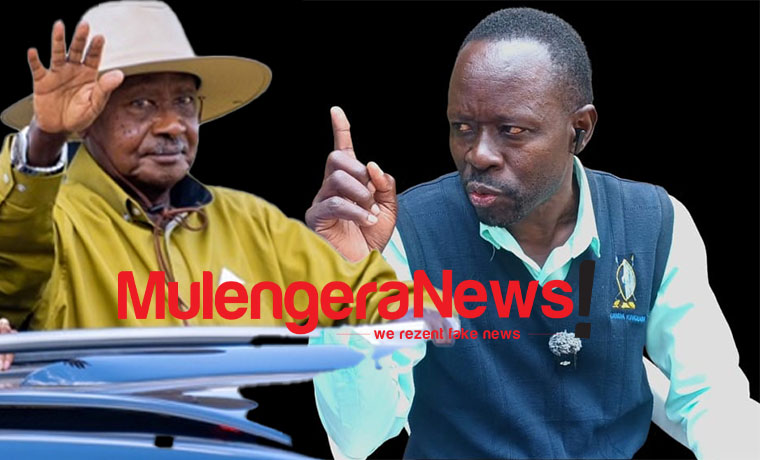
AN OPEN RESPONSE TO H.E. YOWERI KAGUTA MUSEVENI
Your Excellency,
I have carefully read your response to Mr. Andrew Mwenda regarding Stephen Nuwagaba. I commend your unequivocal declaration that torture, maiming, extra-judicial killings and impunity are immoral, counter-revolutionary, unconstitutional and strategically unnecessary. Those are words every Ugandan should welcome.
However, your statement leaves many of us with a deeper constitutional question.
The Preamble to the Constitution of the Republic of Uganda, 1995, reminds us that our history was characterized by political instability, dictatorship, oppression and abuse of fundamental human rights. It records the solemn determination of the people of Uganda to establish a constitutional order founded on democracy, equality, social justice and respect for human rights.

Similarly, the National Resistance Movement’s historic Ten-Point Programme promised democracy, security of persons and property, constitutionalism, national unity, accountability and respect for the dignity of every Ugandan.

Your statement asks whether torture and brutality are what Ugandans fought for.
With the greatest respect, that is exactly the question many Ugandans continue to ask today.
If torture is immoral, if extra-judicial killings are unacceptable, and if impunity is counter-revolutionary, why have allegations of these practices continued to arise under the constitutional order that has existed for nearly four decades?

Ugandans have witnessed painful episodes that continue to haunt our national conscience. The deaths during the 2009 Buganda riots following the restriction on the Kabaka’s intended visit to Bugerere remain a painful memory. The 2016 security operation at the Rwenzururu Palace in Kasese, in which official and independent accounts reported many deaths, remains one of the most controversial security operations in Uganda’s recent history. The November 2020 protests following the arrest of Robert Kyagulanyi left dozens of Ugandans dead according to official reports, while many citizens and human rights organizations have continued to raise concerns about accountability for those deaths.
Beyond those tragic incidents are numerous allegations of torture, unlawful detention and enforced disappearances involving political activists, journalists, lawyers and opposition leaders. Publicly reported allegations concerning Kakwenza Rukirabashaija, Edward Sebuwufu (Eddie Mutwe), and more recent controversies surrounding the arrests and detention of opposition figures and their legal representatives have continued to fuel public concern regarding respect for constitutional guarantees.
More recently, Ugandans have closely followed the legal proceedings involving Dr. Kizza Besigye and his co-accused. These proceedings have generated extensive public debate over due process, judicial independence, legal representation, bail, and the proper role of military and civilian courts. Regardless of one’s political affiliation, every Ugandan should desire that justice is administered fairly, independently and transparently, because public confidence in the administration of justice is one of the pillars of constitutional democracy.
Your Excellency, these are not isolated conversations. They form a pattern that many citizens believe deserves honest national reflection.
You state that some security personnel have become corrupt and have infiltrated the system.
If that is so, Ugandans are entitled to ask another constitutional question.
Who bears ultimate responsibility?
The Constitution vests executive authority in the Presidency. It makes the President Commander-in-Chief of the armed forces and Head of State. The security services operate under institutions established by law within the constitutional framework headed by your office.
If, after nearly four decades in office, torture, unlawful detention, disappearances and excessive use of force continue to dominate national discourse, then this cannot simply be explained as the misconduct of isolated individuals. It inevitably raises questions about institutional accountability.
Perhaps the most revealing part of your statement is your acknowledgement that informal channels frequently become necessary because formal institutions fail to perform their duties.
With respect, constitutional democracies are designed precisely to avoid that situation.
Justice should never depend upon who knows the President personally. It should never depend upon informal networks or exceptional presidential intervention. Justice should be available equally to every Ugandan through independent courts, professional investigators, accountable security agencies and institutions that function without fear or favour.
Strong nations are not built upon extraordinary individuals. They are built upon extraordinary institutions.
History teaches that nations are ultimately judged not by the eloquence of their constitutions, but by the consistency with which they uphold them.
The generation that fought dictatorship did so to ensure that no Ugandan would again live in fear of arbitrary arrest, torture, enforced disappearance or political persecution. That constitutional promise belongs equally to supporters of the NRM, members of the opposition and citizens with no political affiliation whatsoever.
The question, therefore, is no longer whether torture is wrong.
The nation agrees with you that it is.
The question is why, after nearly forty years of the same constitutional leadership, allegations of torture, unlawful detention, excessive use of force and impunity continue to arise with such disturbing regularity.
That is not merely a political question.
It is a constitutional question.
It is a moral question.
It is a question of leadership.
And it is a question that every generation of Ugandans will continue to ask until our constitutional promise becomes a lived reality rather than an aspiration.
As you rightly reminded the nation, many brave Ugandans sacrificed their lives so that future generations would never again endure oppression.
The greatest tribute we can pay to those heroes is not simply to remember them, but to ensure that the ideals for which they fought are faithfully upheld by those entrusted with governing the Republic today.
Respectfully submitted,
Ssentamu Mukasa Ssewandagi
Concerned Senior Citizen
Finalist Student Makerere University School of Law
(For comments on this story, get back to us on 0705579994 [WhatsApp line], 0779411734 & 041 4674611 or email us at mulengeranews@gmail.com).