






By Ben Musanje
National Unity Platform (NUP) Deputy President for Western Uganda, Jolly Jackline Tukamushaba, has alleged that the notorious detention facility commonly referred to by opposition politicians as the “Basement” is located in Buganda, specifically around Entebbe, saying sounds and public announcements she heard while in detention led her to that conclusion.
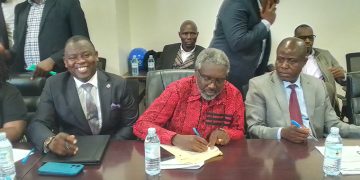
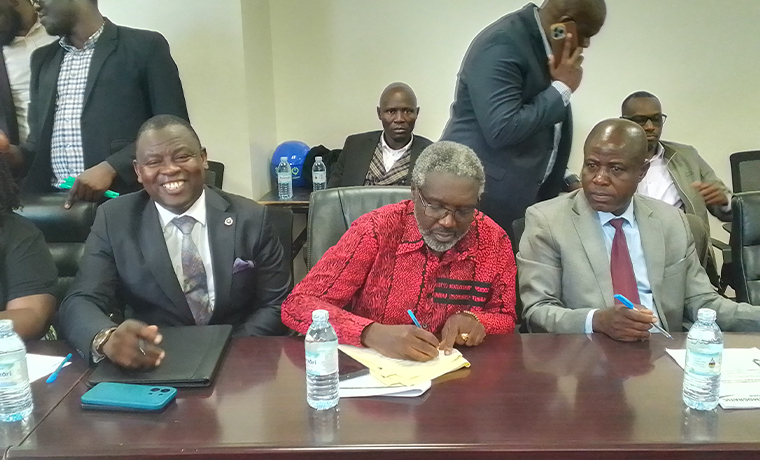
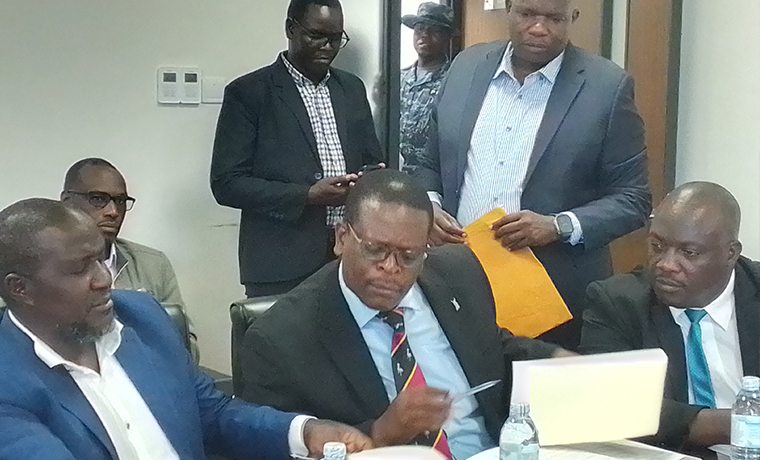
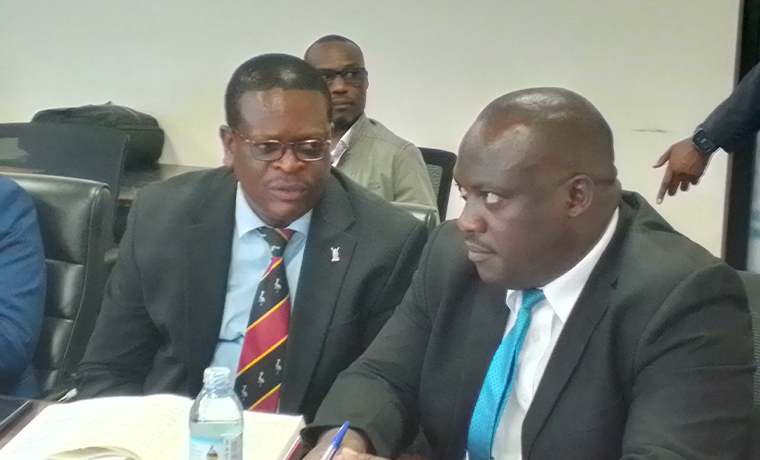
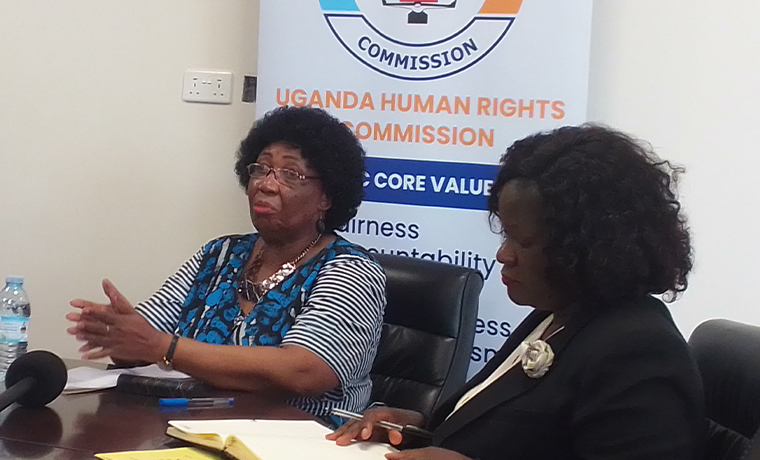
Tukamushaba made the claims while appearing before the Uganda Human Rights Commission (UHRC) during an engagement between opposition political parties under the Joint Democratic Platform (JDP) and the constitutional body. The opposition coalition petitioned the Commission to take a more active role in investigating alleged human rights violations and safeguarding Uganda’s democratic space.
Addressing UHRC Chairperson Mariam Wangadya, Tukamushaba appealed to the Commission to exercise its constitutional independence and impartiality in handling complaints of human rights abuses.

“I look at the Human Rights Commission and the commissioners as parents,” she said. “Parents are expected to address issues with utmost neutrality, impartiality and independence. A wrong remains wrong whether it is committed by the majority or by anyone else.”

The NUP leader said opposition supporters, particularly members of her party, have increasingly become victims of enforced disappearances, arbitrary arrests and prolonged detention.
“We see ourselves as the most vulnerable. We have had many of our supporters missing,” she told the Commission, citing the continued disappearance of NUP Deputy President for Buganda Muhammad Muwanga Kivumbi.
According to Tukamushaba, Kivumbi had by the time of the meeting been missing for 17 days, leaving his family, party members and supporters uncertain about his whereabouts.

“Today is the 17th day and we do not know where he is,” she said. “Is he alive? Is he dead? Is he detained? Is he in the Basement? Where is he?”
She noted that unlike previous arrests of opposition figures, Kivumbi’s case had generated even greater anxiety because authorities had allegedly denied knowledge of his whereabouts.
Tukamushaba contrasted his disappearance with earlier incidents in which detained opposition leaders occasionally managed to communicate through social media.
“When Elias Lukwago was abducted, at least there was a tweet and we knew he was somewhere. This time there has been complete silence, and that worries us even more,” she said.
Personal account of detention
Tukamushaba used the meeting to recount her own experiences in military detention, saying she had twice been arrested under different circumstances.
She said her first arrest occurred in 2021 when she was allegedly abducted and detained at Makenke Military Barracks for three weeks before being charged before the General Court Martial with unlawful possession of military attire.
According to her, she had never possessed military clothing and believes the charge was fabricated.
“When you are in their custody, they are free to trump up any charge against you,” she said, adding that after spending three weeks in detention she was eventually granted bail through the military court and continued reporting until authorities later instructed her to stop.
She described her second detention as far more traumatic.
Tukamushaba said she was contesting for the Rukiga District Woman Member of Parliament seat when armed men dressed in Uganda People’s Defence Forces (UPDF) uniforms allegedly abducted her on January 14, one day before polling.
She said the arrest occurred in front of her children.
“It was the worst ordeal. We are still traumatized,” she said. “I kept asking myself when contesting on the opposition became such a serious crime.”
According to Tukamushaba, she was blindfolded immediately after her arrest and transported for several hours to an unknown location.
Although she said she could not positively identify where she had been taken because she remained blindfolded throughout the journey and while entering the facility, she believes the detention centre is located around Entebbe.
“It was January, and while I was there I could hear megaphones announcing schools in Kitooro,” she told the Commission. “That made me believe I was in Entebbe.”
She said this is why she believes the facility commonly referred to by opposition politicians as the “Basement” is located in Buganda, specifically within the Entebbe area.
“I cannot tell you exactly where it is because once you board the vehicle you are blindfolded, but from what I heard I believe I was in Entebbe.”
She said she remained detained at the undisclosed facility for about three weeks before security personnel transported her to Kabale.
According to her account, army officers later dropped her at Kabale Central Police Station before she was quickly presented before the Kabale Chief Magistrate’s Court, where she was charged with incitement to violence and remanded to Ndorwa Government Prison.
Tukamushaba questioned the timing of her arrest, arguing that if authorities genuinely believed she had committed an offence, they would not have waited until the eve of polling day to detain her.
“You imagine funding an election and then disappearing on the last day. Your phones are off, your agents cannot reach you and they have no appointment letters. It was really so bad,” she said.
She argued that the arrest effectively denied her the opportunity to supervise her own election campaign and participate fully in the electoral process.
Call for UHRC intervention
Throughout her submission, Tukamushaba repeatedly appealed to the Uganda Human Rights Commission to carry out what she described as honest self-assessment regarding its effectiveness in protecting Ugandans.
“As a Commission, are we still on track? Are we still fighting for the human rights of Ugandans? What does the public think about us? Are we still serving their interests or are they on their own?” she asked.
She urged the Commission to use its constitutional powers to establish the whereabouts of Muwanga Kivumbi.
“I request that you put our voices together and look for where Muwanga Kivumbi is,” she appealed.
Tukamushaba also informed the Commission that once her criminal case is concluded, she intends to formally petition the UHRC regarding what she described as unfair treatment during the election period.
Opposition petitions UHRC
The meeting formed part of a broader engagement between opposition political parties under the Joint Democratic Platform and the Uganda Human Rights Commission.
Presenting what he described as a “paper of engagement,” People’s Front for Freedom Deputy President Dr. Michael Lulume Bayiga said the opposition had chosen to petition the Commission because of its constitutional mandate under Articles 52 and 53 of the Constitution.
Bayiga said the UHRC has the responsibility to investigate allegations of human rights violations, inspect places of detention and promote respect for fundamental rights and freedoms.
He urged the Commission to become more proactive in responding to complaints of arbitrary arrests, enforced disappearances and violations of political rights.
Background to Tukamushaba’s case
In February 2026, the Kabale Chief Magistrate’s Court granted Tukamushaba cash bail of Shs1 million, while each of her four sureties executed a Shs5 million non-cash bond.
She had earlier appeared before Chief Magistrate Derrick Byamugisha on charges of incitement to violence, charges she denied before being remanded to Ndorwa Government Prison.
The matter was adjourned to February 24, 2026, for mention and further directions as state investigations continued.
Tukamushaba contested as the NUP flag bearer for the Rukiga District Woman Member of Parliament seat in the last general election but lost to National Resistance Movement (NRM) candidate Sylvia Arinaitwe.
She was among three NUP deputy presidents who had been detained. Following her release on bail, the party said Muwanga Kivumbi, the Deputy President for Buganda facing terrorism charges, and Lina Zedriga, the Deputy President for Northern Uganda facing incitement charges, remained in custody.
The allegations made by Tukamushaba regarding the location of the alleged “Basement” detention facility and claims of unlawful detention have not been independently verified. Ugandan security agencies have previously denied allegations of operating illegal detention facilities, while government officials have consistently maintained that arrests and prosecutions are conducted in accordance with the law. The Uganda Human Rights Commission had not publicly responded to Tukamushaba’s specific allegations at the time of her remarks.