







By Ben Musanje
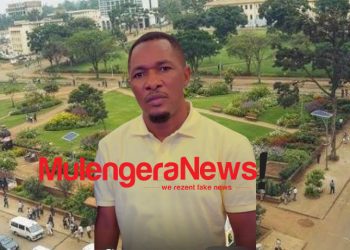
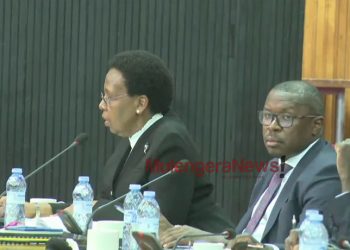
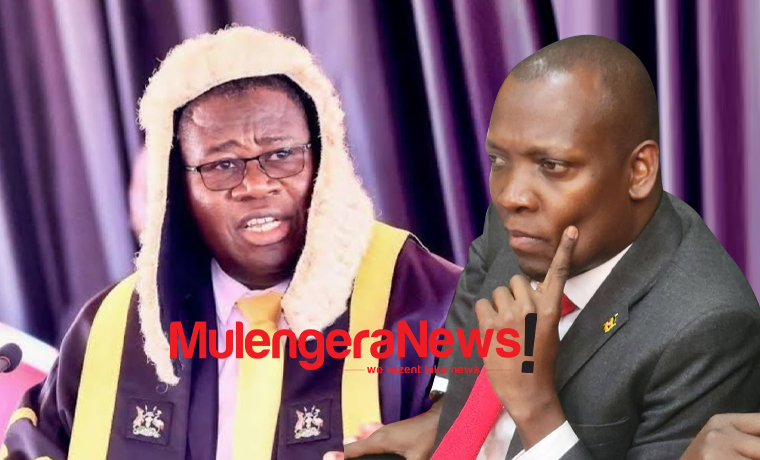
The Chairperson of Parliament’s Public Accounts Committee on Commissions, Statutory Authorities and State Enterprises (PAC-COSASE), Hon. Muwada Nkunyingi, has petitioned Speaker Jacob Markson Oboth-Oboth to revoke an administrative communication issued during the 11th Parliament, arguing that it has unlawfully shielded several government agencies from parliamentary accountability.
In a letter dated July 20, 2026, copied to the Deputy Speaker, the Leader of the Opposition, the Leader of Government Business and the Clerk to Parliament, Nkunyingi said the continued enforcement of the communication had prevented PAC-COSASE from executing its constitutional oversight mandate over statutory authorities, commissions and state enterprises.
The committee chairperson cited Article 90(2) of the Constitution, which empowers Parliament to establish committees and define their functions through the Rules of Procedure, as well as Article 163(4), which requires Parliament to consider the Auditor General’s reports and take appropriate action within six months.

He noted that Rule 187 of Parliament to Nkunyingi, during the 11th Parliament, the former Speaker issued a directive hal’s Rules of Procedure specifically mandates PAC-COSASE to examine the reports and audited accounts of statutory authorities, corporations and state enterprises.

According to Nkunyingi, during the 11th Parliament, the former Speaker issued a directive halting ongoing PAC-COSASE investigations into some entities while the committee was examining audit reports.
He recalled that the decision was strongly opposed at the time by the then PAC-COSASE Chairperson, Joel Ssenyonyi, who argued in writing that the directive amounted to an institutional attempt to shield certain public entities from scrutiny despite having previously appeared before the committee in earlier parliaments.
Nkunyingi said the entities covered by the administrative communication have since not appeared before any other parliamentary committee to account for audit queries, creating what he described as an accountability gap.

He warned that if the directive remains in force, the 12th Parliament risks failing to discharge its constitutional responsibility of scrutinizing public expenditure and ensuring accountability.
The committee chairperson further revealed that invitations issued by PAC-COSASE to some of the affected institutions have continued to be ignored, with some entities reportedly responding that they remain protected under the former Speaker’s guidance.
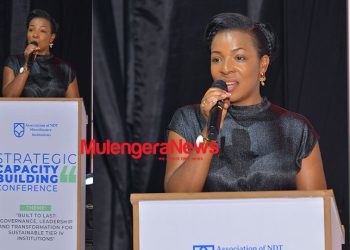
Among the institutions cited is the Microfinance Support Centre Limited, which Nkunyingi said was incorporated as a state enterprise to provide affordable credit and business development services.
He argued that, by virtue of its status as a state enterprise, the Microfinance Support Centre falls squarely within the oversight jurisdiction of PAC-COSASE and should therefore appear before the committee to respond to audit findings.
In his letter, Nkunyingi urged Speaker Among to urgently revoke what he described as the “erroneous administrative communication” to restore the committee’s full oversight authority over all statutory authorities, commissions and state enterprises.
He also requested formal guidance on how PAC-COSASE should proceed with planned accountability sessions involving institutions that continue to rely on the earlier directive to decline invitations.
The request comes as Parliament intensifies oversight of public institutions amid renewed calls for greater transparency and accountability in the management of public resources.
If the Speaker revokes the previous guidance, it could pave the way for several state agencies that have not appeared before Parliament on audit matters since the 11th Parliament to finally account for their financial management before PAC-COSASE. (For comments on this story, get back to us on 0705579994 [WhatsApp line], 0779411734 & 041 4674611 or email us at mulengeranews@gmail.com).