






By Ben Musanje
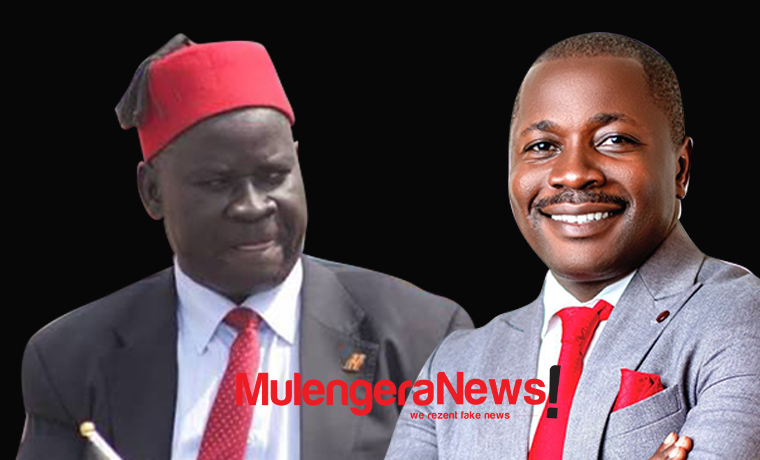
The newly appointed National Coordinator of the Alliance for National Transformation (ANT), Kassiano Wadri, has strongly opposed a proposed amendment to the Administration of Parliament Act that seeks to have the entire House elect the Leader of the Opposition (LoP), warning that the move would undermine democratic principles, weaken parliamentary oversight, and isolate Uganda from established Commonwealth parliamentary practices.
Speaking during his first press conference since assuming leadership of ANT from the party’s founder, Maj. Gen. Gregory Mugisha Muntu, at the party headquarters in Lungujja, Rubaga Division, Wadri described the proposal as a dangerous departure from internationally accepted parliamentary norms.
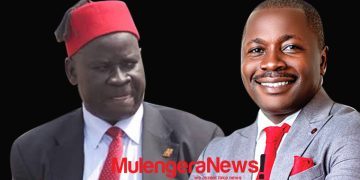
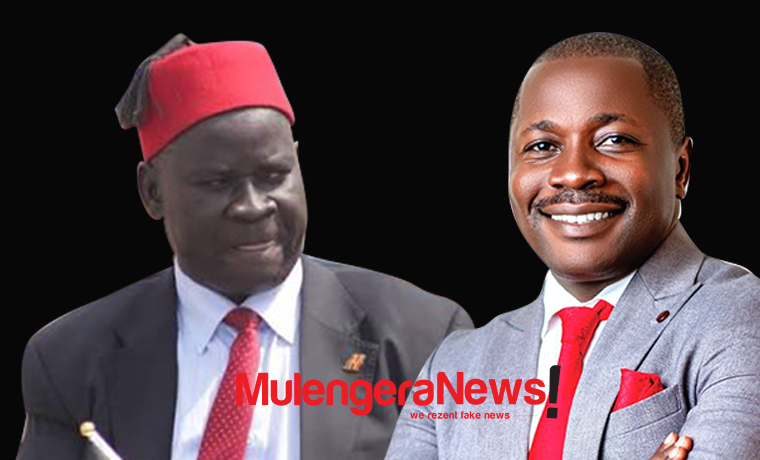
The former Terego County and Arua Central Member of Parliament directed his remarks at the Private Member’s Bill expected to be introduced by Buyaga West MP Dennis Namara, arguing that allowing both ruling and opposition legislators to elect the Leader of the Opposition would fundamentally compromise the office’s independence.

“This morning, I wish to address my mind to the impending Namara motion in Parliament,” Wadri said. “The import of this motion is that the entire Parliament should participate in the election of a Leader of the Opposition.”

He argued that Uganda, as a member of the Commonwealth Parliamentary Association (CPA), is expected to uphold standards that recognize the Leader of the Opposition as the nominee of the largest opposition party rather than someone elected by the entire House.
“In the Commonwealth Parliamentary Association, the role and the person of the Leader of the Opposition is chosen by the party with the highest membership in the opposition. It is the role of that leadership to submit the name to Parliament for recognition, not for Parliament to elect,” Wadri said.
According to him, allowing members of the ruling National Resistance Movement (NRM), who constitute the majority in Parliament, to participate in electing the individual expected to hold the government accountable would create an inherent conflict of interest.

“How can the NRM participate in the election of the leadership of the opposition whose duty is to hold the government accountable?” he asked.
Using a football analogy, Wadri said the proposal was comparable to “a referee who also wants to be the goalkeeper.”
“Who will identify your faults if you are the referee and at the same time the goalkeeper?” he asked.
The ANT leader said he was surprised that the proposal had resurfaced after a similar attempt by Mityana South MP Richard Lumu during the 11th Parliament was eventually withdrawn.
“I am surprised that after Hon. Lumu attempted such a move a few years ago, which he later withdrew, it is again resurfacing under a different arrangement,” he said.
Wadri warned that adopting such changes would damage Uganda’s democratic credentials internationally.
“I have never seen this happen anywhere, not even in neighbouring countries such as Kenya, Tanzania or Rwanda,” he said. “This move will alienate Uganda globally as far as multiparty democracy is concerned.”
Drawing from his experience as the former Chairperson of Parliament’s Public Accounts Committee (PAC), Wadri said other countries within the Commonwealth parliamentary system had consistently respected the principle that accountability committees and opposition leadership should remain independent from the ruling government.
He recalled visits to Rwanda and Ethiopia, where despite opposition parties having only one or two legislators, governments still respected Commonwealth parliamentary conventions by allowing opposition MPs to chair key accountability committees.
“In Rwanda there were only one or two opposition MPs, but Parliament respected the Commonwealth position that the Public Accounts Committee should be chaired by the opposition. In Ethiopia, where there was only one opposition member, he still chaired the Public Accounts Committee,” Wadri said.
He appealed to Parliament’s leadership to reject the proposed amendment, insisting that Uganda was not creating a new democratic model but should instead continue following internationally accepted practices.
“I appeal to the leadership of Parliament that sanity and reason prevail because we are not inventing the wheel,” he said.
Wadri specifically called upon the Speaker of Parliament Jacob Markson Oboth-Oboth, whom he described as someone he respects, to reflect carefully on whether supporting the proposed legislation would serve Uganda’s democratic interests.
He also urged ruling party MPs to consider the long-term implications of the legislation, warning that political dominance is never permanent.
“They may be enjoying the majority today, but we never know what happens tomorrow because nothing is permanent,” he said.
To illustrate his point, Wadri cited the rise and fall of powerful historical empires, including the Roman Empire, the Oyo Empire and the Asante Kingdom, arguing that political fortunes inevitably change.
“The Roman Empire controlled much of Europe, Asia and the Middle East. But where is it today? The same thing can happen to the NRM. They should imagine themselves tomorrow in opposition and ask whether they would still support such a law.”
Addressing opposition legislators, Wadri acknowledged that they currently hold fewer seats in Parliament but encouraged them to vigorously oppose the proposed legislation.
“It is not the numbers that matter. It is the indelible ink that you leave for posterity to judge you,” he said.
He urged opposition MPs to ensure their objections are captured in Parliament’s Hansard, saying history would eventually judge those who defended democratic principles.
“I appeal to them to fiercely fight this battle with words on the floor of Parliament so that the Hansard will vindicate them at the end of the day.”
Wadri also appealed directly to Dennis Namara, noting that the Buyaga West legislator had previously served in the East African Legislative Assembly (EALA), where he was exposed to parliamentary systems across the region.
“Honourable Namara has had the exposure of knowing how other countries that practice democracy work,” Wadri said. “I wish he could reflect on what he learned in Arusha and use that experience to strengthen democracy in Uganda rather than weaken an institution that is supposed to hold government accountable.”
Beyond Parliament, Wadri extended his appeal to religious leaders, civil society and the media, saying they all have a responsibility to defend democratic governance.
Echoing earlier calls by ANT founder Maj. Gen. Mugisha Muntu, Wadri urged religious leaders to use their moral authority to speak out on national issues.
“When a religious leader talks from the pulpit, people listen. If religious leaders keep quiet, where will the flock turn?” he asked.
He similarly praised the media as a vital pillar of democracy capable of amplifying citizens’ voices across the country and beyond.
“You are our key allies. Through electronic media you can reach the whole world. Please do not abandon your work. Continue doing the benevolent work you have always done.”
Wadri concluded by calling on all Ugandans to work together in defending constitutionalism, freedom of expression and the rule of law.
“We have no other country that we can call ours. We are all Ugandans. We need to work harmoniously to ensure that this country prospers, and this can only happen if there is respect for the rule of law and if people are allowed to express themselves,” he said.
“If you cannot allow people to speak and instead want them to die in silence, then what kind of democracy are we in?”
The ANT leader’s remarks come weeks after Parliament granted Dennis Namara leave to introduce a Private Member’s Bill seeking to amend the Administration of Parliament Act.
Deputy Speaker Thomas Tayebwa ruled that the proposed legislation met the constitutional threshold required for introduction, emphasizing that, at the leave stage, Parliament only determines whether a Bill satisfies constitutional requirements rather than debating its merits.
The proposed amendments seek to allow the entire House to elect the Leader of the Opposition instead of the largest opposition party nominating the office holder. The Bill also proposes expanding the grounds for removing the Leader of the Opposition to include incompetence and misconduct, requiring wider consultation among opposition parties in appointing the Shadow Cabinet, and promoting broader representation of opposition parties on parliamentary committees and international delegations.
The proposal has already generated significant debate among legislators. During the motion seeking leave to introduce the Bill, Kassanda South MP Patrick Nsamba Oshabe questioned the need to revisit proposals that had been debated during the 11th Parliament, arguing that political parties had already expressed their positions on similar reforms.
The proposed legislation also comes amid heightened political attention surrounding the Office of the Leader of the Opposition following recent exchanges between current LoP Joel Ssenyonyi and Chief of Defence Forces Gen. Muhoozi Kainerugaba, although Namara did not directly link his proposed reforms to those events while presenting his motion. (For comments on this story, get back to us on 0705579994 [WhatsApp line], 0779411734 & 041 4674611 or email us at mulengeranews@gmail.com).