







By Ben Musanje
The Alliance for National Transformation (ANT) has raised alarm over what it describes as the growing commercialization of Uganda’s Local Council One (LC1) elections, warning that the trend is entrenching corruption at the grassroots and threatening the country’s democratic future.
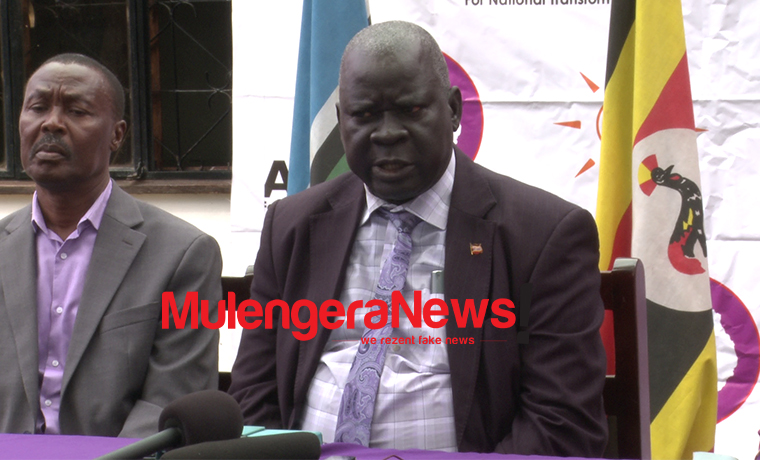
Addressing journalists at the party’s new headquarters in Lungujja, Kampala, ANT founder Maj. Gen. (Rtd) Gregory Mugisha Muntu, Secretary General Alice Alaso and new National Coordinator Kassiano Wadri criticized the conduct of the ongoing LC1 electoral campaigns, saying the elections have become increasingly dominated by money despite the positions carrying little or no financial reward.

Ugandans are scheduled to elect their Local Council One representatives on July 28, 2026, while Local Council Two elections are expected to take place on August 10, 2026.

Muntu described the ongoing campaigns as a worrying reflection of the country’s deteriorating political culture, saying the level of spending witnessed in the village elections should concern every Ugandan.
According to the former army commander, candidates were printing expensive campaign posters, organizing motorized processions and spending between Shs10 million and Shs30 million in contests for offices that are essentially voluntary.
He observed that LC1 chairpersons do not receive salaries, making such expenditure difficult to justify. Muntu argued that the trend demonstrated how Uganda’s political culture was steadily deteriorating and becoming increasingly alarming.

He further contended that the problem extended beyond the current political leadership, insisting that the country’s governance system itself required fundamental reforms. In his view, even when those currently in power eventually leave office, the entrenched political culture would persist unless deliberate efforts were made to reform it.
Muntu argued that the increasing monetization of politics had created a dangerous environment in which public office was viewed as an investment rather than an opportunity to serve communities. He said anyone spending tens of millions of shillings to contest for an unpaid position illustrated the depth of political corruption in the country.
He urged Ugandans, particularly the younger generation, to think beyond the current political challenges and focus on building a better future.
Referring to Uganda’s rapidly growing population, Muntu warned that the country’s governance challenges would become even more severe if the prevailing political culture remained unchanged. He noted that while Uganda currently has about 47 million people, the population could exceed 100 million within a few decades, making corruption, unemployment, poor healthcare and unfair access to jobs even more difficult to address.
According to Muntu, the country’s biggest challenge was no longer simply those occupying public office but the deeply entrenched culture that encourages corruption at every level of leadership. He said the ongoing LC1 elections merely reflected the state of Uganda’s politics today.
Echoing similar concerns, ANT National Coordinator Kassiano Wadri said the commercialization of village elections was laying the foundation for corruption in public office.
He noted that although LC1 chairpersons receive a government stipend of only about Shs10,000 per month, some candidates were spending millions of shillings on campaign posters, hiring buses, organizing processions and transporting supporters.
According to Wadri, candidates who invest heavily in campaigns are likely to seek ways of recovering their money once elected. He warned that citizens should not be surprised if some elected LC1 chairpersons later demanded large sums of money for routine services, such as issuing letters of introduction, because they would be trying to recover campaign expenses.
He argued that the commercialization of elections had become the origin and foundation of corruption in elective offices and explained why many public officials prioritize personal financial gain over public service.
Meanwhile, ANT Secretary General Alice Alaso said the party had successfully nominated candidates in several parts of the country and was continuing to receive nomination reports from regions including Busoga and western Uganda.
Although she acknowledged that ANT’s national coverage remained limited because of organizational challenges and incomplete party structures, she expressed confidence that the candidates the party had presented were individuals of integrity who genuinely wanted to serve their communities.
Alaso expressed concern that the practice of vote buying, previously associated mainly with parliamentary and presidential elections, had now spread to village-level contests.
She said the party had expected LC1 elections to focus on community service but had instead witnessed candidates, particularly from the National Resistance Movement (NRM), spending heavily as though they were contesting for the country’s highest office.
According to Alaso, the growing influence of money in grassroots elections undermines genuine leadership and disadvantages candidates who lack financial resources but possess the integrity needed to serve their communities.
She appealed to voters to elect leaders based on honesty, character and commitment to service rather than financial inducements.
The Secretary General also criticized the repeated postponement of LC elections, saying political parties had suffered setbacks after preparing for elections that were postponed several times.
She further accused some NRM leaders of misleading voters by claiming that government services would only reach communities that elected NRM candidates.
Alaso argued that such statements were misleading because government programmes, including the Parish Development Model (PDM), are funded by taxpayers and not by the ruling party. She maintained that every Ugandan, regardless of political affiliation, was entitled to benefit from government services.
She also referred to previous campaign promises allegedly made to communities in northern Uganda, saying residents had been assured they would receive cattle if they supported President Yoweri Museveni, but many of those promises had never been fulfilled.
According to Alaso, Ugandans should use the forthcoming LC1 elections to reject transactional politics and hold leaders accountable for their commitments.
She added that the elections presented an opportunity for citizens to begin challenging what she described as years of broken promises and political deception.
Alaso also expressed concern over reports that some aspiring LC1 candidates had allegedly been blocked from nomination. She described the reports as worrying and said they raised serious questions about the direction of Uganda’s democratic process.
She called for a free, fair and transparent electoral process that would allow all qualified candidates to participate without intimidation or unnecessary restrictions.
With just days remaining before Ugandans head to the polls for the LC1 elections, ANT leaders say the village contests have exposed deeper governance challenges that extend beyond local leadership. They argue that unless the growing influence of money in politics is addressed from the grassroots upward, corruption and poor governance will continue to undermine service delivery, accountability and public confidence in Uganda’s democratic institutions. (For comments on this story, get back to us on 0705579994 [WhatsApp line], 0779411734 & 041 4674611 or email us at mulengeranews@gmail.com).