






By Ben Musanje
The government is preparing a comprehensive economic empowerment programme for 1,030 Ugandans repatriated from South Africa following xenophobic violence, with officials promising financial support, skills development and enterprise financing to help them rebuild their lives.
The returnees are currently undergoing a two-week rehabilitation and ideological orientation programme at the National Leadership Institute (NALI) in Kyankwanzi, where government says many have overcome trauma and regained confidence after losing businesses, jobs and homes during the attacks.
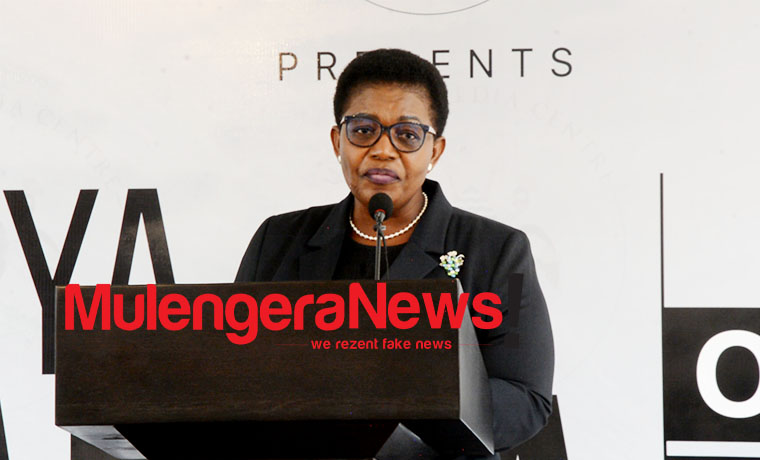
Speaking during the training, Commissioner for the National Secretariat for Patriotism Corps (NSPC) at State House, Hellen Seku, said the programme has transformed the outlook of many participants, who now see Uganda as a land of opportunity rather than a last resort.

“The way they came is not the way they are today. Many have realised they were ignorant about Uganda’s opportunities, wealth and economic potential. They now believe Uganda is the best country to live in,” Seku said.
According to Seku, the group comprises 438 men, 261 women and 331 children, all repatriated by the Ugandan government after fleeing anti-migrant violence in South Africa.
She revealed that the programme’s impact has attracted interest from other Ugandans who returned independently and are now seeking to join future training sessions.
“I have received countless calls from Ugandans who returned on their own and now want to join this programme because they are seeing the positive transformation of their colleagues,” she said.

The orientation programme focuses on patriotism, national identity, leadership and economic empowerment while providing psychosocial support for returnees who arrived traumatised and uncertain about their future.
Some participants required specialised medical attention, while others reportedly suffered severe psychological distress after the attacks.
Seku praised Mulago National Referral Hospital, Kiboga Hospital and other government health facilities for providing medical care to the returnees.
To enable parents to participate fully in the training, organisers established a temporary nursery at the institute to care for hundreds of children accompanying their families.
Enterprise Support Planned
Senior Presidential Advisor on Political Mobilisation Moses Byaruhanga announced that government is designing a special economic intervention to help the returnees restart their livelihoods.
He said beneficiaries will be organised into enterprise groups according to their skills before accessing seed capital through existing government financing programmes.
“The government has money. Our biggest challenge has never been a lack of funds but poor organisation. Once these returnees organise themselves into productive groups, we shall support them,” Byaruhanga said.
He explained that while some returnees may not qualify under the Parish Development Model, government intends to use alternative financing mechanisms to support viable businesses.
Byaruhanga also condemned xenophobic violence, arguing that Africa’s long-term prosperity depends on regional integration rather than hostility toward migrants.
“Africa needs one common market where goods, services and people move freely. Expanding markets across the continent will create jobs for everyone,” he said.
Uganda’s Economic Potential
Senior Presidential Advisor on Special Duties and Chairperson of the Presidential Advisory Committee on Exports and Industrial Development (PACEID), Odrek Rwabwogo, urged the returnees to seize opportunities in Uganda’s growing economy.
He highlighted government plans to expand manufacturing, value addition, agro-processing and affordable energy as key drivers of employment.
Rwabwogo pointed to fish farming as one of Uganda’s biggest untapped economic opportunities, noting that despite abundant freshwater resources, the country still produces far below its potential.
“We can create over 200,000 jobs through fish farming, feed production, maize growing, soybean cultivation and processing industries,” he said.
He urged the returnees not to allow their experiences in South Africa to define their future.
“What does not kill you makes you stronger. They have gone through a painful experience, but Uganda offers them another chance,” Rwabwogo said.
Government Repatriation Effort
The intervention follows the government’s ongoing repatriation exercise launched after xenophobic attacks targeted foreign nationals in South Africa.
Minister for ICT and National Guidance Justine Kasule Lumumba recently confirmed that government has successfully repatriated 1,030 Ugandan nationals, with efforts continuing to assist those still wishing to return home.
Officials say the rehabilitation programme is expected to conclude on July 17, after which the returnees will begin the next phase of reintegration through enterprise formation and government-supported economic empowerment initiatives aimed at helping them rebuild sustainable livelihoods. (For comments on this story, get back to us on 0705579994 [WhatsApp line], 0779411734 & 041 4674611 or email us at mulengeranews@gmail.com).