






By Ben Musanje
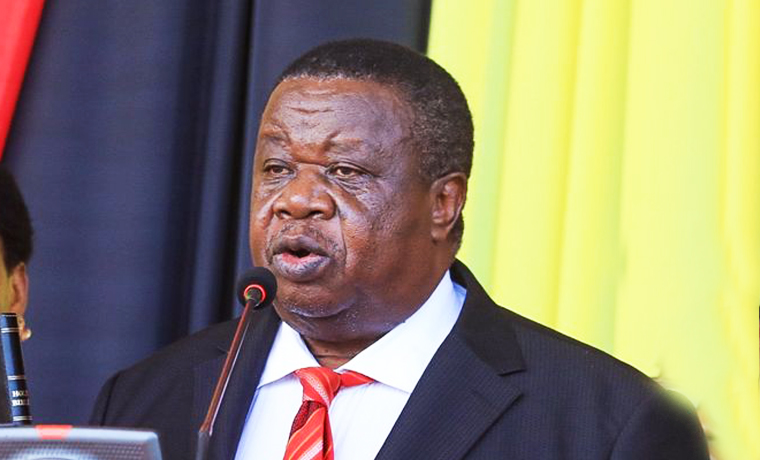
Minister for Water and Environment Maj Gen (Rtd) Kahinda Otafiire has moved to end long-standing disagreements between the Ministry of Water and Environment and the Ministry of Agriculture, Animal Industries and Fisheries over irrigation responsibilities, while announcing that former minister Sam Cheptoris will continue serving as a key consultant to the ministry.
Addressing ministry officials shortly after assuming office at the ministry headquarters in Luzira on Thursday, Otafiire said he had received reports of disagreements between the two ministries regarding the implementation and management of irrigation projects.
The minister clarified that the two institutions have separate but complementary responsibilities and should focus on collaboration rather than competition.

According to Otafiire, the Ministry of Water and Environment is responsible for bulk water supply and the development of water infrastructure, while the Ministry of Agriculture should remain responsible for farm-level irrigation and determining how water is applied to crops.

He explained that agricultural specialists possess the technical expertise required to establish the water needs of different crops and farming systems and should therefore lead the irrigation component of agricultural production.
The minister warned that failure to respect the mandates of the two ministries could lead to inefficiencies and poor implementation of irrigation programmes.
Otafiire called for closer cooperation between the ministries, particularly in extending irrigation infrastructure to drought-prone regions such as Karamoja, where communities continue to face challenges related to water access and agricultural productivity.

He argued that improved irrigation is critical to addressing poverty and food insecurity, which he described as major obstacles to national development and self-reliance.
According to the minister, true sovereignty is closely linked to economic productivity and the ability of citizens to feed themselves. He said poverty weakens the capacity of individuals and nations to manage their affairs independently and leaves communities vulnerable to external dependence.
Otafiire emphasized that officials in the water, environment and agriculture sectors have a responsibility to ensure that Uganda’s natural resources contribute directly to improved household incomes and national prosperity.
He noted that access to water and effective irrigation systems would play a central role in transforming agriculture and reducing vulnerability to drought.
The minister also used the occasion to pay tribute to his predecessor, Sam Cheptoris, for his stewardship of the ministry during the last decade.
Otafiire thanked Cheptoris for maintaining stability within the ministry and ensuring a smooth transition of leadership. He further disclosed that the former minister would continue serving as an important source of advice and institutional memory.
According to Otafiire, Cheptoris possesses extensive knowledge accumulated through years of service in the water and environment sector and remains a valuable resource for the ministry.
The minister said it would be unwise to disregard the experience of former leaders who have spent years managing government institutions and understanding the challenges facing the sector.
His remarks signaled a leadership approach that combines institutional continuity with renewed emphasis on inter-ministerial cooperation, particularly in areas considered critical to Uganda’s water security, agricultural transformation and poverty reduction agenda. (For comments on this story, get back to us on 0705579994 [WhatsApp line], 0779411734 & 041 4674611 or email us at mulengeranews@gmail.com).