

![NO ONE HAS THE POWER TO FIRE HIM! Ex-Omuhikirwa [Who Fought M7 in 2016] Dares Tooro Clan Leaders Over Rwomiire Sacking, Says Only King Oyo Could Fire Him](https://mulengeranews.com/wp-content/uploads/2026/09/Steven-Kaliba-Ateenyi-75x75.jpg)





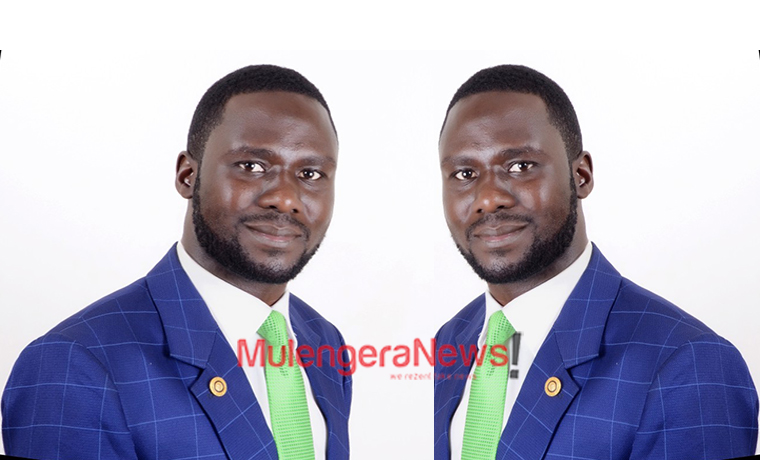
By Tuku-Neko Ogena Bese (Civil & Environmental Engineer, PRINCE2® Agile, LEED AP BD+C, LEED AP O+M, MBA | National Executive Committee (NEC) Member | National Secretary for Workers, Entrepreneurs & Informal Sectors).
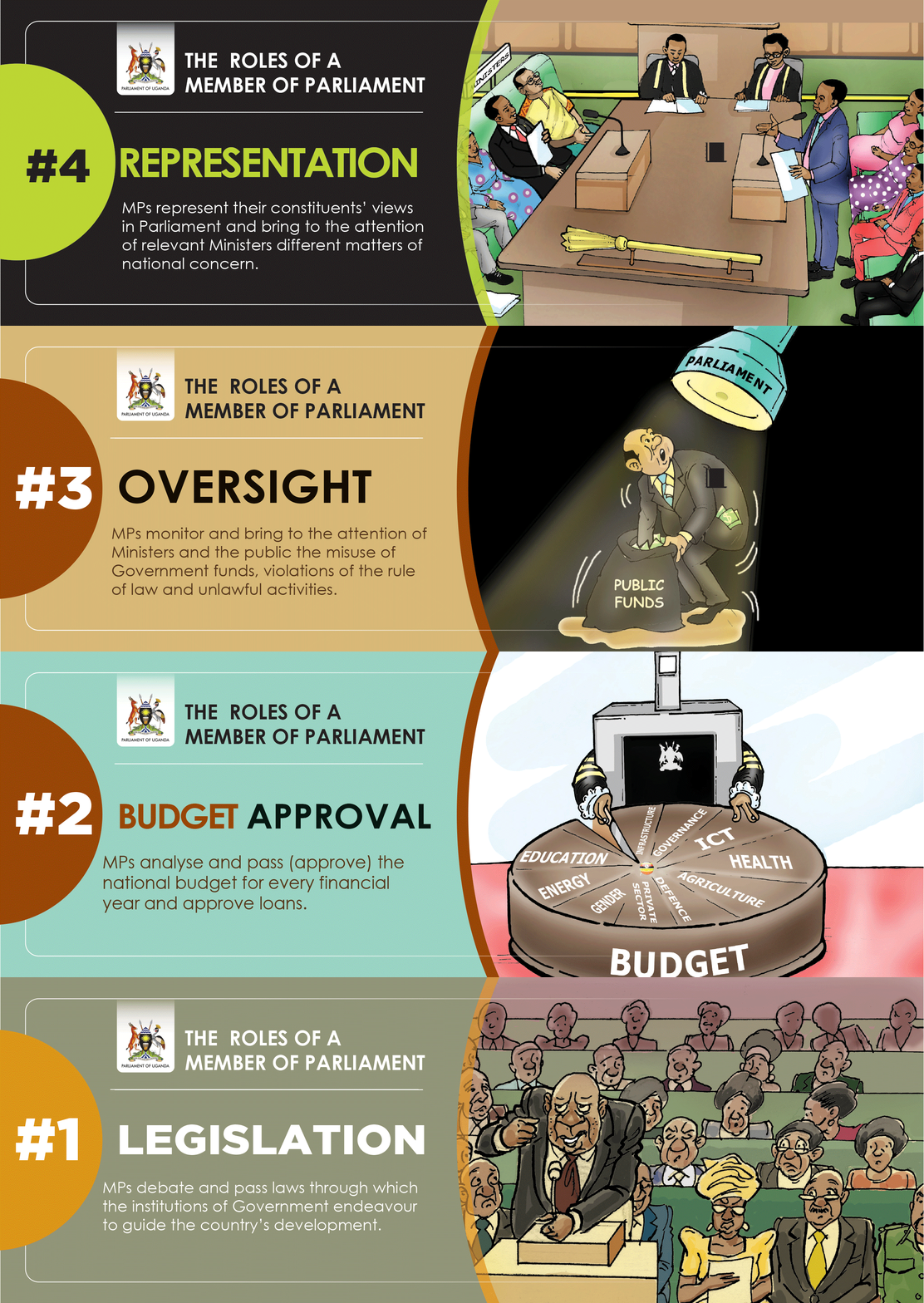
Sacrifice is a currency few are willing to pay in the current Uganda’s political theatre. Yet as the National Resistance Movement (NRM) contemplates whether to “sacrifice” Speaker Anita Among in favor of Democratic Party (DP) President General Norbert Mao for the 12th Parliament’s Speaker, one question burns with uncomfortable intensity: Why should NRM have the moral authority to sacrifice its 5 year old adopted child from the FDC? And what sacrifices or checks has Mao been writing to NRM, FDC in national interest that could have ended his career?
The speakership race has exposed a quiet but consequential tensions within the NRM, with Among emerging as the establishment’s preferred candidate by CEC resolution on which President Museveni mulled over for weeks before signing it. However, the echoes of Kyankwanzi rejected that resolution as declared by H.E President Museveni who alluded that CEC shall revise its position at the right time to allow more candidates. This sent shock waves down the spines of Among and her ‘caliber’ of supporters, and apologists among whom is a corruption convict- Cissy Namujju,MP Elect Lwengo District who was charged in court and sent to Prison in near past.
Among’s infamous “bedroom” metaphor at Kyankwanzi, where she told Mao to stay in the compound but not enter the bedroom has revealed the raw nerve this contest has touched. Furthermore, her UGX 3.4 Billion Rolls Royce car while cancer unit patients sleep on cold concrete floor has stirred a public debate, cementing her alleged corruption scandals. Her body language of apologetic worship with Gen.Muhoozi in Kololo during President Museveni’s swearing ceremony revealed the beginning of the end of the road.

But before we accept this narrative of NRM benevolence in “considering” Mao as 12th Parliament’s Speaker, let us examine what the man-Mao has actually sacrificed or surrendered on the altar of national interest.

In September 2025, Mao openly declared his support for President Museveni’s 2025/2026 Presidential race, saying he was neither “ashamed nor afraid” to back the ruling NRM candidate. He postponed his own presidential ambitions yet he is a man who had contested for the highest office twice before. He sacrificed his ambitions for Museveni’s promises of peaceful transition, constitutional review, national reconciliation and national dialogue as envisaged in the current DP-NRM Cooperation agreement. While others merely talk about sacrifice, Mao shelved his dreams for national interest and by extension to NRM and its national Chairman President Museveni.
Considered perhaps the most audacious sacrifice, Mao stood before a conference and told President Museveni, his Appointing Authority- the man who appointed him Minister of Justice & Constitutional Affairs to stop building more schools, hospitals and bridges. Instead, he urged Gen. Museveni to focus on one legacy that truly matters: peaceful presidential transition. He argued that Museveni should be in the same tent with the next president and hand over peacefully so that another leader doesn’t walk over blood to be sworn in as President, perpetuating Uganda’s tragic narrative of no peaceful presidential transition since 1962. This wasn’t a private suggestion but public display of political passion that went viral and it was a matter of debates on TV, Radios and online spaces that could have cost him his ministerial position. Is there any Minister who could dare say that? That was a sacrifice or a written check of political capital that reflected the spirit of national interest through freedom of conscience of honest DP’s political opposition despite the existence of the DP-NRM Cooperation agreement.
But Mao’s sacrifices didn’t begin with Museveni. In 2001, it began at home in Kilak County, when he made a choice that still reverberates through northern Uganda’s political consciousness. He ‘sacrificed’ his own brother, Dan Kidega, supporting instead FDC’s Michael Ochula who was then Gulu District Speaker for MP. Relatives quarreled. Political allies questioned his judgment. But Mao held firm, arguing that Ochula’s experience, competence and track record would serve the people and national interest better than blood loyalty. He was vindicated but Ochula delivered for Kilak in ways his brother probably could not have. Both Ochula and Mao dared to follow rebel leader-Kony to garamba forests to persue peace that was eventually found.

In 2014, bye election in Amuru District following Hon.MP Betty Bigombe’s resignation, opposition unity was more slogan than strategy, Mao sacrificed DP’s Concy Adoch Nyapolo to support FDC’s Akello Lucy for Amuru District Woman MP, embodying the opposition coalescence that others merely talked about. He rallied UPC’s Amb.Otunnu, FDC’s Mugisha Muntu and Independents alike and agreed on a single candidate. This wasn’t political theater, it was leadership that prioritized the broader struggle over narrow party interests. Todate, FDC’s Hon. Lucy Akello is still in Parliament confirming a team decision that identified a skillful, impactful Legislator of national interest.
In 2006-2011 while Mao was Chairman LCV-Gulu, he identified,mentored FDC’s Councillor Ojara Mapenduzi and rallied behind him to be elected Speaker of the District Council despite DP’s Councillor Sisto Olam showing interest. For the 2011-2016 LCV position, Mao also publicly endorsed FDC’s Mapenduzi to replace him as Chairman V -Gulu. If Mao had not mentored, endorsed Mapenduzi, while ignoring party interests for bigger picture, would he be a NRM MP today?
Mao’s pattern continued locally. In 2025/2026, Mao supported NRM’s Okot Gweno over DP’s Adam for Gulu City Division Councilor-Pakwelo Ward , arguing that experience, competence trumped party loyalty. Mao also supported NRM’s Alimocan Otangalo over DP’s candidate for Councilor Kal Ward in Gulu City, pushing the narrative of competence over mediocrity. Currently, DP’s SG Siranda Gerald Blacks and NVP Mbidde Mukasa have endorsed Among, a rival Speakership candidate to Mao, but were their decisions based on competence and integrity over mediocrity or by omission or commission?
These are not abstract political maneuvers. Each sacrifice carried personal cost, like family friction, party rebellion, accusations of betrayal, the risk of losing his Cabinet position. Yet Mao persisted because he believed in a principle larger than himself: that competence and national interest should trump tribalism and party loyalty.
In contrast, the bitter irony is inescapable. Yet the same NRM that accepted Mao’s sacrifices, his endorsement of Museveni, his bold call for peaceful transition that risked his ministerial tenure, his willingness to be vilified by former opposition allies, now treats the speakership as a “bedroom” he cannot enter as ranted by Among who is injured by corruption scandals and travel sanctions by USA and UK? No wonder Mao kicked-open the bedroom, cut a ‘spare key’ and will lay his bed and catch that sleep. When Among herself crossed from FDC to NRM, she was welcomed with open arms. When Mao seeks recognition for sacrificing family, party colleagues, presidential ambitions, and security for the “national interest,” he is told to wait in the compound?
The question isn’t whether the NRM will sacrifice Among. The question is whether the same 2026 Ugandan voters who gave M7 over 71% will allow the narrative of “sacrifice” to be monopolized by those who, like Among have sacrificed the least. Mao’s record speaks for itself, with decades of choosing principle over convenience, experience over nepotism, truth to power over job security, and national interest over partisan advantage.
In political engineering, here’s the structural reality that cannot be ignored: when a political partnership is built on the promise of cooperation, contractual obligation is created. Mao delivered his specifications from strained family relationships, party loyalty tested to near breaking point, ministerial tenure risked, presidential ambitions deferred for NRM, and bold truth spoken to power when silence would have been safer. The NRM accepted these deliverables. They utilized the structural support. They benefited from the load distribution.
But now, at the moment of accounting, NRM produced Among’s “bedroom” metaphor and told Mao his sacrifices qualify him only for the compound, not in the house? This isn’t politics, it’s a fundamental violation of political engineering ethics. You cannot accept a contractor’s materials, use them to strengthen your housing structure, then deny them access to the building they helped construct.
History will remember not who won this speakership race, but who was willing to sacrifice when sacrifice actually mattered. On that count, Mao’s ledger is full for an “experiment” that will potentially unite Uganda based on President Museveni’s logic and also lead war on ’‘adui’’ corruption to restore public trust in the institution of Parliament. Author’s Email: tuku.neko.ob@gmail.com. (For comments on this story, get back to us on 0705579994 [WhatsApp line], 0779411734 & 041 4674611 or email us at mulengeranews@gmail.com).