

![NO ONE HAS THE POWER TO FIRE HIM! Ex-Omuhikirwa [Who Fought M7 in 2016] Dares Tooro Clan Leaders Over Rwomiire Sacking, Says Only King Oyo Could Fire Him](https://mulengeranews.com/wp-content/uploads/2026/09/Steven-Kaliba-Ateenyi-75x75.jpg)




By Martin M. Lwanga
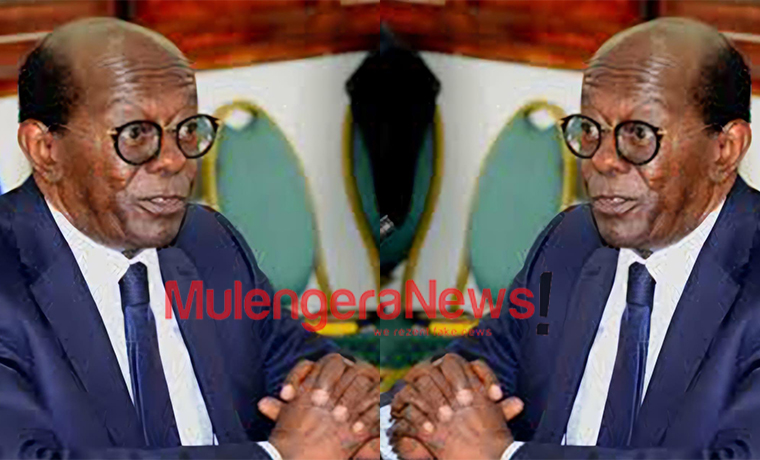
The passing of Peter Mulira, a longstanding Rotarian and Senior Counsel, has left me deeply shaken. Peter was a gentleman and a scholar, reservoir of knowledge. I am not aware of anyone who possessed such a deep understanding of Buganda land matters, or indeed the constitutional history of Buganda, as he did. His knowledge of Uganda’s past was encyclopedic, enriched by his personal familiarity with many of the early figures who often visited his family home.
Peter was born into a politically active and historically significant family, the son of Eridadi Mulira and Rebecca Mulira (née Allen Namugenze). Rebecca was the daughter of Hamu Mukasa and sister to Victoria Nalwanga who sired Sarah Nalule, mother of the current Kabaka, Ronald Muwenda Mutebi II. Hamu Mukasa survived the 1886 religious persecutions and later served as secretary to Appolo Kagwa, accompanying him to the United Kingdom in 1902 for the coronation of King Edward VII.
Rebecca herself was a pioneer of the women’s movement in Uganda. She was among the founders of the Uganda Council of Women, which later gave rise to the YWCA Uganda, alongside notable figures such as Rhoda Kalema, Esseza Makumbi, Lilian Binaisa Mukwaya, Kate Kibuka, and Elizabeth Binaisa. She was also a founding member of the Pan African Women’s Organization and, in 1961, contested for a seat in the Buganda Lukiko.

Peter’s father, Eridadi, was equally distinguished. One of the first African teachers at King’s College Budo, he hailed from Koki royalty. A staunch anti-colonial activist, he was part of the Fabian movement while studying in England, alongside figures such as Kwame Nkrumah. He later founded the Progressive Party and the newspaper Uganda Empya, both of which advocated for independence. For his political activities, he was exiled to northern Uganda together with other nationalists, including Godfrey Binaisa. A prolific writer, he authored a Luganda-English dictionary and the children’s book Teefe, and later served as a Member of Parliament after independence.

Growing up in such a household, Peter witnessed at close range events that would shape Uganda’s history. Among them was the 1953 exile of Edward Mutesa II. His father played a key role in drafting the 1955 Namirembe Agreement that facilitated the Kabaka’s return. Peter would later share his interpretations of such pivotal moments with remarkable clarity, bringing to life the personalities who shaped Uganda’s path to independence. Though I did not always agree with his views—particularly his rather uncharitable assessment of my uncle, Godfrey Binaisa I chose to appreciate the depth of his perspective.
I came to know Peter relatively late in life, having first known his younger brother, Ham, during my time at Makerere. At Budo, Peter’s father had served as Chairman of the Board of Governors, part of a generation deeply committed to community service. Rebecca, ever active, remained a regular contributor to the New Vision, writing on political and social issues. She was a vivacious and engaging woman with a remarkable memory. Her sudden death in a motor accident in 2001 was a cruel end to an extraordinary life.
Despite the difference in our ages, Peter and I became close through Rotary, relating as though we were old friends. We often exchanged views on the major political and social issues of the day. Having once worked as a lawyer with the East African Community, he later established himself in private practice at the Diamond Trust Building, where he mentored a generation of lawyers who rose to prominence including the current Attorney General, Mr Kiryowa Kiwanuka, several Justices and Senior Counsels. In 2023, many of them organized a thanksgiving dinner in his honor, acknowledging his profound influence.

Following the passing of veteran politician Abu Mayanja in 2005, Peter took over his New Vision column, offering incisive commentary on law and politics, always rich in insight.
Peter’s contributions extended beyond the legal field. He was among the founders of Teefe Bank, Kampala Hospital (together with Professor Richard Kanyerezi), and served as a church warden at St. Stephen’s Church, Kisugu. He also served for many years as a cabinet minister in the Buganda Kingdom. He once confided in me his aspiration to serve as a Justice of the Supreme Court—a dream he felt had been thwarted—but he had come to terms with it and moved forward.
Like many who live full and complex lives, Peter was interpreted in different ways by different people. Some found him complicated. But to me, he was a principled man, steadfast in his beliefs within Rotary, we knew him as a stickler for rules—and deeply loyal to his friends. During the COVID-19 period, at his urging, we arranged for Rotary to honor his longtime friend, John Nagenda, for his literary contributions. Watching the two reminisce about their childhood in Mengo was a moment of pure joy.
Peter cared deeply for those close to him. He shared a strong, almost father-daughter bond with my successor as Rotary President, Susan Ajok (RIP), whose sudden passing affected him profoundly. He remained her steadfast supporter to the very end. When I secured an assignment in Tanzania, Peter quietly organized a farewell cake for me. When I discovered it was his doing and called to thank him, he was mildly annoyed that his surprise had been uncovered—but he went on to offer me thoughtful counsel I greatly valued.
A gentleman of the old world, Peter loved books, and his home was filled with classics from which he often quoted. I understand that in his younger days at Budo, he played a musical instrument and was also an accomplished cricketer. Even in later years, he remained physically active until his health declined.
The last time I saw him was on the steps of Namirembe Cathedral, during the funeral of his son a loss that understandably took a heavy toll on him. He was surprised to see me and greeted me with his familiar warm smile, though he appeared frail. I had hoped to visit him again and discuss preserving his many writings on Buganda’s land and constitutional history much like his father’s works, which are archived at Cambridge University—for future generations. Sadly, that opportunity never came.
With his passing, Uganda has lost a legal titan, who has left an indellible print on our constitutional history. (For comments on this story, get back to us on 0705579994 [WhatsApp line], 0779411734 & 041 4674611 or email us at mulengeranews@gmail.com).