







By Ben Musanje
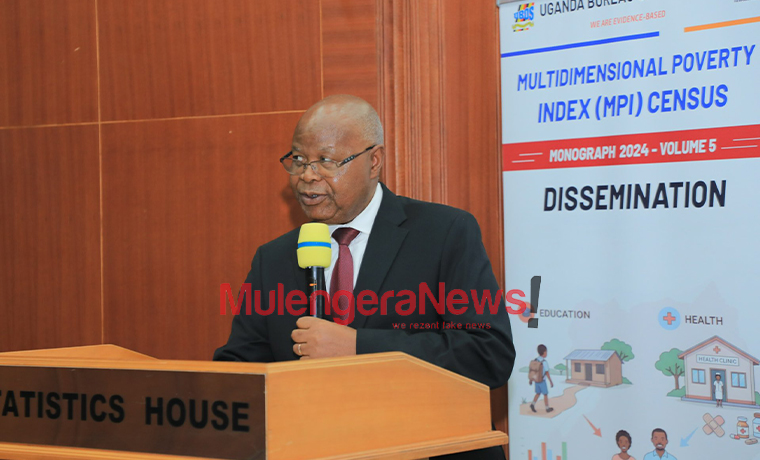
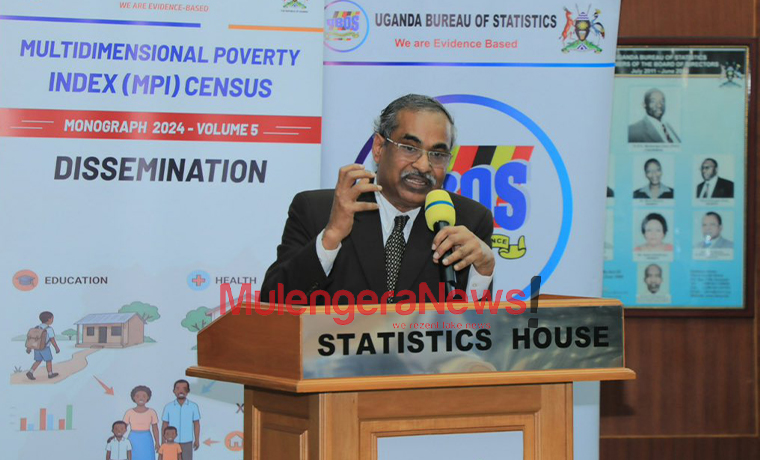
Newly created districts and the elite capture of resources are key drivers of rising poverty levels in Uganda, threatening the effectiveness of the government’s flagship Parish Development Model (PDM), according to Dr. Chris Mukiza, Executive Director of the Uganda Bureau of Statistics (UBOS).
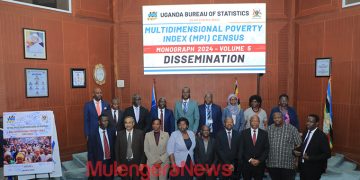
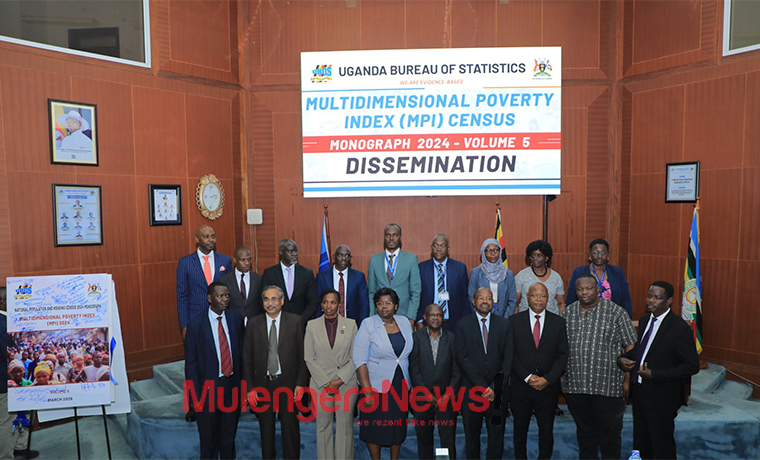
Dr. Mukiza made the remarks during the release of the Multidimensional Poverty Index (MPI) Census Monograph 2024 – Volume 5 at Statistics House on Thursday. The MPI report, the fifth thematic output from the National Population and Housing Census 2024, provides a comprehensive analysis of poverty beyond traditional income measures, highlighting multiple deprivations experienced by households and individuals across the country.
“This volume builds on previous outputs from the 2024 census, including the main census report disseminated in December, the Population Projection Report for 2025–2050, sub-regional profiles, and thematic monographs on disability, orphans, and vulnerable children,” Dr. Mukiza explained. “Each output delves deeply into specific dimensions of social and economic life, allowing policymakers to understand poverty in all its forms, not just income deprivation.”

Drawing on decades of research, Dr. Mukiza highlighted that poverty in Uganda extends beyond lack of income. “Poverty is hunger. Poverty is lack of shelter. Poverty is being sick and not having access to a doctor or nurse. Poverty is not being able to send children to school, not knowing how to read, or not having a job. It is living in fear for the future, losing a child to illness caused by unclean water and malnutrition, and experiencing powerlessness and lack of representation,” he said.

He noted that even households with some income often remain trapped in these multiple deprivations, underscoring the importance of the multidimensional approach. “The MPI allows us to track how far we have come in achieving Sustainable Development Goal 1, which seeks to eradicate poverty in all its forms,” Dr. Mukiza said.
The UBOS chief, who is also the country’s chief statistician, pointed to elite capture and the proliferation of newly created districts as major structural factors driving poverty. “Households in newly created districts often face higher poverty rates compared to established districts,” he said, citing research from 2005 to 2008 that he conducted using multiple household surveys. “Even when resources are targeted from the center, they often end up in the pockets of local elites, undermining programs such as the Parish Development Model.”
Dr. Mukiza urged policymakers to use the MPI data to design interventions that avoid these pitfalls. “This research should inform future programs, ensuring that fiscal decentralization and targeted initiatives genuinely reach the most vulnerable,” he said.

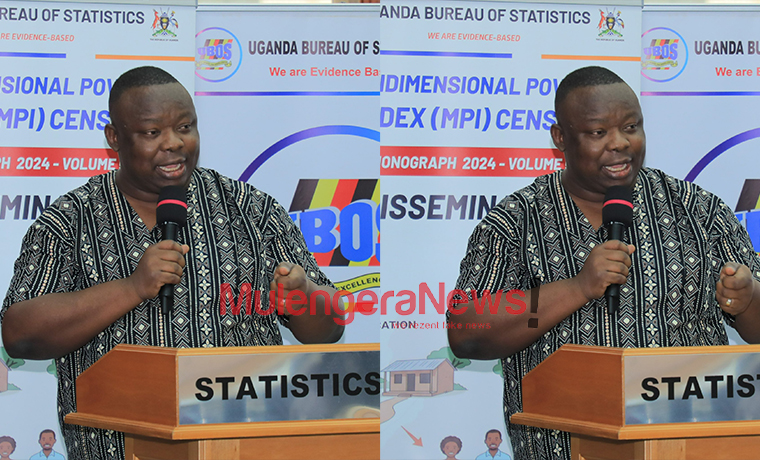
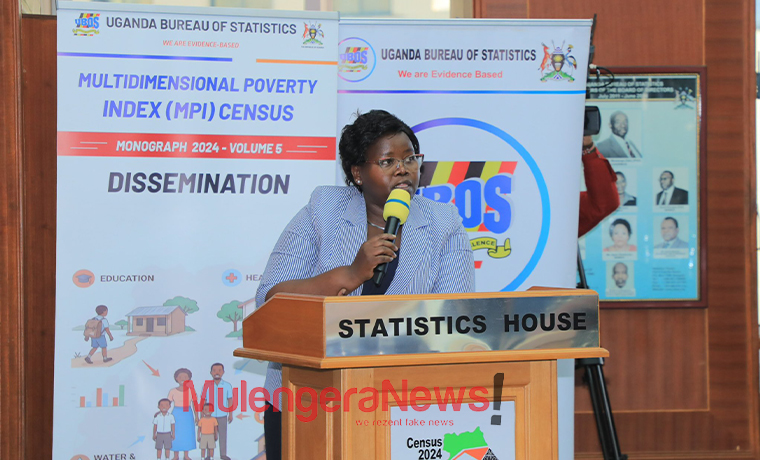
Representing the UBOS Board Chairman Albert Byamugisha, Irene Birungi Mugisha, UBOS Board Member, emphasized the strategic importance of reliable statistics. “Quality data is not just a technical requirement; it is a national asset that allows the government, private sector, and public to make informed decisions that improve citizens’ lives,” she said.
She highlighted how statistics underpin major government initiatives, including the National Development Plans (NDP I–IV), the Poverty Eradication Action Plan, and the Parish Development Model. “Through data, government programs such as infrastructure development, modernization of agriculture, and social protection interventions can be monitored and refined to maximize impact,” she said.
Dr. John Ilukol, Economist at the World Bank Africa, commended UBOS for producing multiple thematic outputs from the census. He described the MPI Monograph as a “critical resource that provides a clear picture of poverty patterns across Uganda’s regions, informing policy decisions and targeted interventions.”
Similarly, Dr. Thangavel Palanivel, Chief of the Strategic and Policy Unit and Senior Economic Advisor at UNDP Uganda, highlighted UNDP’s role in developing MPI methodologies, building capacity among government officials, and promoting the use of MPI data in policy design. “UNDP remains committed to supporting human development analytics, poverty diagnostics, governance reforms, and climate-resilient livelihoods,” he said, noting efforts to strengthen local-level planning, enhance social protection, and promote inclusive service delivery through innovation and digital solutions.
Dr. Mukiza concluded by calling on all stakeholders, including media and policymakers, to leverage the MPI data to drive tangible poverty reduction. “We must strengthen policies and programs to improve the poverty index to zero and ensure that every Ugandan is uplifted from poverty in all its forms,” he said. He also noted a personal milestone, revealing that the day of the dissemination coincided with his birthday, marking over 20 years of work on poverty research in Uganda.
The MPI Census Monograph 2024 provides actionable insights for policymakers and development partners seeking to address the multi-dimensional nature of poverty, reaffirming the central role of evidence-based planning in achieving Uganda’s development objectives. (For comments on this story, get back to us on 0705579994 [WhatsApp line], 0779411734 & 041 4674611 or email us at mulengeranews@gmail.com).