






By Ben Musanje
The Uganda People’s Congress (UPC) has welcomed the Constitutional Court’s landmark decision nullifying key provisions of the Computer Misuse (Amendment) Act, describing it as a major victory for free expression and democratic governance in Uganda.
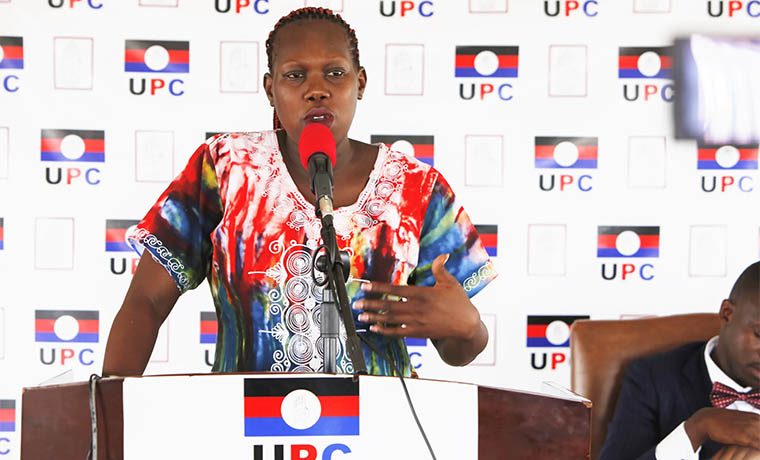
Reacting to the ruling, UPC spokesperson Sharon Arach Oyat said the judgment reaffirms constitutional safeguards and restores confidence in the rule of law after years of what the party views as misuse of the legislation to suppress dissenting voices.
The decision arose from a petition filed by the Uganda Law Society and other civil society actors, with a panel of five justices led by Irene Mulyagonja declaring several sections of the Act unconstitutional. The court struck down Sections 11, 23, 26, 27, 28 and 29, as well as Section 162 of the Penal Code Act, citing violations of rights to freedom of expression and access to information.
The petitioners, including Unwanted Witness Uganda, African Centre for Media Excellence and the Editors’ Guild, had challenged the provisions for being vague and overly broad, arguing that they enabled arbitrary arrests and criminalized legitimate online communication.

UPC maintains that the Act had, in practice, been used to target opposition supporters and restrict political expression, particularly on social media platforms. The party argues that the now-nullified provisions ran contrary to the spirit of Uganda’s Constitution by undermining civil liberties and enabling excessive state control over digital communication.

Following the ruling, Sharon Arach Oyat called for immediate action from state authorities, including the unconditional release of all individuals arrested or convicted under the affected provisions. The party is also demanding that their cases be dropped and that those affected receive compensation.
The judgment comes amid renewed debate on digital regulation, with Emmanuel Lumala Dombo, communications director of the National Resistance Movement, recently urging Parliament to revisit the law to address regulatory gaps in Uganda’s digital space while promoting responsible online conduct.
For UPC, however, the court’s ruling represents a decisive correction, reinforcing the principle that legislative authority must operate within constitutional limits and signaling a turning point in the protection of civil liberties in Uganda’s evolving digital landscape. (For comments on this story, get back to us on 0705579994 [WhatsApp line], 0779411734 & 041 4674611 or email us at mulengeranews@gmail.com).