






By Ben Musanje
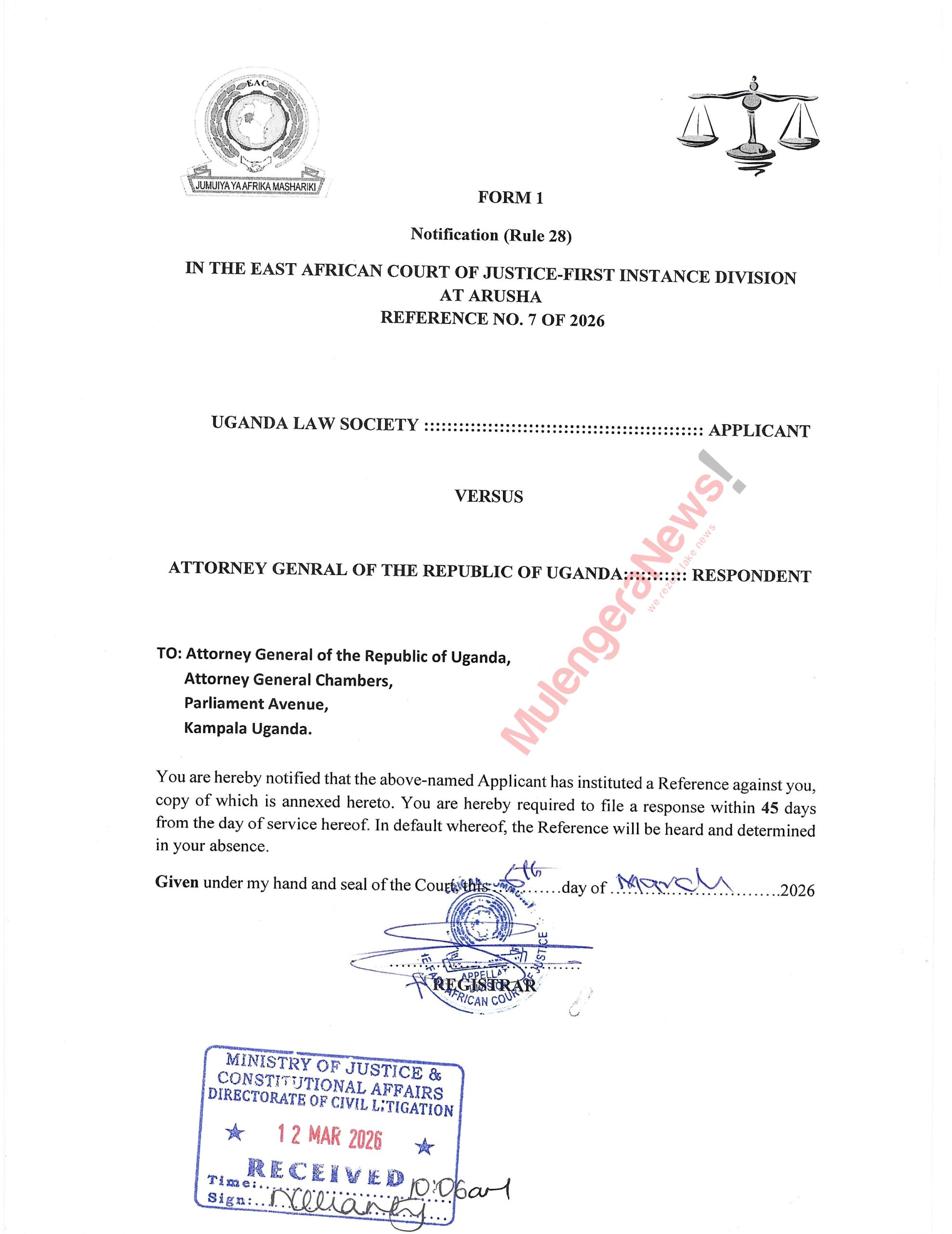
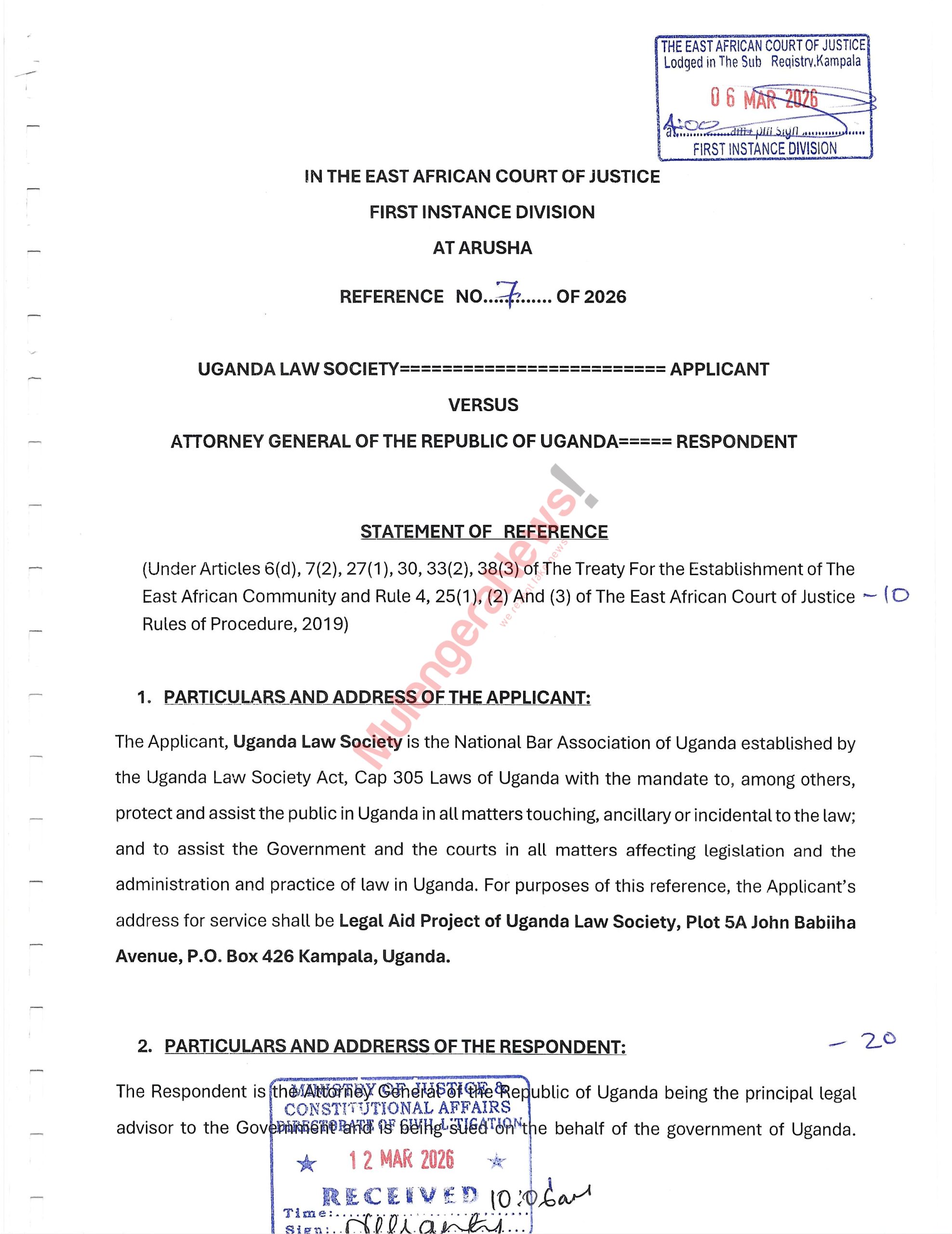
A fierce legal battle has exploded on the regional stage after the Uganda Law Society (ULS) dragged the Government of Uganda to the powerful East African Court of Justice in Arusha, Tanzania, accusing the state of unlawfully shutting down major civil society organizations in a dramatic crackdown that has shaken the country’s legal and human rights community.
The case has been filed against the Attorney General of the Republic of Uganda, who is the chief legal advisor to the government. The lawyers’ body argues that the government violated regional law and the principles of democracy after several well-known organisations were abruptly suspended on allegations linked to national security.
At the centre of the storm is a controversial decision communicated towards the general elections on January 9, 2026, when authorities ordered several organisations to immediately stop operating. The decision was reportedly based on intelligence claims suggesting the groups were involved in activities considered harmful to the security and laws of Uganda.

The suspension targeted some of the most prominent civic organisations in the country, including Chapter Four Uganda, African Centre for Media Excellence, Agora Centre for Research, National Coalition of Human Rights Defenders, Alliance for Finance Monitoring, Centre for Constitutional Governance, Human Rights Network for Journalists, Uganda National NGO Forum, Network of Public Interest Lawyers and African Centre for Treatment and Rehabilitation of Torture Victims.

The sudden move sent shockwaves through civil society because these organisations are widely known for defending human rights, promoting transparency, supporting journalists and offering legal aid to vulnerable citizens.
According to the legal documents filed before the regional court, the suspension forced the organisations to halt all their activities immediately. Authorities also alerted the police and financial institutions, effectively freezing the operations and transactions of the affected groups.
Lawyers behind the case say the organisations were never given a chance to defend themselves before the decision was made. They argue that the government acted without warning, without explaining the alleged offences and without granting the organisations a fair hearing.

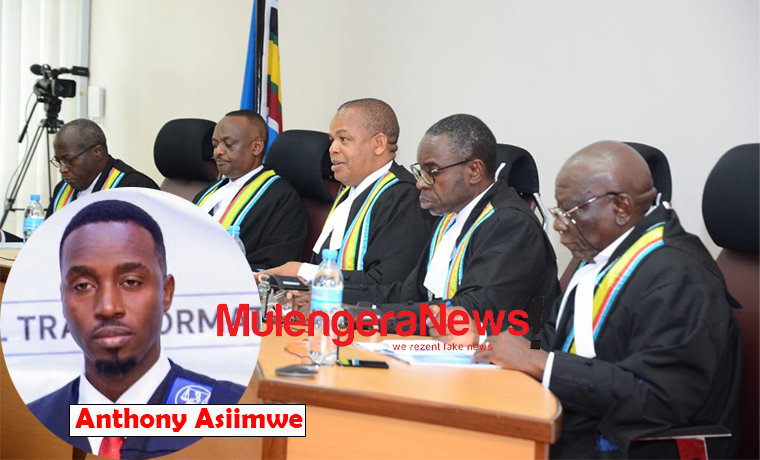
The explosive court action is backed by a sworn affidavit from Anthony Asiimwe, a senior lawyer and Vice President of the Uganda Law Society. Asiimwe says several executive directors from the affected organisations approached him after the shocking suspension, explaining that they had never been summoned or questioned by authorities before their operations were shut down.
He further revealed that more than two months after the government’s drastic decision, none of the organisations had their suspension lifted and all remain paralysed.
The Uganda Law Society believes the government’s action violates fundamental principles of good governance, democracy and the rule of law that Uganda committed to when it joined the East African Community.
The lawyers argue that the decision breaches key provisions of the regional treaty that require member states to respect human rights, fairness and transparency. They also say the shutdown contradicts protections guaranteed under Uganda’s Constitution.
Before taking the matter to the regional court, the Uganda Law Society attempted to resolve the issue through dialogue. On February 19, 2026, Anthony Asiimwe wrote a formal demand letter to the Executive Director of the National Bureau for Non-Governmental Organisations seeking the immediate lifting of the suspension.
The letter warned that the continued shutdown of the organisations was unlawful and was harming vulnerable citizens who depend on civil society groups for legal assistance and other essential services.
Despite the warning, no response came from authorities, triggering the dramatic legal showdown now unfolding in the East African Court of Justice.
Through the case, the Uganda Law Society is asking the regional court to declare the government’s decision illegal and void. The lawyers are also demanding an order forcing authorities to restore the operations of all suspended organisations.
In addition, they want the court to stop the government and its agencies from enforcing the suspension or blocking the activities and financial transactions of the NGOs.
The case has instantly become one of the most explosive legal battles in the region this year because it pits Uganda’s top lawyers against the government over the future of civil society.
If the court rules in favour of the Uganda Law Society, the decision could force the government to reverse the controversial shutdown and reopen the doors for the affected organisations.
But if the government successfully defends its position, it could reinforce its power to clamp down on organisations it suspects of threatening national security.
As the legal drama unfolds in Arusha, the eyes of activists, lawyers and governments across East Africa are now fixed on the courtroom, waiting to see how the powerful regional court will rule in a case that could redefine the balance between national security and civil freedoms in Uganda. (For comments on this story, get back to us on 0705579994 [WhatsApp line], 0779411734 & 041 4674611 or email us at mulengeranews@gmail.com).