







By Aggrey Baba
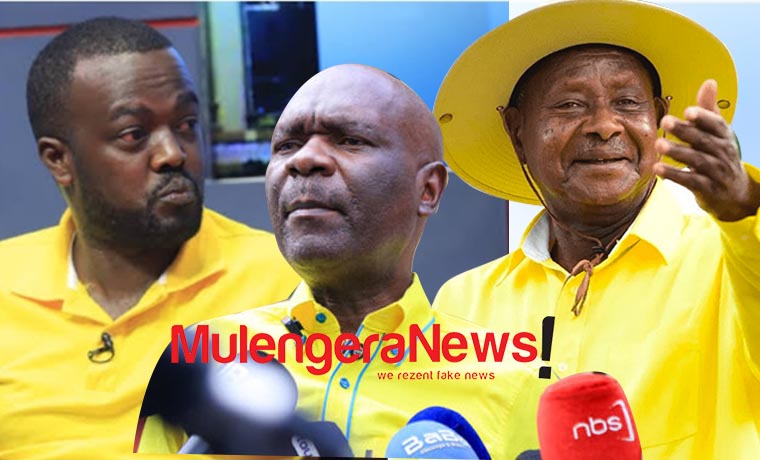
Herbert Anderson Burora has claimed that the Opposition is misdirecting its energy by attacking Yusuf Nsibambi over his defection to the NRM instead of preparing for what he described as a larger political shift being engineered by the yellow.
Speaking on One on One political show on Sanyuka TV on Thursday, the former Rubaga Resident City Commissioner and NRM flag bearer for Nakawa West said the reaction to Nsibambi’s move proves that the Opposition is internally unsettled and strategically distracted.
The opposition is busy castigating Nsibambi while the NRM is planning a constitutional amendment. By the time they wake up, it will be late and they will have no fighters,” Burora said, adding that very many other members of the opposition are in talks with the NRM and will soon join the yellow camp officially.
“I personally know like 35 of them,” Burora said.

Nsibambi, the outgoing Mawokota South MP, on Wednesday, February 18th confirmed his decision to join the NRM, weeks after a high-level meeting with President Museveni in State House at the beginning of this month. The meeting, according to Nsibambi, brought together over 16 Opposition members, most of whom were MPs who had lost in the January 15 parliamentary elections.

Nsibambi has since then defended the meeting publicly, noting that the discussions focused strictly on reconciliation and negotiating for the release of political prisoners, including Butambala County MP Muhammad Muwanga Kivumbi, who’s facing terrorism-related charges.
His eventual shift to the NRM has since drawn criticism from several Opposition figures, including those who argued that his exit would not significantly weaken their ranks. However, Burora rejected that view, describing Nsibambi as “a very important pattern in Uganda’s politics” whose absence creates a visible gap in the opposition.
According to Burora, Nsibambi is not the only Opposition MP engaging President Museveni. He argued that many legislators quietly seek audience with the President despite publicly positioning themselves against the NRM. In his assessment, Museveni does not require their support to remain politically secure because the NRM already commands a firm parliamentary majority. Instead, he said, the President engages them strategically, especially those he believes have capacity but are underutilized within Opposition structures.

Burora further claimed that internal fatigue among Opposition supporters is contributing to the current instability. He contrasted the present situation with what he described as the leadership approach of former FDC leader Kizza Besigye, whom he credited with maintaining cohesion by guiding members rather than publicly attacking them [the way NUP leader, Robert Kyagulanyi did when they got a misunderstanding with for LoP and party Deputy President, Mathias Mpuuga]. Under Besigye’s time, Burora noted that strong Opposition leaders in various constituencies were respected and not undermined by rival candidates from within.
Turning to Mawokota South, Burora projected direct electoral consequences, saying that Nsibambi commands personal loyalty from thousands of voters and that at least half of the 6000 who voted him in the January 15 elections could move with him to the NRM. He noted that in Nsibambi’s speech yesterday, he hinted that the venue (NRM headquarters) was small and that many more supporters were willing to cross over.
Burora also questioned the Opposition’s future in the constituency (Mawokota South), asking who remains to carry its banner if Nsibambi consolidates support under the NRM ticket. In his view, ignoring the implications would be politically careless.
Like passengers arguing inside a bus while the driver has already changed direction, Burora said the NRM is reorganizing and correcting its weaknesses quietly, while the Opposition is locked in public disputes that expose internal cracks.
Burora also said that political allegiance is not permanent and that shifts should not be treated as betrayal, maintaining that dialogue with the President can influence political perspectives and that Nsibambi’s change of position may have followed his direct engagement with Museveni.