






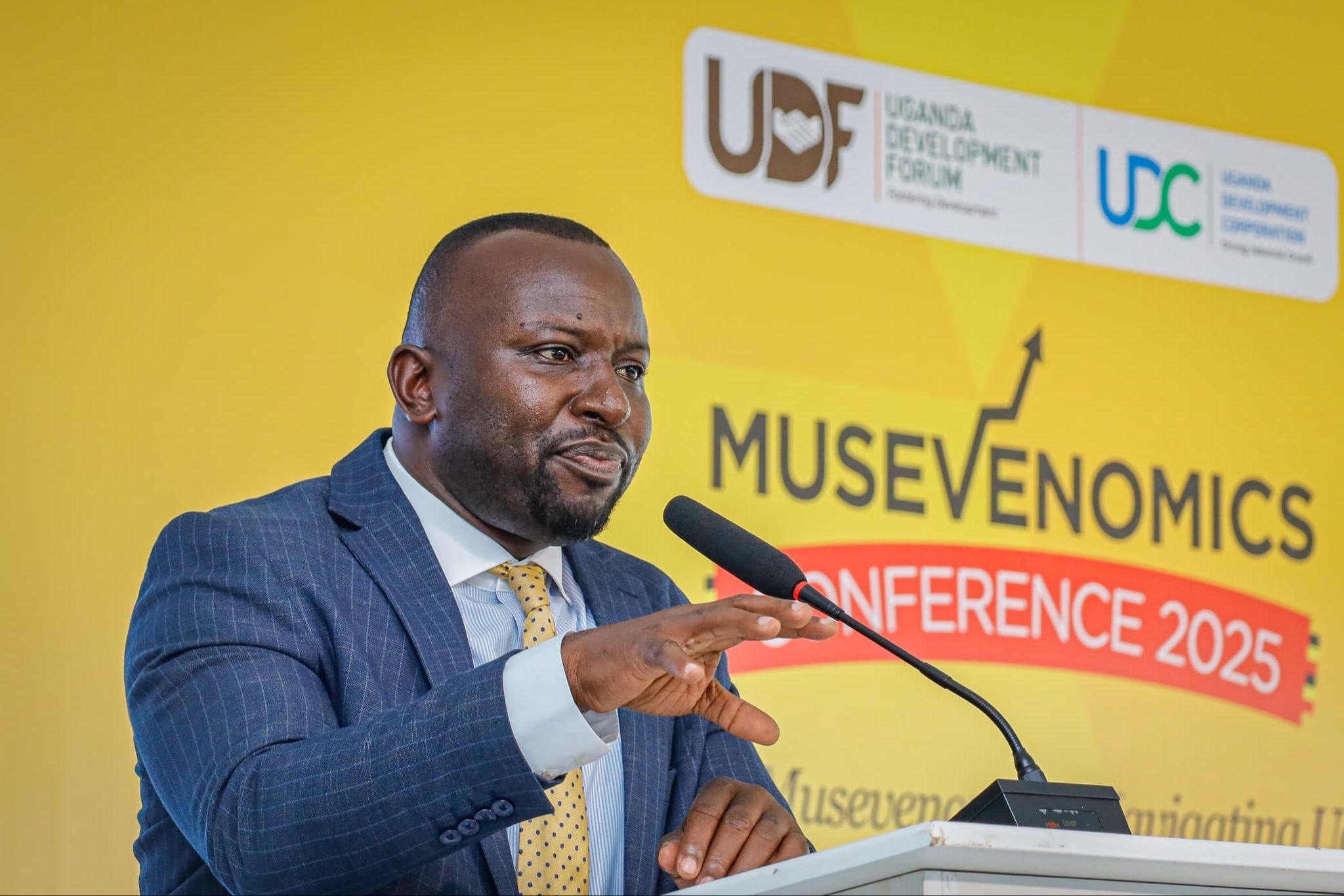
By Eng. Raymond Kamugisha Akankwatsa (rayakamu@gmail.com)
There are moments in a nation’s journey when policy ceases to be mere text and becomes lived reality, when ideology sheds its ceremonial attire and walks into the workshop, the factory floor, the welding bay, and the coding lab. Uganda is living through such a moment. In the hum of machines across Namanve, Soroti, Mbale, Mbarara, Mubende, Masaka, Lira, Gulu, Hoima, Kasese, and beyond, a new nuance of development is being written. It is pragmatic, production-driven, youth-centred, and unapologetically industrial. At the heart of this quiet revolution stand the Presidential Industrial Hubs and allied skilling projects, arguably one of the most consequential interventions in Uganda’s march toward a money economy and middle-income status.
To appreciate the magnitude of this intervention, one must first understand the historical dilemma Uganda has grappled with since independence: a youthful population structurally trapped in informality, an education system long tilted toward theory rather than production, and an economy dominated by subsistence agriculture and low-value services. For decades, Uganda produced graduates fluent in academic grades but deficient in skills, abundant in ambition but starved of opportunity. The result was predictable, graduate unemployment, underemployment, rural-urban migration, and a swelling informal sector that generated survival, not prosperity.


The Presidential Industrial Hubs emerged as a direct response to this structural paradox. Conceptualized under the personal stewardship of H.E. Yoweri Kaguta Museveni, these hubs were not born out of donor conditionalities or imported development templates. They were forged from a long-held ideological conviction of the President: that no country develops by consuming what it does not produce, and no youth is empowered without a skill that can translate knowledge into money.
The genesis of the hubs can be traced to the broader industrialization agenda articulated in Uganda Vision 2040 and the successive National Development Plans. However, their operationalization gained remarkable momentum from around 2021–2022, when the President insisted on decentralized, practical skilling centres directly linked to production, value addition, and market demand. Unlike conventional vocational institutes weighed down by bureaucracy, the hubs were designed to be agile, hands-on, and results-oriented.

Under the technical and strategic leadership of Engineer Raymond Kamugisha Akankwatsa, the Director of Presidential Industrial Hubs, this vision took concrete form. Kamugisha, an engineer with a rare blend of technical depth, progressive mindset and developmental consciousness, has been instrumental in translating presidential philosophy into operational systems. The hubs under his stewardship are not mere training centres; they are micro-industrial ecosystems. Youth are trained in welding and fabrication, industrial mechanics, electrical installation, automotive technology, carpentry, leather processing, textiles, agro-processing, ICT, and increasingly, light manufacturing linked to construction and energy.
The numbers, even in their conservatism, tell a compelling story. By 2024, over 25 Presidential Industrial Hubs had been established across the country, training tens of thousands of young Ugandans, many of whom previously had no access to formal employment or capital. Government briefings and field reports indicate that more than 12,000 youths have completed intensive skilling programmes, with a significant proportion transitioning into self-employment, cooperatives, or absorption into industrial parks such as Namanve, Mbale, and Kapeeka. This is not skilling for certificates; it is skilling for survival, dignity, and income.
The impact on the money economy is profound. A money economy thrives when households earn, spend, save, and reinvest through monetized transactions rather than subsistence exchange. Every skilled welder fabricating doors in Soroti, every youth-led carpentry workshop supplying furniture to schools in Lira, every small-scale manufacturer producing metallic beds, tanks, or agro-tools is injecting liquidity into local economies. These are not abstract macroeconomic theories; they are daily cash flows, school fees paid, rent settled, savings mobilised, and taxes contributed.
Equally critical is the cultural shift the hubs are catalysing. For too long, Ugandan society subtly deified white-collar employment while stigmatizing manual and technical work. The Presidential Industrial Hubs are dismantling this hierarchy of dignity. They are restoring honour to production, to working with one’s hands, to earning through skill rather than speculation. In doing so, they are aligning Uganda with the historical pathways of now-developed nations from Germany’s Mittelstand to South Korea’s vocational-industrial complex, where skilled labour formed the backbone of middle-income transition.
Critically, the hubs are not operating in isolation. They dovetail with Uganda’s expanding industrial parks, energy infrastructure, road network, and regional markets under the East African Community. A skilled youth in Hoima today is not merely trained; they are positioned within an emerging oil and gas value chain. A fabricator in Mbale is part of a regional construction boom. This systemic integration is what gives the hubs their transformative potential.
Of course, no serious analysis should lapse into uncritical praise. Challenges persist, scaling capacity, ensuring uniform quality across hubs, access to startup capital post-training, and deeper private sector integration. Yet, the intellectual honesty of this intervention lies precisely in its openness to iteration. The hubs are learning institutions, evolving with feedback from the ground, refining curricula based on market needs, and increasingly incorporating entrepreneurship and financial literacy into technical training.
What makes this initiative historically significant is not merely what it does but what it signals. It signals a state reclaiming its developmental role not as a bloated employer but as an enabler of productive citizenship. It signals leadership that understands that middle-income status is not declared; it is manufactured, slowly, deliberately, skill by skill, and workshop by workshop.
In a global era where many African countries are trapped between aid dependency and service-sector illusions, Uganda’s Presidential Industrial Hubs stand out as a bold bet on industrial realism. They are imperfect, yes, but they are alive, grounded, and working. They are turning idle youth into economic actors, policy into production, and patriotism into productivity.
History is often unkind to rhetoric but generous to results. If Uganda sustains, scales, and refines this skilling-industrial nexus, future historians may well argue that the road to Uganda’s money economy and middle-income status did not begin in conference halls or policy papers but in the clang of metal, the spark of a welding torch, and the determined hands of a skilled Ugandan youth. The writer is the Director Industrial Hubs and Presidential Projects at State House Uganda. (For comments on this story, get back to us on 0705579994 [WhatsApp line], 0779411734 & 041 4674611 or email us at mulengeranews@gmail.com).