







By Aggrey Baba
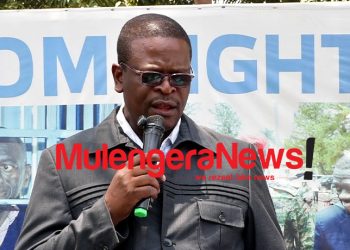
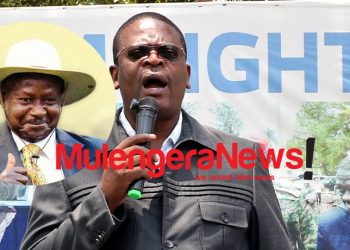
NRM Secretary General (SG) Richard Todwong has said the ruling party’s continued electoral dominance is rooted in its grassroots organization, arguing that politics without village-level structures leaves voters with noise instead of leadership.
Speaking during a TV interview on Tuesday, February 3rd, 2026, Todwong explained that the NRM invested heavily in Local Council One (LC1) structures across the country, ensuring the party had flag bearers and mobilizers in almost every village. He contrasted this with opposition parties that, according to him, failed to sponsor candidates at that level in many areas.
Todwong said this gap means some communities are politically active only during national campaigns, when candidates appear briefly with promises and disappear after voting day, just like rain that falls once and leaves the ground dry again.
According to Todwong, the absence of strong grassroots leadership also shaped the tone of the recent (January 2026) campaigns, with some candidates (mostly, from the opposition) relying more on attacking individuals than presenting clear programmes. He added that when parties lack structures, they often replace ideas with anger, leaving voters with little substance to evaluate.
He explained that the NRM’s political approach is built around addressing collective needs rather than personalizing government. Turning elections into battles between individuals, Todwong warned, weakens institutions and shifts attention away from service delivery, governance and long-term planning.

Todwong also addressed concerns about voter understanding of the electoral process, saying civic education remains weak in many parts of the country. He said many voters still struggle to properly understand ballots, candidate roles and the importance of scrutinising manifestos.

The SG called on the Electoral Commission and other state agencies to intensify voter education, arguing that informed voters are the backbone of meaningful elections. In his view, manifestos should be treated as working documents, not campaign decorations.
On the conduct of the elections, Todwong acknowledged that the NRM faced intimidation of its supporters in some areas but said the party responded by strengthening mobilization and voter awareness, particularly on identifying party symbols and candidates on the ballot.
Reflecting on the election outcome [71% for the president], Todwong said the NRM welcomed the victory, adding that the result was expected given the party’s preparation and nationwide reach. (For comments on this story, get back to us on 0705579994 [WhatsApp line], 0779411734 & 041 4674611 or email us at mulengeranews@gmail.com).