






By Aggrey Baba
Hon. Ofwon Opondo, the newly elected Eastern Uganda’s MP for the Elderly and former Media Centre boss, has launched a critique of opposition politicians who lost in the recent elections.
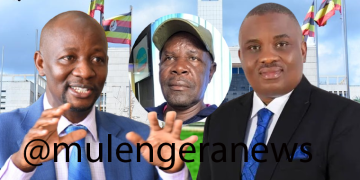
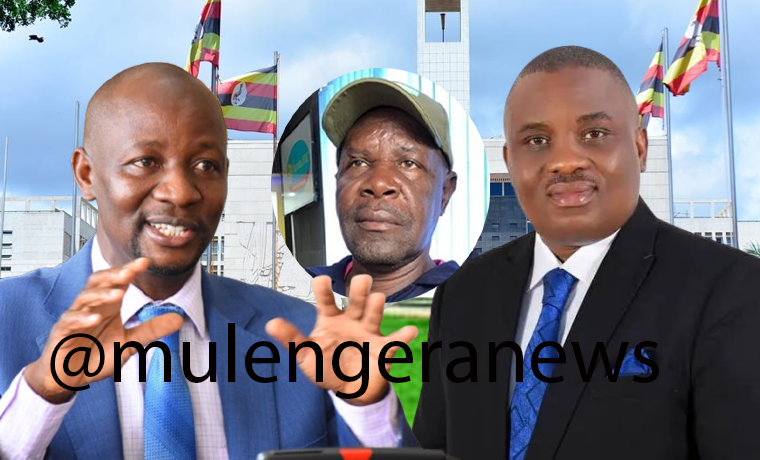
Writing in his column in the January 31, 2026 Weekend Vision, Opondo said the defeats of Salongo Erias Lukwago, Muwanga Kivumbi, Ibrahim Ssemujju Nganda, and Paul Ssemakula Luttamaguzi show that noisy and divisive politics no longer resonate with Ugandan voters.
The four firebrand politicians, who have been active in the political arena since their university days, have long relied on public visibility, fiery speeches, and ethnic-based appeals to maintain their influence, according to Opondo.
Their careers have taken them through DP’s Uganda Young Democrats (UYD), the tribal Buganda group Nkoba Za Mbogo, and more recently the Suubi platform. Over the years, they built reputations as outspoken and high-profile figures in Uganda’s opposition politicr, often dominating media headlines with controversial statements.

However, Ofwino Opondo says their prominence did not translate into electoral success in the January 2026 polls.

Lukwago, who served as Kampala City Lord Mayor for 15 years, came third with 41,915 votes, far behind NUP’s Ronald Balimwezo (141,220 votes) and NRM’s Kizito Nsubuga (43,615 votes). Opondo said that drspite Lukwago attempting to maintain influence through his splinter party, the People’s Front for Freedom (PFF), which won only two parliamentary seats, both he and his party secretary-general, Ssemujju Nganda, the Kira Municipality MP, were defeated, marking a significant political setback.
Hon.Kivumbi, recently appointed NUP vice-president for Buganda, is facing terrorism-related charges linked to violence in his Butambala constituency that left seven people dead on polling day. He has also been known for provocative statements, including publicly describing President Yoweri Museveni as “rotten and stinking.” Opondo noted that such behaviour, combined with reliance on tribal and sectarian appeals, has made the four opposition bigwigs out of touch with a growing segment of younger, more issue-focused voters.
Just like drums whose beats no longer reach the crowd, Opondo noted these politicians’ careers, like buildings built on sand, have little stability in the eyes of Ugandan voters, sending a clear message, that noise and theatrics alone cannot secure political survival in Uganda’s politics today.

He added that the defeats highlight a broader change in Uganda’s political landscape, saying that with many voters under 35, there is a shift toward leaders who engage with citizens’ real concerns, deliver practical solutions, and avoid divisive rhetoric.
For the four politicians, entering their mid-fifties and relying on strategies developed decades ago, Ofwono Opondo said that a comeback will be difficult unless they adapt to the country’s evolving electorate.
Opondo’s commentary serves as both a critique and a cautionary note, suggesting that the country’s politics is moving toward substance over spectacle, and the era when loud voices and personal notoriety could guarantee political influence appears to be fading. (For comments on this story, get back to us on 0705579994 [WhatsApp line], 0779411734 & 041 4674611 or email us at mulengeranews@gmail.com).