






By Ben Musanje
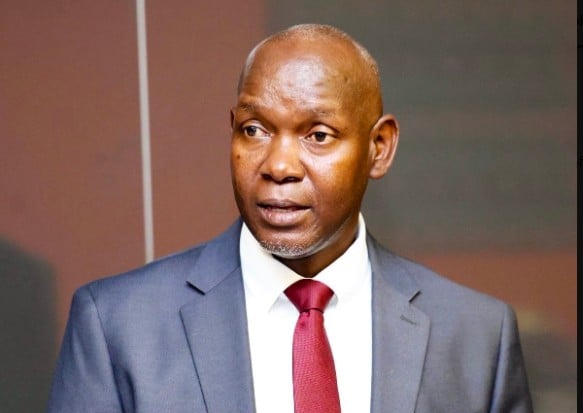
The Office of the Director of Public Prosecutions (ODPP) has issued a blistering demand for accountability after shocking allegations of torture were leveled against Chief State Attorney Richard Birivumbuka by former police officer Abdunoor Ssemujju, known as Minaana.
These allegations, made during a court session in Nakawa, have ignited public outrage and raised serious concerns about corruption, abuse of power, and interference within Uganda’s justice system.
Minaana, who is currently facing charges related to the 2015 assassination of Joan Kagezi, a prominent Assistant Director of Public Prosecutions, made the explosive claims in a dramatic moment in court.

In an act of defiance, he removed his shirt to reveal deep, painful scars on his back, which he insisted were the result of torture inflicted on him during his detention in a police “safe house.”

He directly accused Birivumbuka of being responsible for his mistreatment, claiming that the abuse was not only physical but psychological, with violent beatings and severe mental stress.
Minaana testified that he still felt pain from the wounds and that the scars on his back served as proof of the torture he had endured. He described the treatment as brutal and ongoing, with both physical and psychological abuse.
His testimony, which included the vivid display of his scars, left the courtroom in shock and heightened public concern. Video clips captured by NTV and NBStv showed Minaana’s outburst as he loudly repeated his allegations, demanding justice for the suffering he claimed to have endured.

The allegations quickly gained widespread attention, both in the courtroom and across the country. In response to the claims, Birivumbuka strongly denied any involvement in the alleged torture.
He requested an adjournment of the case, stating that investigations into the allegations were nearly complete and should be allowed to conclude before any further actions were taken. Birivumbuka maintained that the investigation was being handled properly and would eventually clarify the situation.
The ODPP swiftly responded to the situation, condemning any form of harassment or intimidation aimed at its prosecutors. Jacquelyn Okui, the Public Relations Officer for the ODPP, emphasized that any interference with the professional duties of prosecutors whether through false allegations, harassment, or direct intimidation was unacceptable and would not be tolerated.
Okui reaffirmed the ODPP’s commitment to carrying out the prosecution process with transparency and integrity. She also urged the public and the media to refrain from spreading unverified claims that could undermine trust in Uganda’s legal system. The office made it clear that it would not allow any attempts to obstruct justice or intimidate legal professionals.
As the case continued, the allegations of torture added a new layer of complexity and tension. The trial, which had already been marred by delays, was further disrupted by Minaana’s outbursts following the adjournment. From the holding area, Minaana continued to accuse Birivumbuka loudly, causing a chaotic scene in the courtroom. Court security and prison warders intervened to restore order, but the disruption highlighted the emotional and political stakes involved in the case.
Meanwhile, defense lawyer Michael Akampurira, representing both Minaana and his co-accused Nixon Agasiirwe, raised concerns over the prolonged detention of his clients.
He criticized the prosecution for repeatedly failing to meet deadlines for completing investigations, arguing that this not only violated his clients’ constitutional right to a fair and speedy trial but also hindered their ability to properly prepare their defense.
Akampurira pointed out that his clients had been held in remand for an extended period without being formally committed to the High Court, emphasizing that this delay was a clear violation of their rights.
Akampurira also stressed that the prolonged detention and ongoing delays had prevented his clients from adequately preparing for trial. He called for an end to the delays and urged that the case be committed to the High Court for trial, allowing his clients to face the charges against them in a timely and fair manner.
This prolonged detention and the lack of progress in the case are raising serious concerns about the fairness of the trial process and the role of political influence in the administration of justice.
Akampurira’s comments have added fuel to the fire, with many questioning whether the delay tactics are an attempt to obscure the truth or shield powerful figures involved in the case.
As the case continues to spiral, it is becoming increasingly clear that the Joan Kagezi murder trial is no longer just about the prosecution of those accused of her murder.
It has morphed into a larger issue concerning the integrity of Uganda’s entire judicial system. The allegations of torture, interference with legal professionals, and delays in trial procedures have placed immense pressure on the ODPP and the courts.
The unfolding scandal has sparked a wider debate about the state of Uganda’s legal system, with many wondering whether this case will be the tipping point that forces meaningful reform or if it will simply be another chapter in a long history of corruption and abuse of power.
As all eyes turn to January 7, 2026, when the next court appearance is scheduled, the question remains.(For comments on this story, get back to us on 0705579994 [WhatsApp line], 0779411734 & 041 4674611 or email us at mulengeranews@gmail.com).