


By Ben Musanje
The Uganda Human Rights Commission (UHRC) has issued a stern warning regarding the rising presence of political youth brigades, commonly known as “foot soldiers,” in the lead-up to the 2026 general elections.
These youth groups, often aligned with various political parties especially the National Unity Platform (NUP), have been accused of engaging in violent behavior and intimidating opponents, posing serious risks to the peaceful conduct of the electoral process.
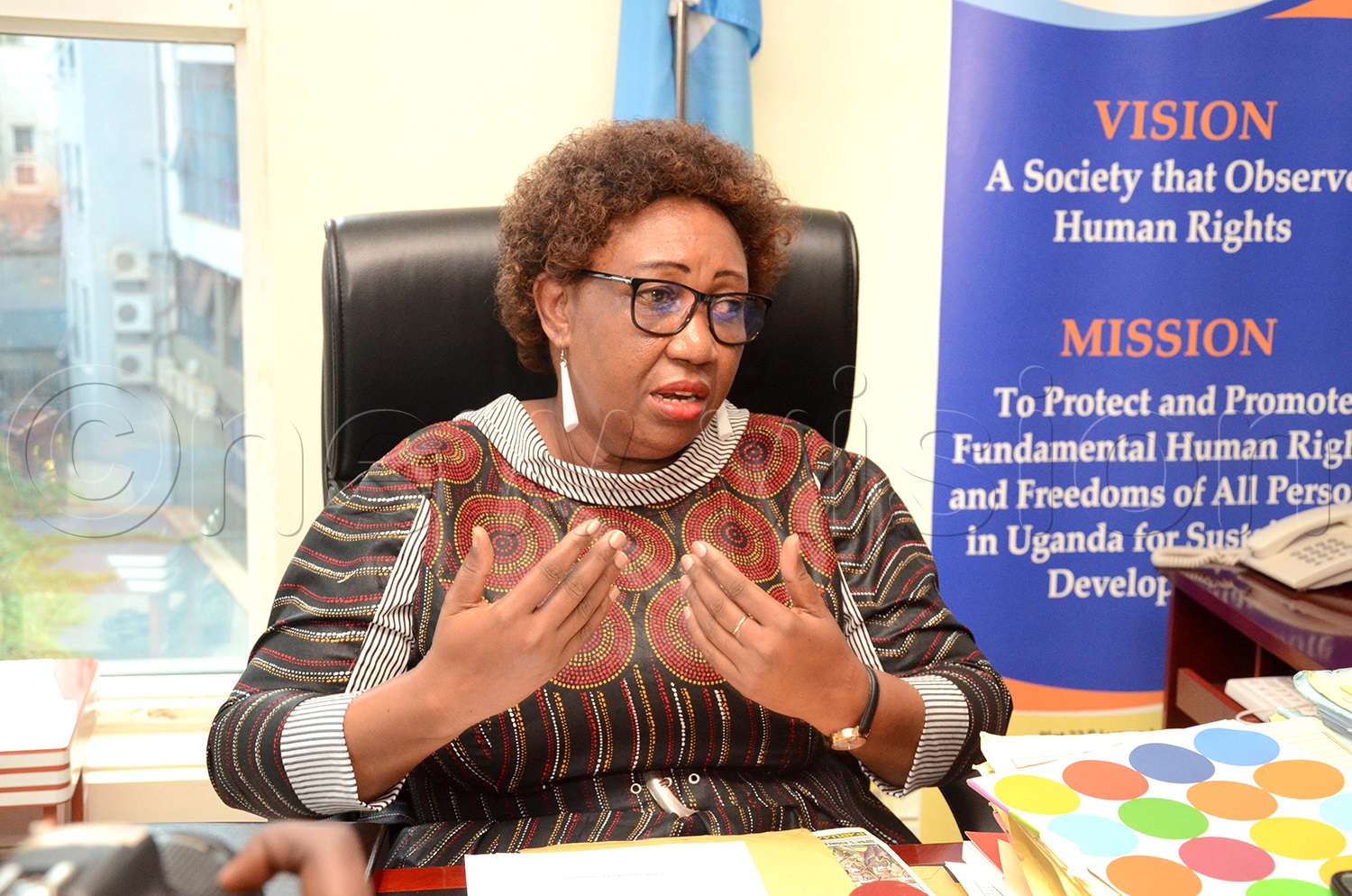
In a joint press briefing with other stakeholders of 2026 general elections at Sheraton Hotel in Kampala, UHRC Chairperson Mariam Wangadya, noted that the commission highlighted the increasing number of unlawful youth formations, particularly in the central region.
Wangadya emphasized that these youth groups, often referred to as “Egaali,” are incompatible with a democratic process and must be disbanded immediately.
“We have noted the rise of youth groups acting as vigilantes and political foot soldiers, particularly in the central region. These groups are unlawful, dangerous, and incompatible with a democratic process,” said Wangadya. “Election security remains the constitutional mandate of the Uganda Police Force alone. We urge that these formations be disbanded immediately wherever they exist.”
The growing influence of these political foot soldiers mirrors past election cycles when similar groups contributed to sporadic violence, electoral disruptions, and a climate of fear and intimidation. Their presence, Wangadya warned, could undermine the credibility of the elections and threaten the safety and rights of citizens.
Emerging Identity-Based Politics
Wangadya also expressed concern about the resurgence of identity-based politics, which has seen a revival of ethnic and religious mobilization in certain regions of the country.
She cited instances of political narratives being fueled by tribal and religious divisions, particularly in the central and western regions, where “Abafuruki” movements have resurfaced in Bunyoro.
“In Bunyoro, for instance, the Abafuruki narrative is resurfacing, and in Kigezi, religious-based mobilization between Catholics and Protestants has re-emerged in some areas,” Wangadya said. “Identity politics corrodes the foundations of equality and non-discrimination and threatens to divide communities that have lived together for generations.”
She stressed that such divisions have no place in Uganda’s electoral process, and that elections should never be used as platforms to inflame tribal or religious tensions.
Misinformation and Media Responsibility
Another major concern raised by Wangadya was the increasing spread of misinformation, especially through mainstream media and social media platforms.
She pointed to the use of biased reporting and unverified claims, particularly about police brutality against opposition candidates, which have not been substantiated by factual evidence but are being widely circulated.
“It is troubling that some mainstream media houses have recently swung into action to discredit the electoral process through narratives that are false, exaggerated, or selectively framed,” Wangadya remarked. “Notably, the claims of police brutality against some candidates circulating in selected outlets have not been corroborated by facts, yet they are being amplified recklessly. Such conduct undermines public confidence and harms the integrity of the electoral process.”
She called on the media to maintain professionalism and responsibility, ensuring that they report accurately and avoid spreading fear or distorting reality. Wangadya also urged Ugandans using social media to practice restraint and skepticism, noting that the rapid spread of misinformation can have detrimental effects on public trust and the electoral process.
Gender-Based Constraints in Political Participation
Wangadya also raised concerns about gender-related barriers to political participation. Reports from various regions indicate that some women feel pressured to seek permission from their husbands before choosing which political candidate to support. This practice, she argued, violates women’s constitutional rights and contributes to an increase in sexual and gender-based violence.
“Such practices must be condemned and rejected unequivocally,” she declared. “Women’s rights to political participation must be respected and protected.”
A Call for Peace, Responsibility, and Inclusivity
Wangadya concluded her statement by urging political parties, candidates, and the electorate to uphold peace, dignity, and respect during the election season.
She commended political leaders who have demonstrated restraint and maturity in their campaign activities and called on them to continue to put Uganda’s national interests first.
“To the electorate, these elections are about your voice and your future. Participate peacefully. Reject violence. Respect opinions different from your own,” Wangadya said. “Democracy thrives on diversity of thought, not uniformity of belief.”
She also urged the security agencies to maintain law and order in a professional and proportionate manner, within the confines of human rights principles.
Monitoring and Observing the Elections
The UHRC remains committed to ensuring the safety of citizens and the protection of human rights throughout the election process. Wangadya announced that the commission would continue to monitor the pre-election environment through daily engagements with political leaders, cultural institutions, religious groups, security personnel, and communities. The UHRC will also deploy observers on Election Day and issue public assessments of the electoral process.
“We have established a 24-hour hotline for citizens to report human rights concerns,” she added. “We will continue to provide civic education and engage stakeholders to keep our democracies stable, peaceful, and inclusive.”
Final Remarks
Wangadya concluded by reiterating that the credibility of the 2026 elections will depend on respect for human rights, tolerance, and adherence to the rule of law.
“Peace is everyone’s responsibility. Uganda must prove that disagreement does not mean division and that competition need not lead to conflict. Let us work together to ensure that the 2026 elections become a celebration of democracy, not a contest of hostility,” she said.
She emphasized that it is the collective responsibility of all citizens, institutions, and leaders to uphold human rights and ensure a peaceful electoral season. “Let us uphold human rights, the rule of law, and the dignity of each and every Ugandan without discrimination on any ground. For God and my country,” Wangadya concluded. (For comments on this story, get back to us on 0705579994 [WhatsApp line], 0779411734 & 041 4674611 or email us at mulengeranews@gmail.com).





