







By Ben Musanje
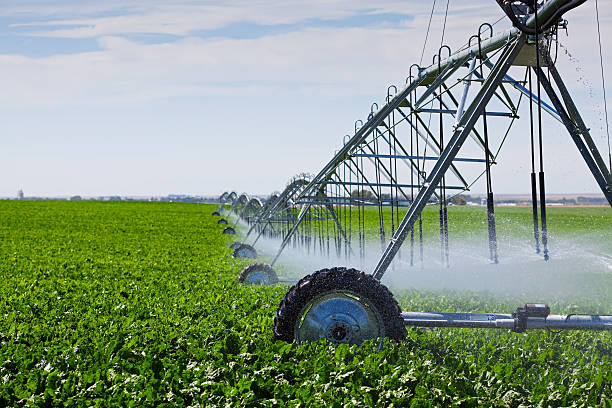
A solar-powered irrigation scheme, initiated under President Yoweri Kaguta Museveni’s directive, is revolutionizing agriculture in Gule B village, Lyolwa Town Council, Tororo District, in the Bukedi Sub-Region of Eastern Uganda.
Once plagued by poor harvests, mounting debt, and climate-driven crop failures, Gule B is now witnessing a surge in commercial horticulture, with farmers earning higher incomes than ever before.
The Gule B Legaga Small-Scale Irrigation Scheme, implemented by the Ministry of Water and Environment and constructed by Nexus Green Limited at a cost of Shs 716 million, was launched in July 2023 as part of a nationwide initiative to modernize agriculture and reduce poverty. For the farmers here, the impact has been life-changing.

From Maize Failures to Thriving Horticulture

Before the project, irrigation was nearly impossible. “We were just waiting for God to answer us by prayer,” said Patrick Were, Chairman of Gule B Farm. “If it didn’t rain, the maize died. By the end of the season, you had nothing.”
Farmers often fell into debt trying to survive. Were recalls struggling to repay a Shs 2 million loan in 2017, eventually selling a cow to clear it.
By 2024, his fortunes had reversed. “The first season I earned Shs 3.3 million from cabbage,” he said proudly. “That’s why many farmers joined the project.”

He has since expanded from a single rented plot to owning additional land, growing high-value crops like cabbage, onions, and tomatoes, with guidance from agronomists that has made production more reliable.
A Widow Builds a New Life
Among the most transformed residents is Margaret Ephrance Onyango, a 75-year-old widow and retired school administrator.
“Before, I could not grow crops like green pepper, there was no water,” she explained. “Now I cultivate three times a year.”
Her earnings now support both her farm and her five surviving children. “I have built a house with three rooms, a big sitting room, a store, and a shed,” she said. “I thank His Excellency the President. Being a widow, I could not do much before.”
Community-Wide Prosperity
Gule B LC1 Chairman Godfrey Owere says the project has uplifted all 82 households in the village, totaling about 570 people.
“Before this project, we were really struggling,” he said. “Now we have taps right in the scheme. Water is no longer a problem.”
Farmers who once earned little from drought-stricken cassava and maize now make millions from tomatoes, cabbage, and peppers.
Owere himself earned Shs 2.15 million in the first 2024 season—the highest he has ever made.
He used the money to move his children from government to private schools and to continue building his family home. By the third season, he earned Shs 1.99 million, enough to finally roof the house.
“This irrigation has changed our lives,” he said. “Motorcycles and vehicles lined up to buy tomatoes. We had never seen that before.”
Opportunities Extend Beyond the Scheme
Landowners like Mrs. Onyango rent plots to newcomers at Shs 60,000 per quarter, enabling more residents to join the program. Farmers now cultivate three times a year, and crop failure has become rare except due to poor management.
A Model for Rural Transformation
The Gule B solar-powered irrigation scheme demonstrates how modern farming infrastructure can lift entire communities out of poverty.
With reliable water, technical guidance, and government support, farmers are earning steadily, building homes, educating children, and creating a thriving local economy focused on horticulture rather than subsistence crops.
“We don’t care about the season anymore,” Margaret said. “As long as we are ready, we begin digging.”
For Gule B, what was once a struggling rural village is now a model of resilience, productivity, and hope, powered by the sun and driven by opportunity.
Bruno Byembabazi, an agronomist and Irrigation Support Officer, advises farmers to plant hybrid seeds rather than genetically modified crops and to follow seasonal calendars.
He notes price fluctuations in the market remain the biggest challenge for farmers. (For comments on this story, get back to us on 0705579994 [WhatsApp line], 0779411734 & 041 4674611 or email us at mulengeranews@gmail.com).