






By Mulengera Reporters
Forum for Democratic Change (FDC) presidential candidate Nathan Nandala Mafabi has outlined a bold plan to address Uganda’s economic challenges, emphasizing poverty eradication, youth empowerment, and agricultural revitalization as the cornerstones of his campaign.
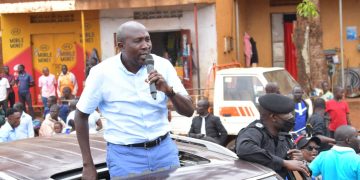
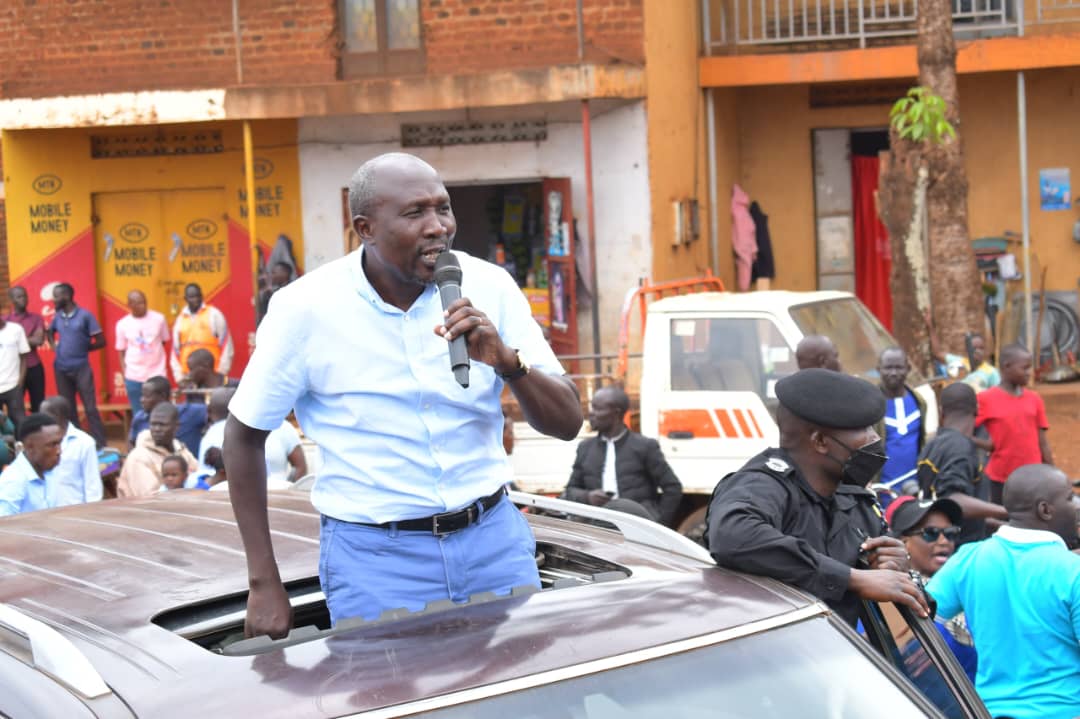
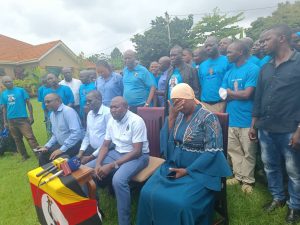
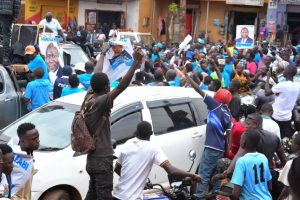
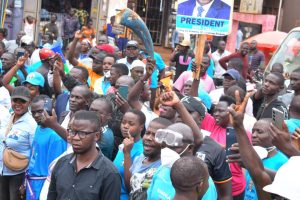
Speaking at his home in Buikwe District on Friday morning before departing for Jinja, Mafabi thanked members of the media, his campaign team, and local supporters who had accompanied him throughout his campaign trail.
He described the journey he was undertaking as one aimed at taking power to fulfill the promises made in the party’s manifesto.

Mafabi said that while Uganda had achieved security something the current president had gone to the bush to secure, the country now faced a different challenge: poverty.

He explained that unlike President Museveni, who had used the gun to fight insecurity, he would instead use his ideas, training in economics, and experience in accountability and management to confront poverty and fix the country’s economy.
He noted that the FDC’s slogan, “Fixing the Economy and Putting Money in Our Pockets,” was not just political rhetoric but a realistic objective based on practical plans.
Mafabi pointed to the dire economic conditions he had witnessed in areas he had recently visited, particularly in island communities such as Buvuma.

Mafabi described how people living near Lake Victoria were surrounded by resources yet trapped in poverty because fishing had been restricted by security agencies.
He proposed the restoration of beach management committees, run by local communities instead of security organs, to sustainably manage fishing activities and ensure local residents benefited directly.
Drawing from examples in Tanzania and Kenya, he emphasized that such local governance structures had succeeded elsewhere and could work in Uganda.
He also addressed the potential of fish processing and value addition, especially for smaller fish species like Mukene, which he said could be both a source of food and a valuable export.
The FDC presidential flag bearer pledged that his government would invest in building fish factories and also support agriculture on the islands, where arable land is often underutilized.
Mafabi highlighted broader economic issues, including poor wages for sugarcane cutters, who he said were earning as little as UGX 3,000 per day, which totaled just UGX 75,000 per month.
He questioned how a person earning that amount could afford rent, transport, food, and school fees, especially when the sugar industry’s real profits were going to middlemen and processors.
He called this an example of the country’s failed economic structure, where those doing the hardest labor benefit the least.
He compared this to the more efficient and inclusive coffee sector in his home region of Bugisu, where cooperatives help farmers aggregate and market their produce without the need for permits or middlemen.
He criticized the permit system in the sugarcane industry as another layer of exploitation and said it had no place in a fair economy.
Youth unemployment, according to Mafabi, was a symptom of poor investment choices by the current government.
He argued that too much money was being spent on non-productive sectors, while the productive sectors that could generate jobs remained underfunded.
He proposed investing UGX 5 trillion in the motorcycle (boda boda) sector, with UGX 2.5 trillion allocated in the first year and the remainder in the second year.
This, he explained, would allow youth to access affordable motorcycles, avoid exploitative loan schemes, and become self-reliant.
Mafabi also touched on tax reform, suggesting that employment would naturally expand the tax base, allowing government to reduce tax rates while still increasing revenue.
He reasoned that when people have jobs, they consume more goods and services, which in turn increases indirect tax collections such as VAT and excise duty.
He argued that such a cycle of employment and consumption could drive national development.
He discussed the need to revive cash crops like cotton and coffee, which he said had once been Uganda’s economic backbone but had declined due to neglect.
He recalled that cotton from his home area, Namuresa, had once fetched premium prices on the international market, and urged for renewed investment in such high-value crops. He noted that coffee, like fuel, was in high global demand and called for Ugandan coffee to be given visibility on platforms like the New York board to fetch better prices, similar to Kenya.
Infrastructure was another priority. Mafabi mentioned specific roads such as Kamuli-Buyende-Ukungu and Ambercourt-Kamuli, which he claimed had appeared in the national budget repeatedly without being constructed.
He argued that local materials and labor could significantly reduce road construction costs and promised that his government would deliver on road projects quickly and efficiently.
He added that many Ugandans lacked awareness of their constitutional rights.
His manifesto included a plan to translate and disseminate the Constitution in local languages such as Luganda, Lusoga, Swahili, and Luo to ensure that people across the country could understand and defend their rights.
Mafabi concluded by expressing concern over unequal treatment of presidential candidates, noting that the incumbent was simultaneously treated as a sitting president and a candidate.
He alleged that Museveni was benefiting from state resources, including public addresses and media time.
He said the Electoral Commission must ensure a level playing field for all candidates and hinted at the need for constitutional amendments to address such discrepancies.
The FDC candidate was set to continue his campaign trail in Jinja before proceeding to Bundibugyo and Ntoroko districts on Saturday.