






By BM
As Uganda moves closer to becoming an oil-producing nation, a new report warns that unless urgent reforms are undertaken, the country’s natural wealth may fail to deliver any meaningful improvement in the lives of its citizens.
Despite sitting on vast mineral and petroleum reserves, Uganda like many of its African peers is still struggling to fund basic public services like healthcare, education, and social protection.
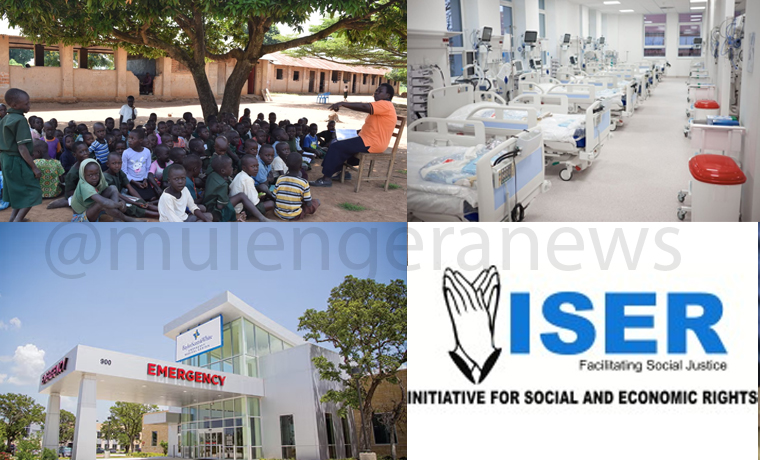
The Initiative for Social and Economic Rights (ISER), the civil society group behind the report, cautioned that Uganda and other resource-rich countries in Africa risk falling into the well-known “resource curse” trap.
They argue that without stronger governance, oil and mineral wealth will only deepen inequality and elite capture, rather than strengthen national development.

According to ISER, Uganda has the potential to transform its public services if it can properly manage its anticipated oil revenues.

However, the organization expressed concern that political and fiscal mismanagement could turn this opportunity into yet another missed chance to improve the lives of ordinary citizens.
More than two decades after the Abuja Declaration, a pledge by African governments to spend at least 15% of their budgets on health, only two countries have met the target.
Uganda is not one of them. In the 2023/24 financial year, the country allocated just 5.9% of its budget to the health sector.

Education fared slightly better at 10.4%, but that too fell well below the 20% target set in the Dakar Framework for Action.
Social protection spending remained especially low, at just 0.4% of GDP.
ISER noted that these figures are not simply technical failures; they reflect political choices that deprioritize essential services.
The situation is made worse by Uganda’s heavy reliance on foreign aid, especially in the health sector.
With international funding shrinking, including the World Bank’s 2023 decision to halt new public financing, there is a looming fiscal crisis that could further undermine social service delivery.
The report pointed to Uganda’s vast oil potential, which at peak production is expected to generate over US$4.5 billion annually, with an average of around US$2 billion per year for the next three decades.
The country also holds significant reserves of gold, cobalt, and rare earth minerals.
ISER emphasized that these resources could bridge current financing gaps—if managed responsibly.
However, past decisions have cast doubt on whether that will happen.
The report highlighted Uganda’s 2011 decision to purchase fighter jets worth $740 million, funded through anticipated oil revenues.
That amount was four times larger than the combined education and health budgets at the time.
In another case, Parliament approved the withdrawal of UGX 200 billion from the Petroleum Fund in 2021 without a clear spending plan, which violated the Public Finance Management Act (PFMA).
ISER expressed deep concern over such practices, saying that they revealed a pattern of discretionary spending that undermines accountability.
While Uganda has introduced several legal frameworks to manage its oil and mineral revenues including the PFMA, the Oil and Gas Revenue Management Policy, and the Mining and Minerals Act ISER argued that implementation remains weak and transparency limited.
The country still lacks a Petroleum Revenue Investment Policy, and there is no clear fiscal rule guiding the saving and spending of oil revenue.
The report also raised alarm over widespread revenue losses in the mining sector. Uganda’s tax-to-GDP ratio remains at 12.2%, well below the regional average.
In 2020, the Uganda Revenue Authority failed to collect taxes on 22 mineral categories valued at over UGX 72 billion. ISER attributed this to tax holidays, poor enforcement, and tax avoidance by multinational corporations.
ISER urged the government to consider earmarking a fixed portion of oil and mineral revenues for public services.
The group also called for stronger regulatory oversight, tighter controls on withdrawals from sovereign funds, and reforms to curb illicit financial flows.
It further noted that investment in social services was not just a moral issue but also a strategic one, arguing that spending on education, health, and social protection would contribute to a more stable, productive, and equitable society.
The organization stressed that public services should be treated as rights rather than optional expenditures. It argued that prioritizing human development would yield long-term dividends, including a healthier workforce, increased productivity, and more inclusive economic growth.
ISER concluded that as Uganda nears first oil, the stakes are high. With declining donor support, growing debt, and increasing public demand for services, the country faces a critical choice. It must either invest its resource wealth in improving lives or risk reinforcing cycles of poverty and inequality.
According to the report, the opportunity is still there, but time is running out. The decisions Uganda and its peers make today will determine whether their natural wealth becomes a tool for transformation—or a footnote in yet another cautionary tale. (For comments on this story, get back to us on 0705579994 [WhatsApp line], 0779411734 & 041 4674611 or email us at mulengeranews@gmail.com).