







By BM
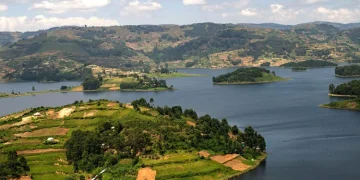
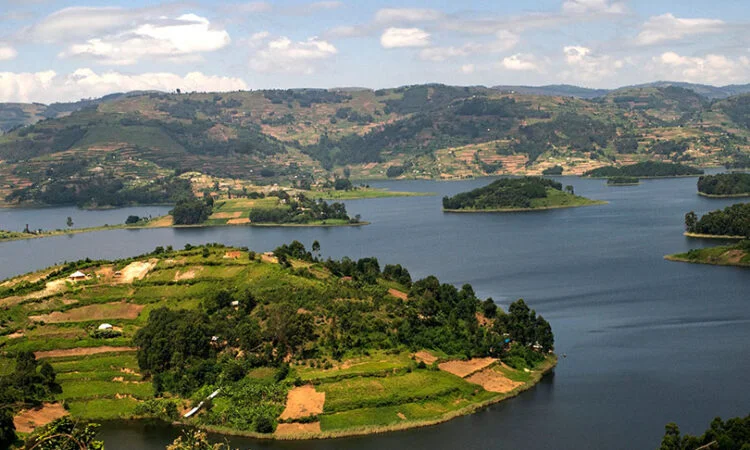
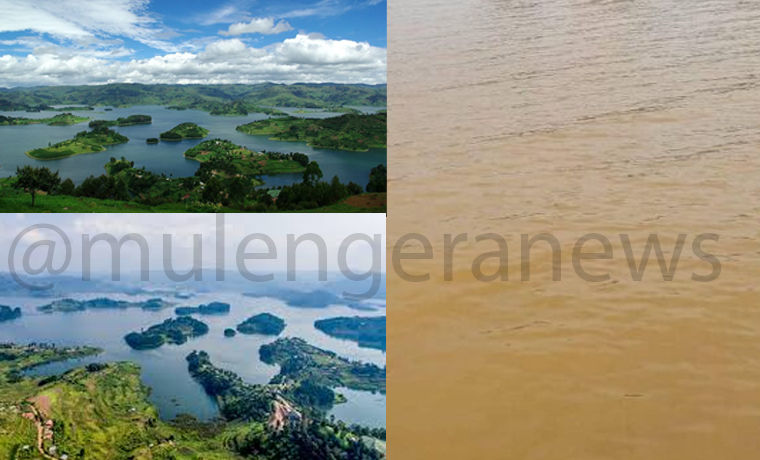
Lake Bunyonyi, one of Uganda’s most beautiful and important lakes, has changed in a very worrying way. The water, which used to be clear and blue, has turned brown.
People have also seen an oily film and white patches floating on the surface. The lake now smells bad. This sudden change has made many people worried, including local residents, visitors, and environmental experts.
Some people thought there might be volcanic activity under the lake causing these changes. But the government clarified in a Tuesday statement that this is not true.

The Ministry of Water and Environment said there is no volcanic eruption or underground activity in Lake Bunyonyi.
The Ministry added that if there was volcanic activity, people would feel shaking or tremors. Also, there would be strong waves or flooding around the lake. None of these things have happened.
So, the Ministry said the problems with the lake are caused by other reasons, mostly from people’s actions and natural changes in the environment.
To find out what is causing the problem, experts from the Ministry and its agencies visited the lake. They talked to local people and took water samples for testing. Their tests showed that the water in Lake Bunyonyi has very low oxygen levels. Oxygen is very important for fish and other living things in the lake. Without enough oxygen, fish and other animals cannot survive.

The water was also very cloudy, meaning it had a lot of dirt and particles floating in it. The tests showed that these particles come from soil that has washed into the lake.
This happens when it rains and the soil from the hills around the lake is carried into the water. The brown color in the water comes from this soil, but also from dead plants and other organic matter in the lake.
The Ministry said there is a natural process called “Lake Turnover.” This happens when the cold water deep in the lake mixes with the warmer water on the surface. This mixing can cause dirt and other things that have settled at the bottom to rise up into the water.
This process often happens after heavy rains and sudden temperature changes. It is normal for the lake water to get a little cloudy during this time. But this year, the brown color has lasted for more than three weeks, which is unusual.
Another big problem is the way people live around the lake. The lake is in a valley with steep hills. Many farmers grow crops on these hills. When it rains, soil from these farms washes down into the lake.
There are also places where people have cut down trees. Without trees to hold the soil, even more dirt flows into the water.
There are also 46 hotels along the shore of Lake Bunyonyi. The hotels say they have septic tanks to handle their waste, but some may still be letting dirty water flow into the lake.
Nearby, there is a busy market called Harutindo Landing Centre. This market does not have enough toilets or waste systems. Trash and waste from the market could be going directly into the lake.
These human activities are making the lake water dirty and smelly. The Ministry said that poor waste management is causing oily films and white patches to appear on the water.
Many people who live near the lake use its water for drinking and other daily needs.
The National Water and Sewerage Corporation (NWSC) said it is finding it hard to clean the water to look clear. Even though the treated water meets safety rules for germs, people do not like the brown colour and smell. Because of this, many have stopped using tap-water and look for other sources, which are not easy to find.
The Ministry said it is working hard to fix these problems. They are improving the technology at the NWSC treatment plant to better clean the lake water.
The government is also making sure that businesses and people around the lake follow the rules about waste and pollution. They will check that no one dumps waste into the lake and will punish those who do not follow the rules.
The Ministry added that it is planning to protect the land around the lake. They want to plant more trees and help farmers use better ways to grow crops without washing soil into the lake.
They will also work with local governments to build better toilets and waste systems, especially in busy places like the Harutindo market.
The Ministry said these actions need to happen quickly to save Lake Bunyonyi. If nothing is done, the lake’s water quality will keep getting worse, and many plants and animals could die. The people who depend on the lake will also suffer.
The government promised to share more information after a full report is finished by the end of September 2025.
For now, the Ministry wants everyone to understand that the lake’s problem is not from a volcano but from pollution and environmental damage.
The health of Lake Bunyonyi depends on how well everyone, government, businesses, communities, and visitors, works together to protect it. (For comments on this story, get back to us on 0705579994 [WhatsApp line], 0779411734 & 041 4674611 or email us at mulengeranews@gmail.com).