





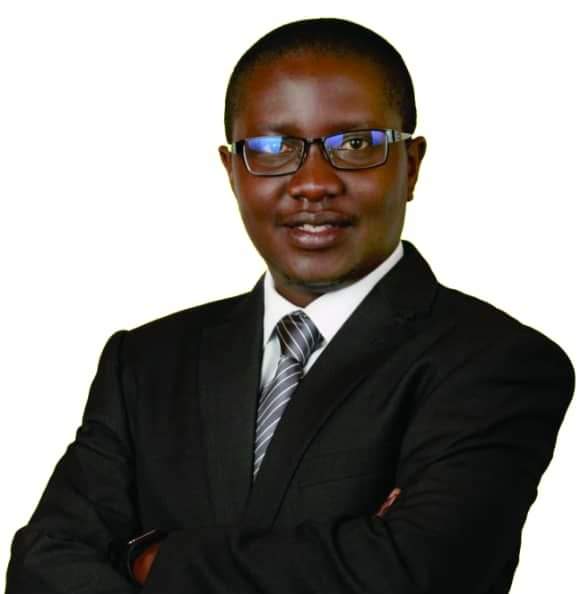

By Dr. Gerald Wanzala Werikhe (PhD)
The recent article by Esteri Mugurwa Akandwanaho has sparked predictable but necessary debate around the role of political families in Uganda. While critics have continued to raise the alarm over the prominence of President Museveni’s relatives in public office, it’s crucial to assess this issue beyond populist talking points and examine it with historical context, institutional logic, and democratic principle.
There is truth in Ms. Mugurwa’s piece, particularly in her reference to global precedents. Political families are not unique to Uganda, nor are they inherently undemocratic.
Political Families Are a Global Reality
It’s naïve to pretend that Uganda’s political landscape is unusually dominated by family figures. History tells us otherwise.

The Gandhi family in India, the Marcos-Duterte alliance in the Philippines, the Trudeaus in Canada, and many others reflect a similar trend: where politics runs in families, not by conspiracy, but often by exposure, upbringing, and personal ambition.

This trend is equally present in Uganda. When Dr. Paul Kawanga Ssemogerere was serving as Democratic Party (DP) President General, his brother John Kawanga was the Member of Parliament for Masaka Municipality. The son of former President Milton Obote, Jimmy Akena, is marking 20 years in Parliament and currently leads a faction of the Uganda People’s Congress (UPC), with clear presidential ambitions. Idi Amin’s grandson, Taban Amin, also served as MP for Kibanda. Today, the brother of National Unity Platform (NUP) President Robert Kyagulanyi, Fred Nyanzi, is not only a former MP candidate, but is currently contesting for the Kawempe South seat in the forthcoming 2026 election, and remains an influential figure within the party.
Are these nations or political parties less democratic because of family involvement? No. What separates democratic systems from dynastic rule is not the presence of relatives in politics; it is whether those individuals are subject to transparent institutions, legal checks, and public accountability.
The Real Issue: Weak Oversight, Not Family Names

Critics often focus on personalities and relationships, but in doing so, they obscure the more urgent governance problem: institutional weakness.
Let’s be honest; it is not the Museveni family that runs District Service Commissions, Public Service Commissions, or procurement units across dozens of government agencies. Yet these are the places where corruption, nepotism, and abuse of power frequently thrive. These failures are often the result of compromised technocrats, not political relatives.
The overemphasis on the Museveni surname distracts us from the broader rot in public service, where unqualified individuals are recruited, tenders are rigged, and accountability mechanisms are ignored, all outside the reach of any so-called ‘family rule.’
It is time we shift the debate. If we are to build a sustainable democracy, we must focus less on bloodlines and more on the systems that are supposed to protect public interest, regardless of who is in office.
Personal Ambition Isn’t Illegitimate, It’s Human
Another overlooked reality is the role of personal ambition and environmental influence.
If one is born into a family of educators, they are likely to be exposed to education, perhaps even encouraged to teach. If one grows up in a business family, entrepreneurship often follows. So why do we treat political ambition in political families as unnatural?
Children of public figures like Salim Saleh or President Museveni grow up watching meetings, listening to discussions on governance, and engaging with current affairs from a young age. Some are entrusted with responsibilities, witness the pressures of leadership, and develop interests shaped by proximity.
This isn’t manipulation or imposition; it is exposure. And it’s not a crime to pursue public service because one grew up around it.
Citizenship Applies to Everyone — Including Political Families
Lastly, we must remember one fundamental truth: the relatives of political leaders are citizens too.
They enjoy the same rights as any Ugandan to vote, to serve, to stand for public office, and to participate in national life. To disqualify them from leadership based solely on who their parents are is not only unjust; it’s unconstitutional.
The issue should not be who someone is related to, but how they come to power and how they perform. If they are elected fairly, appointed legally, and held accountable like any other public servant, then democracy is not under threat, it is working as intended.
Let’s Elevate the Conversation
Uganda doesn’t need less family involvement; it needs stronger institutions, transparent processes, and a citizenry that judges leaders on merit, not lineage. Ms. Mugurwa’s article challenges us to think more deeply, and her critics would do well to meet her argument not with outrage, but with equal nuance.
We must stop chasing shadows and start fixing systems. Because in the end, it is not political families that destroy democracies; it is the failure of accountability. The writer is Associate Lecturer/Associate Consultant at Uganda Management Institute. (For comments on this story, get back to us on 0705579994 [WhatsApp line], 0779411734 & 041 4674611 or email us at mulengeranews@gmail.com).