






By Mulengera Reporters
The regulatory Commission says operating without a licence undermines public safety, disrupts lawful broadcasters, deprives government of much-needed revenue, causes citizens to be defamed without remedy and fuels impunity.
The Uganda Communications Commission (UCC) on Tuesday morning carried out a major enforcement operation in Sheema District, Western Uganda, shutting down Voice of Sheema Radio, a station it says has for years been operating without a valid broadcasting licence.
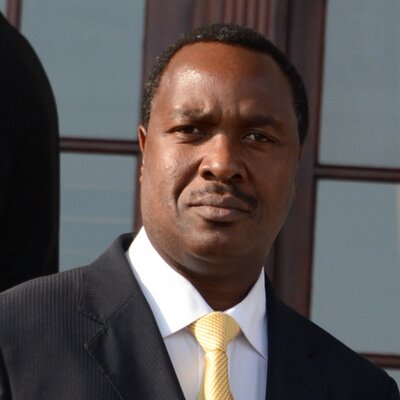
The station, broadcasting on 90.9 FM, is owned by former Minister for Science, Technology and Innovation, who also served as Minister for Health between 2015 and 2016, Dr. Elioda Tumwesigye. UCC accuses the station of “self-allocating” the frequency without the regulator’s consent, in direct violation of the Uganda Communications Act and related regulations.
The operation, conducted at around 7:30am, was led by UCC enforcement officers backed by armed personnel from both the Uganda Police Force and the Uganda People’s Defence Forces (UPDF). The team arrived at the station’s premises and found morning show host, Herbert Muhimbise, on air presenting Bwayaba, one of the programmes that had been broadcasting daily without authorisation.

Upon entering the premises, the enforcement team introduced themselves to Muhimbise and explained the purpose of their visit. They instructed him to step away from the microphone and contact his superiors. Starting with station manager Edmand Byamukama, who is also the brother of Dr. Elioda Tumwesigye, Muhimbise called multiple times but his calls went unanswered.

He then reached out to the programmes director, Dickson Rwamutwe, said to live across the road from the station.
Although Rwamutwe promised to come “shortly,” the team waited for a long time without his arrival. In the meantime, UCC officers requested access to the transmission room, but Muhimbise said the keys were with Rwamutwe.
After continued delays and failed attempts to reach management, the enforcement team decided to gain entry into the transmission room, where they found and confiscated a transmitter, along with the mixer, antenna, computers and two generators. All items were recorded in two separate inventories. Both copies were signed by Muhimbise, with one being left at the station and the other retained by the UCC enforcement team.

UCC officials revealed that this was not the first time Voice of Sheema had been switched off for illegal broadcasting. The regulator previously shut down the station last year, but instead of applying for a licence, the owner reportedly purchased new equipment and resumed broadcasting without obtaining the Commission’s authorisation. Such repeated defiance, sources say, is often linked to the political clout of some owners, which can create a perception in the community that they are untouchable.
For presenter Muhimbise, the closure was a personal blow. He told our reporter that he had worked at the station for only two months, having moved from another Sheema-based radio station also owned by a politician. He said he was recruited directly by Dr. Elioda Tumwesigye and was unaware that Voice of Sheema was operating illegally.
“Much as I was promised better pay, staying at my former workplace would have been better,” he tearfully lamented, adding that he now has no source of income to support his wife and children.
The station’s gatekeeper, however, reacted with defiance, telling our journalists (while running away from the camera) that UCC’s action was a “waste of time” because his boss could “easily buy new equipment” and resume operations, boasting that no legal action could succeed against such a “powerful person in government.”
According to UCC’s legal team, illegal broadcasting stations present significant risks to public safety, security and the integrity of the country’s communications sector. When a broadcaster operates without a licence, the regulator has no record of their location, the identity of the responsible officers or the technical details of their transmission, making it difficult to intervene promptly if harmful content is aired.
The Commission notes that such operators can easily propagate offensive or misleading information without any accountability, potentially destabilising communities or undermining public confidence.
In times of national emergencies (like was the case with COVID), licensed broadcasters form part of the official communication network that can be relied upon to transmit accurate information. Unlicensed operators fall outside this framework and can become a source of harmful, misleading or unverified content.
UCC maintains that broadcasting frequencies are a limited national resource that must be allocated and managed in an orderly manner. Illegal operators not only disrupt this management of this resource but also create unfair competition at the expense of law-abiding broadcasters who have invested in meeting the required legal and technical standards, and requirements.
Because UCC’s enforcement officers cannot be everywhere, the Commission also relies on public vigilance. Communities are encouraged to report any unlicensed broadcasting in their areas so that action can be taken quickly before harm is caused. The law prescribes a jail term of years once perpetrators behind such illegal broadcasting may end up enduring in case of successful prosecution. Dr. Elioda Tumwesigye could potentially find himself rotting in jail.
The Voice of Sheema case has also highlighted the challenge regulators face when dealing with politically connected individuals. In Sheema, some locals told our journalists that they expected the station to be back on air soon, given the owner’s profile, the kind of perception that undermines the rule of law and UCC’s regulatory efforts.
Persistent defiance by unlicensed broadcasters can erode the effectiveness of Uganda’s communications framework because licensing ensures that broadcasters meet minimum standards for content, technical quality and operational safety. Submitting to regulation also facilitates equitable use of the radio spectrum, which is a finite public resource. Without such control, frequencies can be hijacked or interfered with, causing disruption not only to other broadcasters but potentially to emergency communication channels.
As of Tuesday afternoon, UCC had not indicated whether criminal charges would be preferred against the station’s management or ownership, but enforcement officers confirmed that the seized equipment would be held until further notice. Attempts by our reporter to reach Dr. Elioda Tumwesigye for a comment were unsuccessful, as calls to his known numbers went unanswered.
The Commission has not ruled out further enforcement action, including prosecution, and has reiterated its determination to bring all broadcasters into compliance, saying this case should serve as a warning and deterrence because if illegal broadcasting continues unchecked, not only the quality of media in Uganda risks being compromised but also public safety and security. (For comments on this story, get back to us on 0705579994 [WhatsApp line], 0779411734 & 041 4674611 or email us at mulengeranews@gmail.com).