






By Mulengera Reporters
The Commercial Division of the High Court has brought final clarity to a long-standing financial dispute between Simbamanyo Estates and Equity Bank, affirming the legality and commercial soundness of a $10 million loan transaction at the centre of a high-profile legal battle.
In a detailed 67-page ruling issued on July 25, 2025, Justice Harriet Grace Magala dismissed all claims brought by Simbamanyo Estates against Equity Bank Uganda, Equity Bank Kenya, and Mauritius-based Bank One, marking a decisive legal victory for the regional lender and clears the air around a case that had cast a cloud over syndicated lending and cross-border financial transactions in Uganda.
At the heart of the case was a complex set of transactions involving a $6 million syndicated loan obtained by Simbamanyo in 2012 from Equity Bank Uganda and Equity Bank Kenya. In 2017, Simbamanyo secured an additional $10 million bridge loan from Bank One, guaranteed by a standby letter of credit from Equity Bank Kenya. When Simbamanyo defaulted, Equity Bank Kenya stepped in, repaid Bank One, and activated a post-import loan facility through Equity Bank Uganda to recover the funds.
Simbamanyo contested the entire process, claiming it had not formally requested the loan drawdown, that the arrangement breached Uganda’s Financial Institutions Act, and that the involved banks acted fraudulently or without proper authorization.
However, Justice Magala firmly dismissed all those claims, ruling that the syndicated loan arrangement and subsequent transactions were not only lawful, but also commercially standard for international banking.
The ruling emphasized that the standby letter of credit was self-executing, meaning that the loan facility could be activated automatically upon default, without the need for a separate utilization request.
Justice Magala also clarified that the Financial Institutions Act does not prohibit Ugandan companies from borrowing from foreign entities, as long as they are not accepting deposits locally. The court further confirmed that no fraud, misrepresentation, or undue influence had occurred, and that Equity Bank had acted within its contractual and legal obligations.
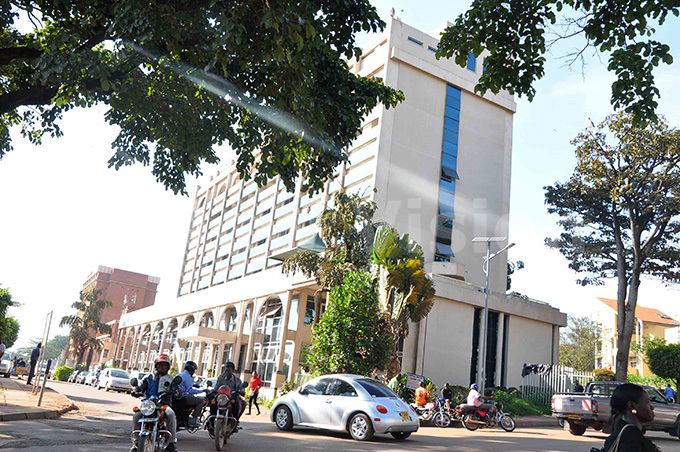
With this ruling, the court has also upheld the 2020 sale of Simbamanyo’s mortgaged properties (Simbamanyo House and Afrique Suites Hotel) which were auctioned to recover the outstanding debt.
Simbamanyo House was acquired by Ugandas business mogul Sudir Rupaleria’s Meera Investments, while Afrique Suites Hotel was purchased by Luwaluwa Investments.
Legal and financial experts say the judgment not only strengthens investor confidence in Uganda’s financial system but also provides a strong precedent affirming the legality of syndicated loans, standby letters of credit, and cross-border bank partnerships.
For Equity Bank, the ruling is seen as a strong endorsement of its adherence to lawful lending practices, risk management, and regional integration in financial services, sending a message that borrowers must honour commercial agreements and cannot rely on technicalities to avoid contractual obligations.
The decision brings closure to one of Uganda’s most closely watched banking disputes and reinforces the credibility of the courts in handling complex commercial cases with regional dimensions.