


By Aggrey Baba
President YK Museveni’s recent nomination as the NRM flagbearer for the 2026 presidential election has set the stage for yet another term of what government officials are calling “proven, visionary leadership.”
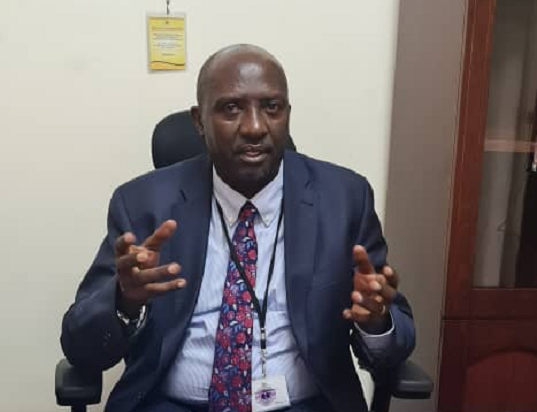
According to Willis Bashasha, the Director of the Manifesto Implementation Unit in the Office of the President, this development is a clear expression of the will of Ugandans to retain a leader under whose guidance Uganda has registered significant socio-economic transformation.
Bashasha explained that the President’s renewed candidacy is a testament to the enduring social contract between the citizens and the NRM government, structured around the party’s manifesto. The current manifesto was built on five core pillars (creating jobs and wealth, delivering education, health and water, promoting justice and equity, ensuring security, and driving economic and political integration).
He pointed to a recent tracking and validation exercise which showed that by the mid-term of the current term, government had acted on 84% of the 809 manifesto commitments. Of these, 35% had been fully implemented while another 49% were nearing completion, while only 16% had not yet been acted upon.
He added that the end-of-term evaluation currently underway suggests further progress has since been made.
Among the notable achievements, Bashasha highlighted the Parish Development Model (PDM), which he described as a multipurpose vehicle for wealth creation operating at the parish level.
By January 2024, over 1 million Ugandans had accessed PDM loans amounting to over UGX 1 trillion through more than 10,000 SACCOs. This intervention, alongside Emyooga and industrial job growth, has contributed to reducing the number of Ugandans in subsistence livelihoods from 39% to 33%.
Bashasha also noted that the agriculture sector, supported by investments in ICT and value addition, now employs 77% of Uganda’s workforce and contributes 33.7% to GDP. Coffee export revenue rose to $1.14 billion and milk revenues reached UGX 30 billion in the 2023/24 financial year.
To support this, government focused on infrastructure projects (rehabilitating over 13,000km of roads and expanding the paved road network to 7,000km). The commissioning of the 600MW Karuma Hydropower Dam also enabled connection of West Nile and 210 new sub-counties to the national grid, increasing the number of connected sub-counties to 1,656 by November 2024.
Bashasha reported that internet penetration had risen to 70% of the country following expansion of the National Backbone Infrastructure to 4,172km of fibre across 63 districts.
This has significantly reduced internet costs from over $1,000 to $35 per megabit per second.
In the social sectors, government aimed to ensure every sub-county has a secondary school and health centre III. As of this year, 398 new health centres II and three regional blood banks had been commissioned, raising the total number of health centres II to 1,696.
Government also expanded specialised health services, completing the Gulu Regional Oncology Centre and launching new regional cancer centres in Arua, Mbale, and Mbarara.
Bashasha said that these efforts have increased geographic access to healthcare to 77%, reduced infant mortality from 54 to 43 per 1,000 live births, and under-five mortality from 90 to 64 per 1,000.
The percentage of births attended to in health facilities rose from 42% to 73%, and childhood stunting declined from 33% to 29%.
In education, 114 out of 259 planned seed secondary schools have been completed, with another 114 still under construction, contributing to a national literacy rate of 74%, according to the 2024 census.
Clean water access now stands at 72% in urban areas and 67% in rural areas, with over 31 million Ugandans being served by various water sources including boreholes, piped schemes, and domestic points.
Turning to justice, Bashasha said the Judiciary recruited over 700 judicial officers and processed nearly 640,000 of the 717,000 registered cases. New High Court circuits were established in six districts and 110 disciplinary cases handled to clean up the sector.
Land ownership was also improved, with over 157,000 land titles distributed under government’s land rights programme, unlocking economic value for thousands.
On security, Uganda has remained stable, with joint operations in DR Congo weakening the Allied Democratic Forces. Though sporadic urban terror incidents were noted, Bashasha said these had been swiftly dealt with.
He also cited the 2025 passage of the UPDF Amendment Act as a milestone in strengthening the military’s command structure.
Bashasha also said that these achievements were clear evidence of a leadership that delivers on its promises, emphasizing that the nomination of President Museveni represents a logical continuation of Uganda’s transformation journey under the stewardship of a leader committed to improving the lives of all citizens. (For comments on this story, get back to us on 0705579994 [WhatsApp line], 0779411734 & 041 4674611 or email us at mulengeranews@gmail.com).





