






 By Mulengera Reporters
Veteran politician and former Masaka Municipality MP JB Kawanga has shared detailed recollections of his long friendship with President Yoweri Kaguta Museveni, going back to their days as students and continuing into their early years of political activism.
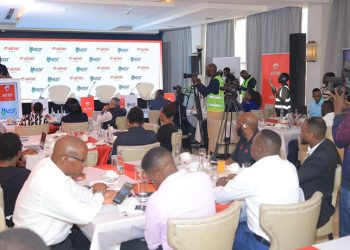
Kawanga, who is also a younger brother to the late DP leader Paul Kawanga Ssemogerere, said during the recent Musevenomics Conference in Kamapala, that he first met Museveni in 1965 when he joined Ntare School for A-Level studies, having completed his O-Level at St Mary’s College Kisubi.
He said he chose Ntare because he wanted to get exposed to another part of Uganda outside Buganda, but also wanted a school that matched Kisubi’s academic standards.
On reporting to Ntare, he asked a student to direct him to the headmaster’s office. That student happened to be Museveni. Museveni asked him what he wanted the headmaster for, and when he said he had come to register, Museveni led him to the school noticeboard where he found his name and house placement.

Kawanga had been allocated to Mbaguta House (the same house where Museveni belonged). From that moment, they became close.

Kawanga said he had no relatives in western Uganda, and Ntare students used to go out for Sunday walks. On such Sundays, he would often accompany Museveni to the home of the late Boniface Byanyima, where they were welcomed.
Kawanga said Museveni was a committed Born-Again Christian and very active in the school’s Scripture Union. Kawanga himself was Catholic, and that sometimes caused tensions between them.
For example, he said he once secretly took alcohol and Museveni, upon finding out, was very upset with him. Kawanga reminded him that he was a Catholic and had no problem with drinking.

They studied the same combination (Economics, History, and Government) and Museveni was very serious about his studies, especially History. Kawanga said Museveni always linked what they learned in class to real life.
He recalled that when monarchism were abolished by Obote in Uganda in 1966, he (Kawanga), being the only Muganda in Mbaguta House, was greatly disturbed but Museveni sympathised with him.
At Ntare, Museveni once contested for President of the debating society but lost to the late Eria Kategaya. Kawanga also stood for secretary but didn’t win. After that, the two of them decided to form a new club called the History Society, with Museveni as chairperson and Kawanga as secretary.
Through the History Society, they invited prominent politicians to speak to students. Among those who came were Apollo Milton Obote and, later, Kawanga’s elder brother Paul Kawanga Ssemogerere, who came with several MPs.
Kawanga said this made Ntare School stand out politically, adding that they even wrote a book together titled King Ntare, to teach fellow students about the true origin and history of the school’s name.
Kawanga said the History Society brought them into contact with many political ideas and movements. Museveni developed a keen interest in leadership and read widely on topics like land ownership, the enclosure movement in Europe and African political history.
Kawanga said when they learned about land enclosures in European history (where land was privatized and common grazing was restricted), Museveni connected this with the Bahima’s cattle culture, where pastoralists moved freely without permanent ranches. This excited him and influenced his political thinking.
After completing A-Level, both were admitted to the University of Dar es Salaam. Although Museveni had qualified for Law, he chose to study Economics and Political Science. Kawanga said it was at university that Museveni’s political ideology began to shift significantly.
He read deeply into socialist and revolutionary literature. At one point, he stopped saying power comes from God and started insisting that power comes from the barrel of a gun.
Museveni later founded the University Students’ African Association (USAA), which brought together students from across East Africa to discuss Africa’s struggles and leadership.
He became close to members of the TANU youth league in Tanzania, especially former Tanzanian president, Benjamin Mkapa, who was then a publicity secretary in TANU.
Kawanga also recalled an incident involving an annual university event called “Raga Day,” where students would wear rags and beg on the streets to raise money for the poor. Museveni opposed the event, saying it was insulting to Africans.
One time on the night before Raga Day, Museveni mobilised his colleagues, and they deflated the tires of tractors and trucks that were supposed to be used during the event.
He then led a protest around the university shouting, “No Raga Day!” The university administration was not pleased and the event never happened.
Later, Museveni organised a secret trip to Mozambique. A group of seven university students, including Kawanga, travelled to the liberated areas where they joined the freedom fighters. They received military training in guerrilla warfare and firearms handling.
It was during one of these sessions in Mozambique that Kawanga said he almost shot his friend Museveni by accident. They were seated after training, and Kawanga said he was holding his gun improperly when he accidentally released a bullet. The bullet narrowly missed Museveni.
“Museveni turned to me and shouted in Runyankore, ‘Noyenda kunyita?’ meaning ‘Do you want to kill me?” Kawanga reminisced. People in the training camp were stunned but it was soon appreciated that it was an accident. Kawanga said he often reflects on that moment and is thankful the bullet missed.
“I believe that God spared him because his journey wasn’t over. That bullet could have ended everything, but fate had its own plans.”
He added that the experience in Mozambique helped to solidify Museveni’s belief that political change in Africa required more than just speeches and protests. Kawanga said Museveni returned from Mozambique more determined and grounded in the belief that leadership required courage, action and a willingness to sacrifice and confront injustice directly.
Though their political paths later diverged, Kawanga said he has always respected Museveni’s commitment to correcting the wrongs of post-independence Uganda (especially the abuse of power, the abolition of constitutional rule and the use of detention without trial).
He said their friendship was forged in the fires of youth, study, hardship and shared ambition. And while they no longer walk the same political road, the foundation they laid in Ntare, Dar es Salaam and Mozambique continues to shape the country, something which both of them are very proud of. (For comments on this story, get back to us on 0705579994 [WhatsApp line], 0779411734 & 041 4674611 or email us at mulengeranews@gmail.com).