






By Aggrey Baba
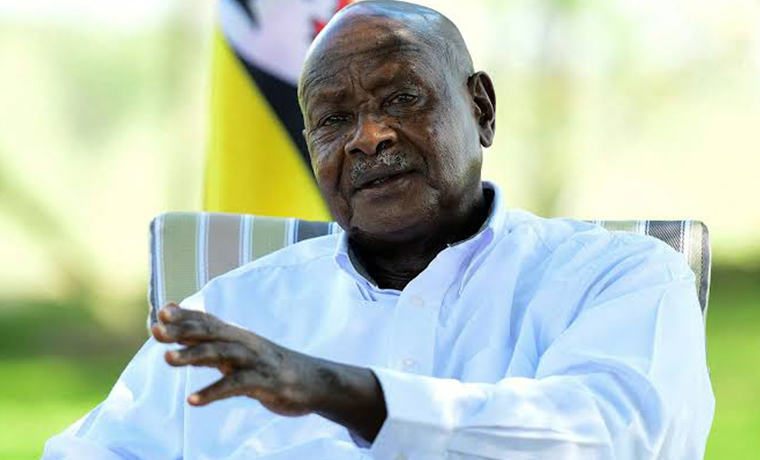
President Yoweri Museveni has warned self-important members of the National Resistance Movement (NRM), against individualism, ego, and self-glorification within the party.
He said this after officially picking nomination forms to contest for both party chairmanship and the 2026 presidential flag bearer slot, reminding party members that success in politics lies not in personal brilliance, but in collective effort, discipline, and ideological unity.
Museveni traced his leadership journey back to January 1971, when he and a group of colleagues fled to Tanzania during Idi Amin regime, explaining that at the time, they had no capacity to confront Amin as individuals, and it was only through organisation, shared vision, and unity of purpose that they were able to return in 1979 as a force that ultimately removed the dictator.
He used this lesson to emphasize that political effectiveness depends on building and belonging to strong institutions, not seeking personal credit or positions. According to him, NRM is bigger than any individual, and any member who believes they can shine or achieve alone is only wasting time and weakening themselves.
Museveni said the habit of praising oneself, boasting about personal achievements, and fighting for individual recognition is not only counterproductive but dangerous to the unity of the party, urging political leaders to view themselves as vehicles for ideas, policies, and collective progress (not as personalities seeking applause).

He urged NRM members, especially during election periods, to drop pride and emotion, and instead engage with local communities to collectively determine who among them can best address the issues in their area, saying it is the spirit that should guide candidate selection (one rooted in unity, purpose, and problem-solving rather than ego).

Museveni’s remarks appeared aimed at growing internal tensions within NRM, especially as the country prepared for the 2026 elections.
In recent years, the NRM has faced criticism for disunity, intrigue, and the emergence of factions built around individual politicians rather than party ideology. His warning suggests a renewed push to discipline the party and recentre it around its founding principles of collective action and service above self.