


By Aggrey Baba
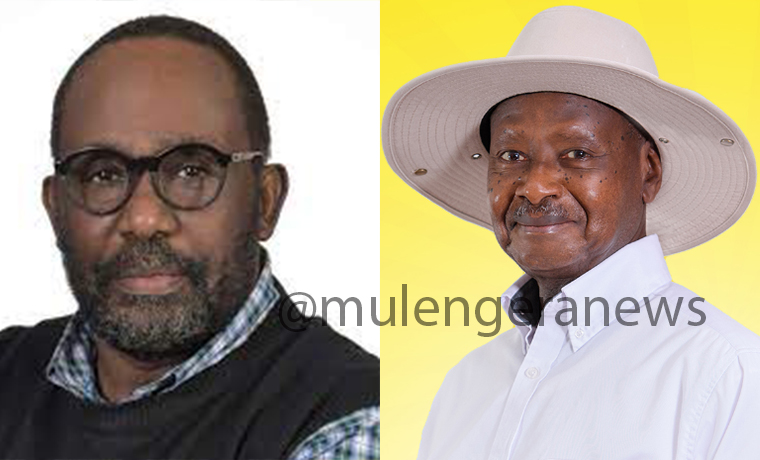
Seasoned political analyst and former Journalist Charles Onyango-Obbo has painted a sobering picture of what Uganda might look like after President Yoweri Kaguta Museveni finally exits the stage, warning that the country could face unprecedented turmoil, fragmentation, and uncertainty.
In a wide-ranging analysis, Onyango-Obbo argues that Uganda’s long stretch under one ruler (now approaching four decades) has created an abnormal political landscape that will be difficult, if not dangerous, to navigate once Museveni is no longer in charge.
“Having one leader for 40 years, irrespective of their strengths or weaknesses, creates a situation where power becomes too personalised and deeply entrenched. In a country where no previous leader has lasted beyond eight years, that kind of longevity stores up unresolved tensions,” Obo said.
According to him, Uganda’s post-Museveni future could swing in several directions (but the most likely and alarming scenario is one of disorder and disintegration). He warns that many Ugandans, particularly along regional and ethnic lines, have been held together more by the force of Museveni’s grip on power than by national consensus.
“There are strong forces pulling in opposite directions,” he explained, adding that the risk that Uganda as we know it today may cease to be a unified republic is very high.”
Obo adds that once Museveni is no longer in the picture, a significant section of Ugandans may reject any new leader (especially one who does not come from their own region).
“We are looking at a situation where people may not only refuse to accept authority from outside their region but also lose trust in the very idea of national power itself,” he said.
This breakdown in trust, Onyango-Obbo cautions, could easily spiral into open conflict, saying that in many countries, long-standing grievances are not settled through elections or debate, but often resolved through conflict.
“If Uganda goes down that path, we are likely to see a bloody and nasty future, where the country fragments into semi-autonomous zones (much like Somalia’s Puntland or Somaliland).”
But even in his warning, Onyango sees slivers of hope.
He points out that Uganda has one of the youngest populations in the world, with more than 75% of its people below the age of 35. For him, this demographic reality presents a chance for a radical national renewal (one led by a generation that did not participate in the bush war, and whose loyalty is not tied to old guard politics).
“There’s a version of the future where Uganda becomes a very young, dynamic republic. This new Uganda would be driven by people with big dreams, who come together to build a country that fits the challenges and opportunities of the 21st century,” Obo said.
However, he added that the necessary structures to support this transition are not yet in place. Political parties are weak, civic education is low, and leadership pipelines remain dominated by the same old names.
According to Obo, also overlooked is Uganda’s ability to self-organise away from state control. As an example, he points to the surge of running and walking clubs across the country, which, while seemingly recreational, reflect deep social organisation.
“Ugandans are forming alternative societies outside the state. We actually have more running clubs than Kenya, yet Kenya is the regional powerhouse in athletics. In Uganda, it’s not just about sport, but building community, structure and identity,” the analyst said.
This trend, he believes, could one day serve as the foundation for a new kind of citizenship, one not built on patronage, but on shared values and voluntary association.
A third possible scenario Onyango-Obbo outlines is the emergence of a reformed version of the National Resistance Movement (NRM), a movement that recaptures the broad appeal it once had during its formative years after the 1986 takeover.
He observes that some actors within the NRM are already quietly working to build coalitions with opposition elements and civil society actors, with the goal of constructing a new political consensus.
“There’s a possibility we may see a new-look NRM, a slightly better and more inclusive version of what we have today,” he said, adding that it would take serious political will, but it’s not entirely out of reach.”
Even with these alternative futures on the table, Onyango’s message remains one of cautious realism. He emphasises that what comes after Museveni will not be determined by chance, but by what Ugandans (particularly its youth) choose to do in the coming years.
“The real question is not who replaces Museveni, but whether the country has built the institutions, the trust, and the unity to survive his departure,” Onyango added.
With elections looming and political uncertainty mounting, Onyango-Obbo’s analysis offers a timely, if unsettling, reflection on what lies ahead for Uganda, a nation where the end of one man’s rule may mark the beginning of a long and difficult reckoning. (For comments on this story, get back to us on 0705579994 [WhatsApp line], 0779411734 & 041 4674611 or email us at mulengeranews@gmail.com).





