






 By Mulengera Reporters
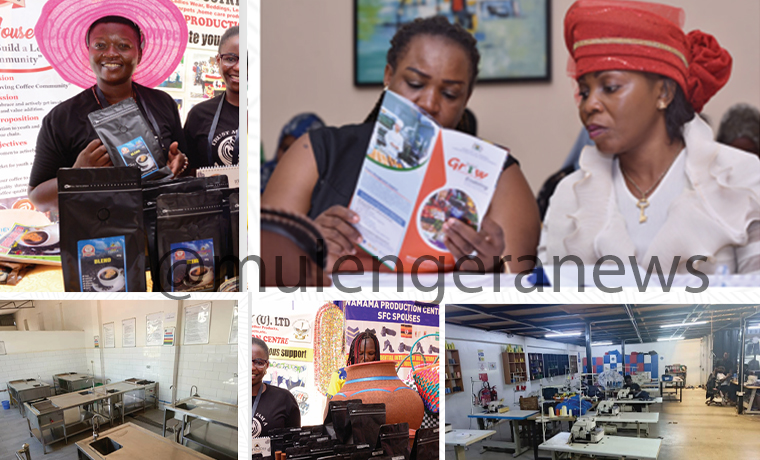
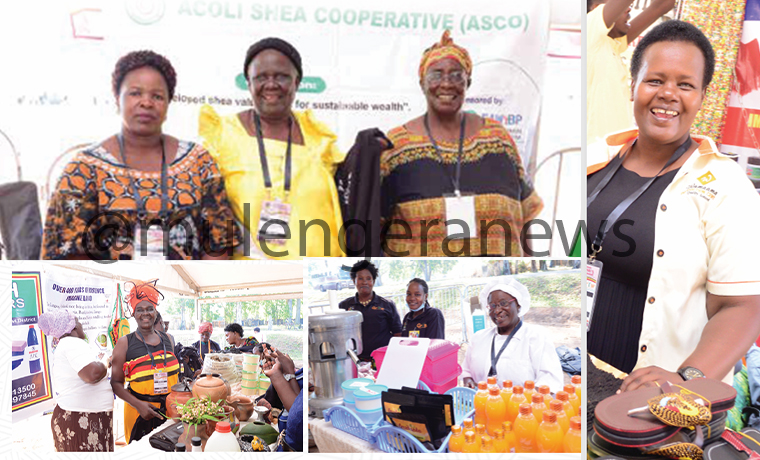
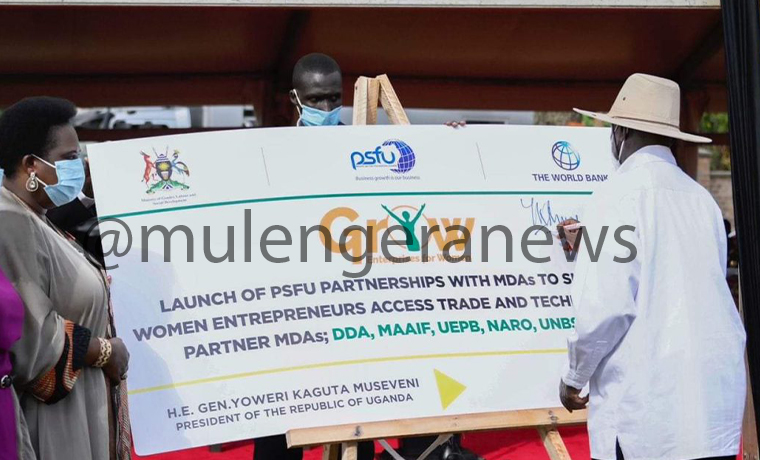
For roughly three years, the GoU (through the Ministry of Gender, Labor & Social Development) has been implementing the GROW Project which seeks to strengthen women entrepreneurs through training, skilling, mentoring, grant-aiding and accessing them to affordable capital or credit etc.
GROW Project covers women entrepreneurs involved in micro and small scale business enterprises in all districts of Uganda. Refugees, who live in refugee settlements, are also covered under a special package. Women in refugee-hosting communities are considered in a special way.
The GROW Project also has affirmative action provisions aimed at emancipating and addressing historical injustices women in certain vulnerable communities have endured for an eternity. These affirmative action communities, profiled as deserving special attention under the GROW Project, include the Batwa, the Tepeth, the Ik and the Benet. Women entrepreneurs who happen to be refugees are also given special attention.
The same goes for women entrepreneurs in Busoga, Bukedi and Karamoja sub regions. Women entrepreneurs who happen to (at the same time) be with any form of disability, as defined under the Disability Act 2020, are also given special priority.

Through the GROW Project, the GoU, through the Gender Ministry and the Private Sector Foundation Uganda, is also deliberate about identifying and helping to overcome multiple constraints impeding women from being successful entrepreneurs and being sustainable in business.
The constraints, which have impeded women entrepreneurs for an eternity, include inadequate business management skills, inadequate access to affordable capital, limited access to common user manufacturing infrastructure and negative social or cultural norms prohibiting their participation in business.
Comprising of up to over Shs813bn (or $217m) grant money availed by the World Bank via the International Development Association (IDA), the GROW Project implementation deeply involves the Local Governments based in districts and cities upcountry. The district Community Development Officers and Labor Officers who are heavily involved and serve as GROW Project focal persons are all LG employees under the districts and cities scattered in upcountry parts of Uganda.
Besides being availed with affordable credit, the GROW Project beneficiaries are also exposed to mentorship, networking & information-sharing opportunities. In place to support the coordination and operationalization of GROW Project activities are the Women Entrepreneurship Platforms-and these have to be in existence in every district or City of Uganda.

The GROW Project prioritizes women-owned enterprises (or those in which one given woman has 51% shareholding or more) for support. These have to either be micro or small scale enterprises. A micro enterprise under GROW Project is one with an annual turnover of Shs10m or less and has fewer than 5 employees.
Then the small enterprise, in the GROW Project speak, connotes an enterprise with a turnover of between Shs10m and Shs100m. It must have between 5 and 49 employees. The GROW Project intervention is meant to strengthen those women-owned enterprises and the whole idea is to amplify the broader socio-economic transformation progress which our country Uganda is already achieving through other GoU interventions such as PDM, Emyooga, Uganda Women Entrepreneurship Programme (UWEP) and Youth Livelihood Programme (YLP) etc.
Women entrepreneurs require and are free to take out of the GROW Project different forms of support and emancipation which can be in form of training, networking, mentoring, information-sharing, affordable capital or credit to replenish and amplify their business operations etc.
For those seeking affordable capital, the GROW funds are available (upon meeting certain minimum requirements) at just 10% per annum/year, which translates to just 1% per month. One can take out between Shs4m (for the minimum) and Shs200m (for the maximum).
The loan or grant (whatever the case may be) is given to an individual woman entrepreneur borrowing as herself, and not as a group. And the money has to be paid back within a repayment period of between 6 months and 2 years. This means that there is at least a grace period of 6 months before the loan begins to become due and repayable. 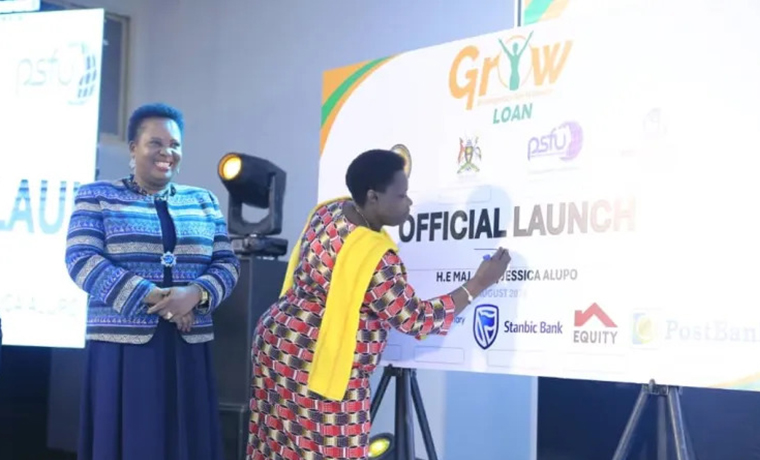
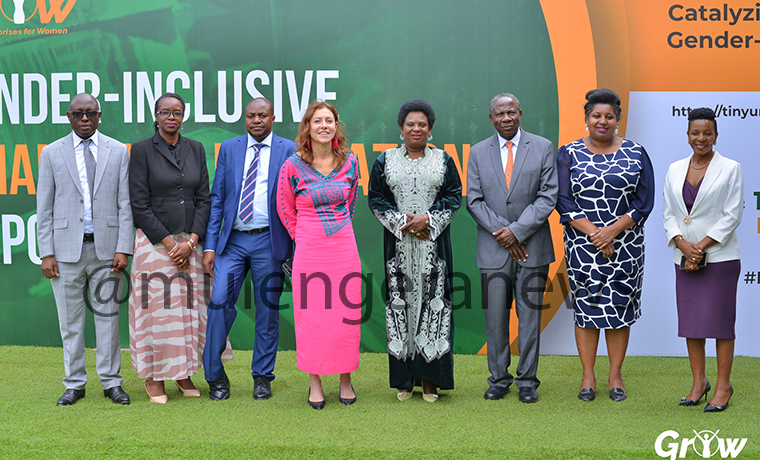
THE BANKS: The GoU works in partnership with private sector partners to handle the disbursement and recovery of the loaned monies. These partners include the six commercial banks which were cleared to participate. And these include Centenary Bank, DFCU Bank, Equity Bank, Stanbic Bank, Finance Trust Bank and Post Bank.
There are basic banking industry mandatory procedures which are applicable to all manner of borrowers. Each of the six banks is free to choose which ones to apply when disbursing out the GROW Project billions to eligible women entrepreneurs or beneficiaries.
To demonstrate commitment and seriousness, a borrower is required to render collateral of some sort which can take the form of registered or unregistered land, movable household and business assets. There are no bank charges that apply to GROW Project loans and this GoU directive to the six banks excludes expenses relating to loan application, processing or even loan arrangement fees.
But a borrower will incur statutory charges such as security valuation fees (the collateral she renders has to be valued by a professional to match the quantities of money sought), mortgage registration charges, loan insurance and Credit Reference Bureau fees. Gratefully, all these are nominal levies, which can’t constrain or inhibit any serious borrower from proceeding to pursue the loan under the GROW Project.
Some borrowers who are constrained by collateral requirements can leverage their membership to a certain group to have their loan guaranteed. This simply means that in a case a potential borrower has been assessed and found to be suitable but has no collateral or security to render, the women’s group to which she is a member can guarantee to the bank that they will make sure she pays up. That can be accepted as collateral, in some cases, to facilitate the disbursement of the loan under the GROW Project arrangement.
There are other basic and obvious requirements which are commonly applied by commercial banks, which the GROW Project beneficiaries can’t circumvent. These include the borrower having to open/hold a bank account in the bank she is borrowing from, completing/filling the loan application form, proving cash flow of the business she is borrowing to replenish and producing a trading license to prove she has an ongoing business.
Those borrowing in order to be able to facilitate and finance performance of contractual obligations under a running contract, with a certain entity, have to share a copy of the contract and call-off orders too. This is common practice, and it wouldn’t amount to a commercial bank asking for too much.
Each of the 6 banks is required by the GoU to be flexible on collateral or security requirements including being prepared to accept personal or group guarantees, movable assets, land titles, registered and unregistered land as security for the loan.
The borrower has to demonstrate to the satisfaction of the bank that the loan being sought or taken out is to facilitate business growth operations and activities-and not anything else.
The business being operated must comply with social and environmental requirements as is well set out and stipulated under the GROW Project guidelines.
It’s the case that GROW Project loan money can strictly not be used to pay off an old loan or buy it out. Simply put, loan substitution is strictly prohibited. As indicated earlier, the business in whose name the loan is being taken out should be a micro or small scale enterprise that is owned by a woman entrepreneur up to 51% or more. (For comments on this story, get back to us on 0705579994 [WhatsApp line], 0779411734 & 041 4674611 or email us at mulengeranews@gmail.com).