






 By Aggrey Baba
Ten years after state prosecutor Joan Kagezi was gunned down in Kiwatule, new revelations in court are showing how Uganda’s security agencies have been chasing her killers through phone signals, satellite footprints, and data trails, just like hunters following hoofprints in the dark.
Kagezi, the former Assistant Director of Public Prosecutions, was murdered on the evening of March 30, 2015, as she drove home with her children. She had stopped by a roadside stall to buy fruits when gunmen fired through her driver’s window, hitting her in the neck and shoulder. Her children survived, but the attack shook the nation and left investigators chasing shadows.
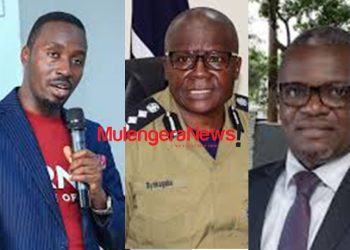
Court last week heard from Lt. Col. Francis Nyakairu, a top intelligence officer formerly under the Chieftaincy of Military Intelligence (CMI). He revealed that just hours after the assassination, then Inspector General of Police (IGP), Gen. Kale Kayihura, instituted a joint team to hunt down the killers. Nyakairu’s task was to use a special software, to scan all phone numbers that had connected to the Kiwatule mast between 7:00 and 8:00 pm on the day of the murder. He described it as “cluster intelligence,” grouping suspects by digital footprints rather than eyewitnesses.
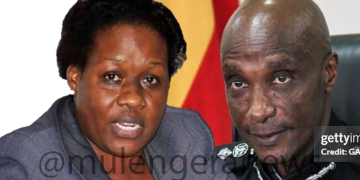
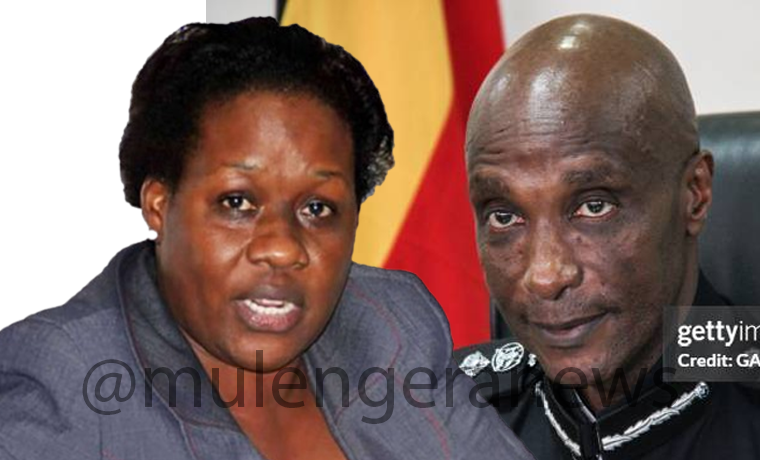
The sweep cleared dozens of early suspects, though their numbers never linked back to the crime scene. But just as the team was gathering momentum, it was disbanded by the then CID boss Grace Akullo, who instead ordered Nyakairu to retrace Kagezi’s movements that day, from her home in Kiwatule to Kololo High Court and Serena Hotel. It was a wild goose chase, and the case went cold.
Fast forward to August 2023, when CID director Tom Magambo reassembled a fresh taskforce, this time pulling in officers from CMI and Internal Security Organisation (ISO). Their mission was to reopen the old clusters and match them with new intelligence. Nyakairu testified that when he scanned the old data again, one number jumped out, belonging to John Masajjage, later identified as one of the suspected shooters. The data showed his phone was within the Kiwatule mast coverage on March 30, 2015, just as bullets pierced Kagezi’s car.

Another number tied to Daniel Kiwanuka Kisekka, a former UPDF soldier who deserted with rifles in the mid-2000s, also pinged the same mast. When investigators tracked it to Bombo in October 2023, police found Kisekka already in custody over a robbery, again in Kiwatule.

The web thickened when investigators linked a third number, belonging to John Kibuuka, also active on the same mast around 7:23 pm the night Kagezi was killed.
A separate witness, Superintendent of Police (SP) Edward Kasita, recounted how he was tipped off in August 2023 to track down a suspect described as a short, light-skinned man who wore shades and a helmet to disguise the fact that he had only one eye. Kasita said he picked him up near Wandegeya, opposite Equity Bank. The suspect turned out to be none other than Masajjage, matching the description perfectly.
Adding a twist, the tenth witness, whi happens to be Masajjage’s brother-in-law, Samuel Nsanja, pinned him further. Nsanja testified that back in 2015, his sister Loy had hinted at an “intended visit” involving Masajjage, which later tied back to the events around the murder.

The Kagezi case has dragged for nearly ten (10) years, bogged down by dead leads, disbanded teams, and shifting political winds. Yet, like embers rekindled, the new data-driven hunt seems to be breathing life into a file many had written off. (For comments on this story, get back to us on 0705579994 [WhatsApp line], 0779411734 & 041 4674611 or email us at mulengeranews@gmail.com).