






By Crispin Kaheru (Member UHRC)
Lately, Uganda keeps appearing in international headlines. Usually it is about politics, security, or some geopolitical something. That is how the world often meets us. But if you walk around the country itself, the story feels different. Recently, I attended a forum where a joint British and Indian business delegation was sharing their impressions after visiting Uganda. One of them summed it up rather simply: “What we see about Uganda in the news and what we have experienced here are two completely different things.” That remark stayed with me. It captured, in one sentence, the gap between Uganda as it is reported and Uganda as it is lived.
Of course like many other countries, Uganda is one of those places where challenges never quite disappear, but neither does progress. While the politics sometimes gets noisy, other things continue happening beneath the surface. Exports expand. Regional influence grows. And the population, which is young, energetic and endlessly entrepreneurial keeps pushing forward.
I will give you one statistic that rarely makes the headlines. In 1995, Uganda’s exports were about 550 million dollars. Today they are roughly 11.2 billion dollars. That is not a small jump. It shows we are gradually learning how to sell.

But what exactly are we selling these days? It is almost everything. There was a time when the country’s export story was very simple. It revolved around the 3Cs and 3Ts: Coffee, Cotton and Copper; Tea, Tobacco and Tourism. Coffee alone once accounted for about 90 percent of export earnings. Today it contributes closer to 12 percent. The rest of the export basket has widened significantly.

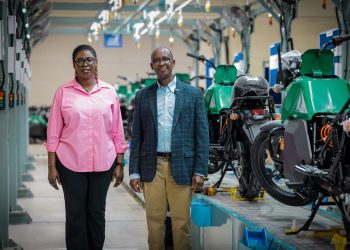
Now Uganda exports gold, fish, maize, dairy products, cocoa, sugar, fruits and a growing range of manufactured goods. Tourism is back in conversation. Skilled Ugandans are also exporting their labour across the region and beyond. In short, we have moved on; moved on from selling a few traditional commodities to selling whatever we can competitively produce.
If one were to summarize Uganda’s economic strategy in a single word, it would probably be hustle. Here, hustle should not be read as a bad word. I simply mean movement, initiative, and the determination to find opportunity wherever it hides. In this Ugandan version of hustle economics, everyone should ideally be either a producer , a value-adder, or a salesperson.
Produce something. Agricultural products. Manufactured goods. Services. Technology. Ideas. If you cannot produce, then add value on a product or sell. Every company in the world has a sales department for a reason. Products do not sell themselves.


Sometimes I like to think of Uganda as a company. A big national company with about forty-five million shareholders called citizens. Like any company, it must produce goods, sell them, make profits, and then use those profits to provide services to its shareholders. If we all looked at the country that way, perhaps we would move even faster.
The government seems to have already adopted part of this thinking. Diplomats are often described as Uganda’s top salespeople abroad. Their assignment is straightforward. It is to find investors, open markets, attract tourists, and help Ugandan products reach the world.
In today’s global economy, every country is essentially running a sales pitch. Uganda’s pitch should be simple: peace, potential and profit. That’s what it is. After marketing, you sell and make profits. It is the profits that are used to spur growth.
But who is benefiting from the growth?
Statistics suggest that much of the economic progress so far has reached roughly 32 percent of the population, while about 68 percent of Ugandans are still struggling to build sustainable wealth. That imbalance may explain much of the political conversation you hear today. It is not necessarily a crisis of ideas. Uganda has many ideas. It is more a challenge of coordination and inclusion.
So what should be done differently?
First, Uganda must become serious about production and value addition. Exporting raw coffee beans is good. Exporting roasted coffee is better. Exporting chocolate instead of raw cocoa is the best. Countries that move from raw materials to finished products are the ones that eventually make real profits and transform their economies.
Second, diplomacy must become economic diplomacy. Every Ugandan embassy abroad should operate partly like a trade mission, perhaps even like a marketing department for the country. Markets do not open themselves. They don’t just happen. Someone has to knock on the door.
Third, Uganda must invest heavily in infrastructure and skills. The country’s youthful population is often described as its greatest asset. But an asset must be prepared, trained and equipped. Otherwise it risks turning into an unemployment statistic.
Finally, government coordination needs to improve. When ministries, investors, farmers, diplomats and entrepreneurs all work from the same script, transformation becomes less of a slogan and more of a strategy.
Uganda’s story is still unfolding. Sometimes it is loud. Occasionally it contradicts itself. But one thing is certain. Through all the ups and downs, Uganda keeps moving. And somehow, against the odds, it keeps finding a way forward. (For comments on this story, get back to us on 0705579994 [WhatsApp line], 0779411734 & 041 4674611 or email us at mulengeranews@gmail.com).